Tharoor Hails Navi Pillay's 2026 Nobel Peace Prize
Synopsis
Congress MP Dr. Shashi Tharoor praised Navi Pillay on her 2026 Nobel Peace Prize, calling it well-deserved and citing her lifelong commitment to human rights and international justice. Tharoor, a former UN Under-Secretary-General, spoke from shared institutional experience.
Key Takeaways
Navanethem 'Navi' Pillay has been awarded the 2026 Nobel Peace Prize for her decades of work in human rights and international justice.
Shashi Tharoor extended congratulations on October 9, 2026 , describing the honour as 'truly well-deserved.' Pillay previously served as UN High Commissioner for Human Rights (2008–2014) , judge of the International Criminal Court , and President of the International Criminal Tribunal for Rwanda .
Tharoor framed the tribute as a fellow UN veteran, referencing 'all of us who, like her, served the UN.' The prize is seen as an affirmation of the international rule-of-law tradition at a time when multilateral institutions face intense scrutiny.
One of the most consequential voices in the history of international human rights law has just received the world's most coveted honour. Congress MP Dr. Shashi Tharoor on Friday, October 9, 2026, extended his congratulations to Navanethem 'Navi' Pillay upon her being awarded the 2026 Nobel Peace Prize, calling it 'a truly well-deserved honour.'
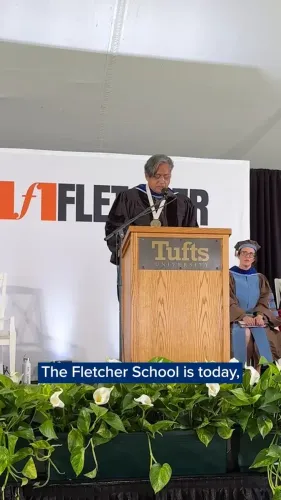
Tharoor, himself a former senior United Nations official who served as UN Under-Secretary-General, posted the tribute on X, drawing on a shared institutional identity. 'Her lifelong dedication to human rights, international justice, and strengthening the rule of law across the globe continues to inspire all of us who, like her, served the UN,' he wrote.
Who Is Navi Pillay — and Why This Prize Carries Weight
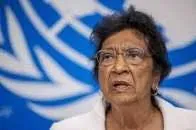
Navanethem Pillay, widely known as Navi Pillay, is a South African jurist and human rights champion whose career spans decades at the highest levels of international law and justice. She served as a judge and later President of the International Criminal Tribunal for Rwanda, was a judge of the International Criminal Court, and most prominently served as the UN High Commissioner for Human Rights from 2008 to 2014. In that last role, she became one of the most outspoken advocates for accountability in conflicts from Syria to Sri Lanka.
Her recognition by the Nobel Committee places her in the lineage of laureates who transformed international norms — people whose work inside institutions shaped the rules that govern how states treat their own citizens and the world's most vulnerable populations.
Tharoor's UN Bond — A Personal Frame to a Global Story
Tharoor's congratulations carry a texture beyond the ceremonial. As someone who spent nearly three decades at the United Nations — including heading the Department of Public Information — he writes not as an outside admirer but as a colleague from the same multilateral world. His framing, 'all of us who, like her, served the UN,' grounds the tribute in institutional kinship rather than partisan sentiment.
The post arrives on Nobel Peace Prize announcement day, a moment that annually focuses global attention on the architecture of peace, justice, and accountability. In a geopolitical era where international institutions face mounting pressure and legitimacy questions, the Nobel Committee's choice of Pillay signals a deliberate reaffirmation of the rule-of-law tradition she has embodied.
For India's foreign-policy community and its diaspora of international civil servants, the prize is a reminder that individuals who commit decades to multilateral service can still reshape the moral landscape of global governance — a point Tharoor, himself once a candidate for UN Secretary-General, knows with rare personal clarity.
Point of View
The tribute is strategically personal: by invoking shared UN service, he aligns India's liberal internationalist political voice with a globally celebrated figure, subtly reinforcing the argument that multilateralism and human rights norms remain relevant and worthy of investment. The post also lands on a day when India's own posture toward international human rights mechanisms continues to attract scrutiny, lending the congratulations a quiet but legible subtext. Whether the accolade accelerates any concrete policy conversation in New Delhi is unlikely — but as a signal of values, it is anything but accidental.
NationPress
9 Oct 2026
Frequently Asked Questions
Who is Navi Pillay and why did she win the Nobel Peace Prize?
Navanethem 'Navi Pillay' is a South African jurist who served as UN High Commissioner for Human Rights from 2008 to 2014, as a judge of the International Criminal Court, and as President of the International Criminal Tribunal for Rwanda. She was awarded the 2026 Nobel Peace Prize for her lifelong dedication to human rights, international justice, and the rule of law.
What did Shashi Tharoor say about Navi Pillay's Nobel Prize?
Tharoor called the award 'a truly well-deserved honour' and praised Pillay's lifelong dedication to human rights, international justice, and strengthening the rule of law, adding that her work continues to inspire those who served the United Nations.
When was the 2026 Nobel Peace Prize announced?
The 2026 Nobel Peace Prize was announced on Friday, October 9, 2026, which is the traditional Nobel Peace Prize announcement day.
What is Shashi Tharoor's connection to the United Nations?
Dr. Shashi Tharoor served at the United Nations for nearly three decades, rising to become UN Under-Secretary-General and head of the Department of Public Information. He was also a candidate for UN Secretary-General in 2006.
Has Navi Pillay won other major international awards before?
Pillay has received numerous international honours for her human rights work across her career at the International Criminal Tribunal for Rwanda, the International Criminal Court, and as UN High Commissioner for Human Rights, though the Nobel Peace Prize represents the highest global recognition she has received.