Sitharaman hails Vastrakala's blend of craft and tech in France
Synopsis
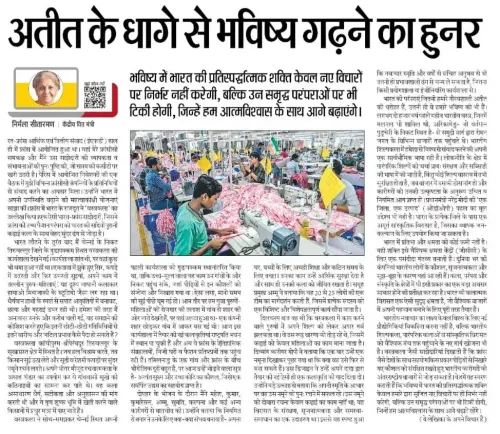
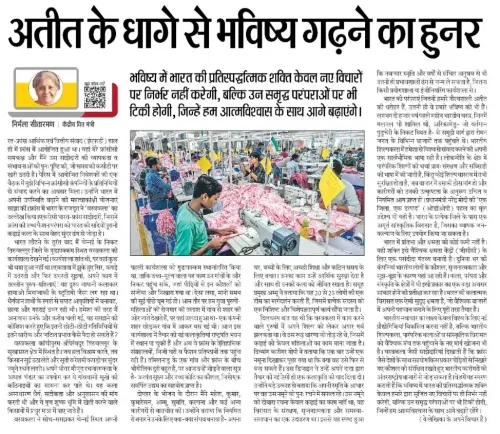
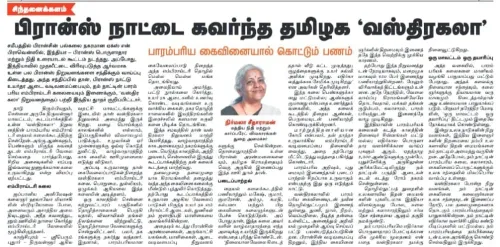
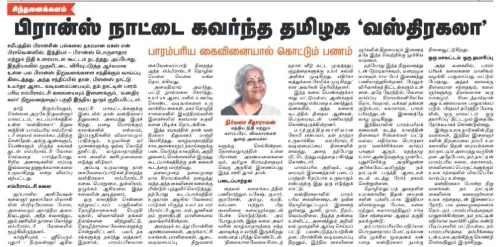
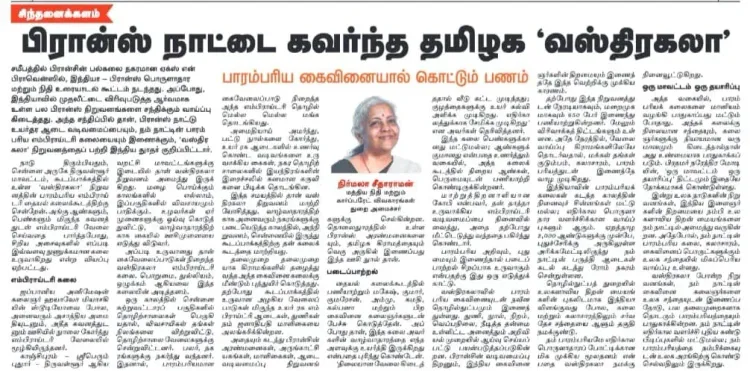
Finance Minister Nirmala Sitharaman, writing in Tamil daily Dinamalar on 19 July 2026, celebrated Vastrakala — a Tamil Nadu initiative merging traditional weaving with scientific methods and French design expertise — as a model of how heritage craft and modern innovation together create global success.
Key Takeaways
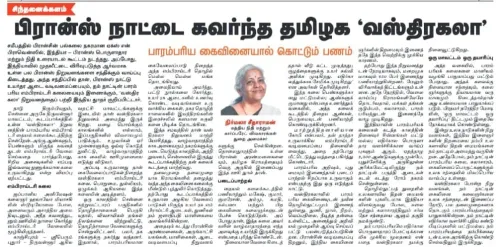
Union Finance Minister Nirmala Sitharaman authored an opinion piece in Tamil daily Dinamalar on 19 July 2026 on the success of Vastrakala in France.
Vastrakala is a Tamil Nadu textile initiative that applies scientific testing of fabric, thread, colour, temperature and durability to traditional handloom crafts.
Sitharaman credited the combination of France's design expertise and Indian artisans' skill as the key reason for the project's international success.
The initiative aligns with the National Handloom Development Programme (2015) and the Make in India framework promoting craft-technology integration for exports.
The India-France Strategic Partnership (1998) provides the diplomatic foundation for such textile and design collaborations.
Sitharaman's article in a Tamil-language daily signals the Finance Ministry's active interest in promoting regional craft exports through cultural diplomacy.
Union Finance Minister Nirmala Sitharaman on Sunday, 19 July 2026, wrote an opinion piece in the Tamil-language daily Dinamalar celebrating the success of Vastrakala, a Tamil Nadu textile initiative that fuses traditional handloom craftsmanship with modern science and technology, in captivating the French market.
Context
In the article, Sitharaman described Vastrakala as a model of how heritage knowledge and innovation can together produce creative excellence. Translated from Tamil, she wrote: 'பாரம்பரிய அறிவும், புதுமையும் இணைந்தால் படைப்பாற்றல் சிறப்பாக உருவாகும்' — 'When traditional knowledge and innovation come together, creativity flourishes at its best.' She noted that fabric, thread, colour, temperature and durability are all examined through scientific methods before being put to use.
Sitharaman specifically attributed Vastrakala's international success to the combination of France's design expertise and the skill of Indian artisans, calling it the defining reason for the project's achievement in the French market.
Policy Backdrop
Vastrakala sits within a broader policy lineage that successive Indian governments have pursued: integrating indigenous craft knowledge with scientific processes and foreign design inputs to lift export earnings from the textiles sector. The National Handloom Development Programme, launched in 2015, supported modernisation of traditional looms and skill upgradation for weavers across states including Tamil Nadu.
The India-France Strategic Partnership, established in 1998, has long included cultural and creative-industry cooperation, and France's dominance in haute couture and sustainable luxury markets has made it a recurring partner for Indian craft-modernisation efforts. The Make in India initiative, announced in 2014, further encouraged such fusion of tradition and technology to boost exports.
Tamil Nadu has one of India's most storied textile traditions — spanning silk, cotton and natural-dye crafts — and Vastrakala represents an attempt to position these regional skills within global value chains without displacing the artisans at their core.
Stakeholders and Impact
The primary beneficiaries of the Vastrakala model are Tamil Nadu's handloom weavers and textile artisans, whose traditional techniques gain international marketability through scientific validation and French design collaboration. The initiative also speaks to French designers seeking authentic, sustainably produced craft inputs for luxury and premium segments.
By writing in Dinamalar — one of Tamil Nadu's most widely read Tamil-language dailies — Sitharaman directed her message squarely at the state's weaving communities and regional readership, underscoring the cultural and economic significance of the project for the state.
What's Next
The spotlight on Vastrakala's French reception could build momentum for expanded Indo-French textile collaboration, with possible announcements anticipated around upcoming bilateral meetings between the two countries. Analysts will watch whether the next Union Budget or a forthcoming textile policy review includes dedicated funding for craft-technology centres modelled on the Vastrakala approach. Sitharaman's public endorsement signals that the Finance Ministry views such craft-export initiatives as a credible strand of India's broader economic and cultural diplomacy.
Point of View
Lending export credibility to what might otherwise be seen as niche artisanal production. By anchoring the narrative around scientific rigour — testing fabric, thread, colour and durability — the Finance Minister subtly frames traditional craft not as heritage preservation alone but as a scalable, investable economic sector. This positions Vastrakala as a potential model for other states with strong handloom traditions seeking to enter premium export markets.
NationPress
18 Oct 2026
Frequently Asked Questions
What is Vastrakala and why is it in the news?
Vastrakala is a Tamil Nadu textile initiative that combines traditional handloom weaving with scientific testing of fabric, thread, colour, temperature and durability for export markets. It is in the news because Finance Minister Nirmala Sitharaman wrote about its success in France in the Tamil daily Dinamalar on 19 July 2026.
What did Nirmala Sitharaman write in Dinamalar?
Sitharaman wrote that Vastrakala is an example of how traditional knowledge and modern innovation together produce creative excellence. She highlighted the scientific methods used in the project and credited the combination of French design expertise and Indian artisans' skill for its success in France.
How is France connected to Tamil Nadu's Vastrakala project?
France's strength in haute couture and sustainable luxury design has made it a partner for Indian craft-modernisation efforts. Sitharaman specifically noted that French design capability, combined with Tamil artisans' traditional skills, is the primary reason for Vastrakala's success in the French market.
Which government schemes support handloom and textile modernisation in India?
The National Handloom Development Programme, launched in 2015, supports modernisation of traditional looms and weaver skill upgradation. The Make in India initiative, announced in 2014, also promotes integrating traditional crafts with contemporary technology to boost exports.
What could Vastrakala's success mean for Indian weavers?
If the Vastrakala model is scaled, handloom weavers in Tamil Nadu and potentially other states could access premium international markets, particularly in France and Europe, by combining their traditional skills with scientific quality validation and foreign design partnerships.