Sitharaman Pitches India as Global Sustainable Textiles Leader
Synopsis
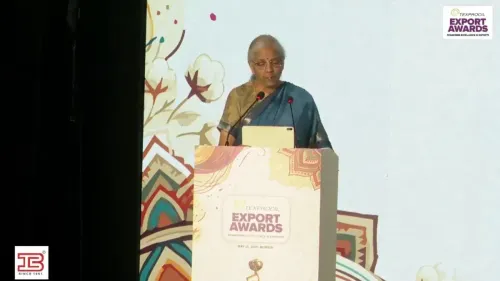
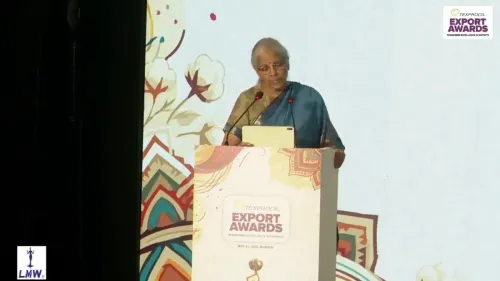
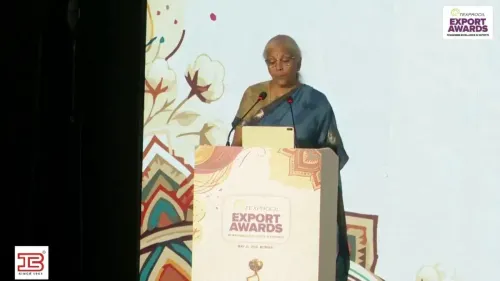
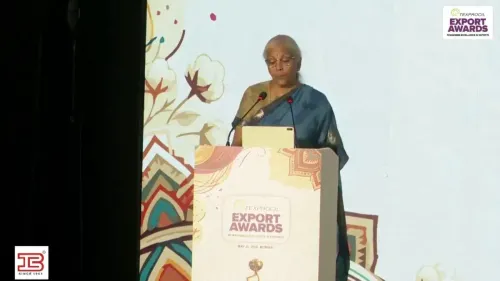
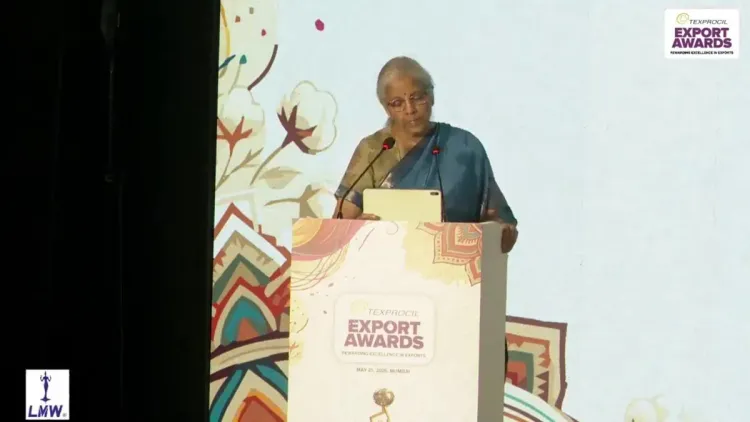
Union Finance Minister Nirmala Sitharaman, addressing an event in Mumbai on 25 May 2026, called for India to leverage its cotton, silk, and handloom heritage to lead global sustainable textiles, backed by certification systems, traceability infrastructure, and a shift to design-led, value-added exports.
Key Takeaways
Nirmala Sitharaman called for India to become the global leader in sustainable textiles at an event in Mumbai on 25 May 2026 .
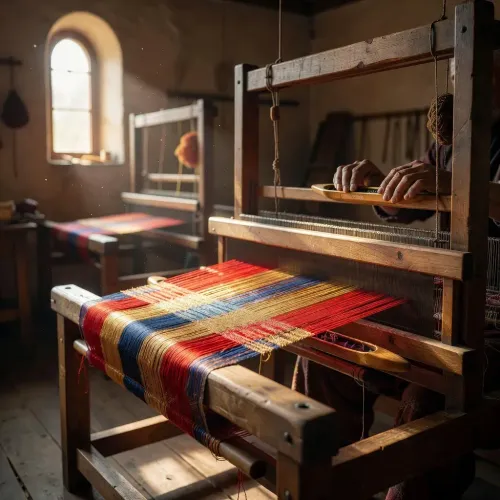
She identified India's cotton, silk, handloom traditions, natural dyes, and low-carbon craft techniques as core competitive advantages in premium global markets.
The Finance Minister called for building certification systems , traceability infrastructure , and branding platforms to command premium pricing internationally.
She stressed that India must invest in design education at scale , shifting textile exports from commodity goods to design-led, value-added products.
The remarks align with existing schemes including the PLI Scheme for Textiles , seven PM MITRA textile parks , and the revised RoSCTL scheme .
Concrete policy follow-through is expected to be tracked in the next Union Budget allocations for textiles.
Union Finance Minister Nirmala Sitharaman on Monday, 25 May 2026, called for positioning India as the global leader in sustainable textiles, emphasising the country's natural advantages in cotton, silk, and handloom traditions during an address in Mumbai. She stressed the need for certification systems, traceability infrastructure, and design-led exports to help Indian textiles command premium pricing in world markets.
Context
Speaking at an event in Mumbai, Sitharaman highlighted that India's handloom traditions carry 'inherently low carbon footprints' and that natural dyes and craft techniques are 'actively sought by the world's premium consumers.' She argued that these are not merely cultural assets but competitive economic advantages that must be systematically monetised through global branding and certification.
The Finance Minister also underlined the importance of design capability, stating that 'the future of textile exports is not in commodity products but in design-led, value-added goods.' She called on India to produce not just skilled workers but creative designers capable of building globally competitive products.
Policy Backdrop
The remarks build on a series of central government initiatives aimed at transforming India's textile sector. In 2021, the government approved seven PM MITRA textile parks to create integrated manufacturing ecosystems with modern infrastructure, and launched the Production Linked Incentive (PLI) Scheme for Textiles to boost man-made fibre and apparel manufacturing capacity.
The RoSCTL scheme was extended and revised in 2022 to provide rebates of state and central taxes on textile exports, improving price competitiveness for exporters. These measures collectively reflect a strategic push to move India up the textile value chain — from raw material supplier to a design and sustainability leader.
India is already among the world's largest producers of cotton and silk, and its handloom sector supports millions of artisans. However, the premium sustainable-textiles segment has historically been fragmented, lacking the certification and traceability frameworks that major international buyers now demand.
Stakeholders and Impact
Textile exporters stand to gain significantly if a credible national certification framework is established, as it would allow them to access higher-margin markets in Europe, North America, and Japan where sustainability credentials attract premium pricing. Handloom weavers and artisan communities could see income improvements if their products are formally recognised under such a system and linked to global branding platforms.
Design professionals and design institutions are also central to the Finance Minister's vision. A shift toward design-led exports would require scaled-up investment in design education, potentially reshaping curricula at textile and fashion institutes across the country. For small and medium exporters, the proposed traceability infrastructure could reduce compliance costs over time while opening doors to buyers who currently source from certified competitors in Bangladesh, Vietnam, and Turkey.
What's Next
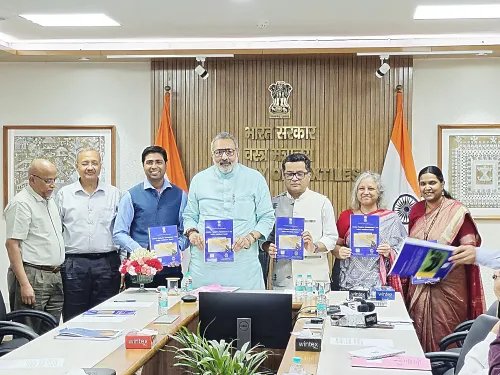
Observers will watch closely whether Sitharaman's remarks translate into concrete allocations in the next Union Budget — specifically for traceability infrastructure, design education, and a national certification framework for organic and handloom textiles. The Ministry of Textiles is also expected to release roadmap documents that could operationalise the branding platforms she referenced.
If India successfully builds the institutional architecture around sustainable textile certification, it could reposition the country's export basket toward higher-value goods, reducing dependence on commodity-driven volumes and aligning textile trade with India's broader climate commitments under the Paris Agreement.
Point of View
Traceability, and design investment in a single articulation, she is effectively sketching an institutional architecture that India's textile sector has long lacked. The remarks arrive at a moment when the European Union's sustainability disclosure rules and carbon border mechanisms are reshaping what global buyers demand from suppliers, making the timing politically and commercially significant. Whether the vision converts into Budget allocations and ministry roadmaps will determine if this remains aspirational positioning or becomes a structural shift in India's textile export model.
NationPress
9 Oct 2026
Frequently Asked Questions
What did Nirmala Sitharaman say about India's textile sector?
Speaking in Mumbai on 25 May 2026, Finance Minister Nirmala Sitharaman called for India to become the global leader in sustainable textiles by building certification systems, traceability infrastructure, and branding platforms, and by investing in design education to shift exports toward value-added goods.
Why does India have an advantage in sustainable textiles?
India is one of the world's largest producers of cotton and silk and has centuries-old handloom traditions with inherently low carbon footprints, along with natural dyes and craft techniques that premium global consumers are increasingly seeking.
What is the PLI Scheme for Textiles?
The Production Linked Incentive Scheme for Textiles, approved in 2021, offers financial incentives to manufacturers to boost capacity and exports in man-made fibre and apparel segments, forming part of India's broader strategy to upgrade its textile industry.
What are PM MITRA textile parks?
PM MITRA refers to seven integrated textile parks approved by the central government in 2021 to provide modern infrastructure for the full textile value chain, from fibre to finished product, in a single location.
How would a textile certification system benefit Indian exporters?
A national certification framework for organic, handloom, and sustainably produced textiles would allow Indian exporters to access higher-margin markets in Europe, North America, and Japan, where buyers pay premium prices for verified sustainable products.