FM Sitharaman Highlights India's Textile Rise at Mumbai Event
Synopsis
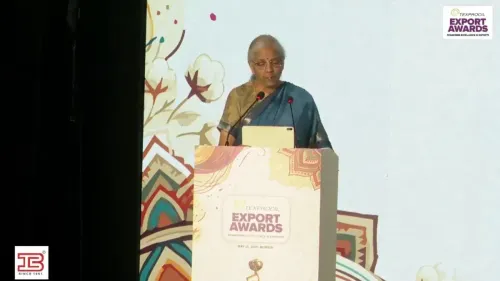
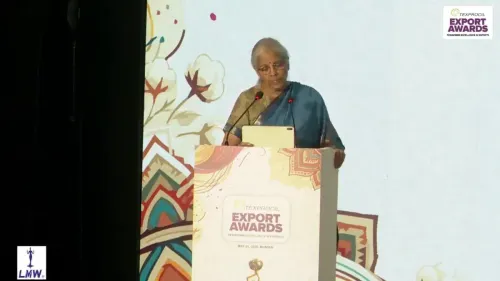
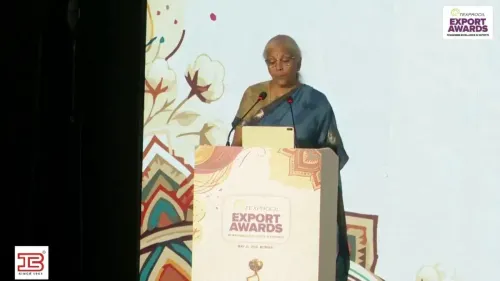
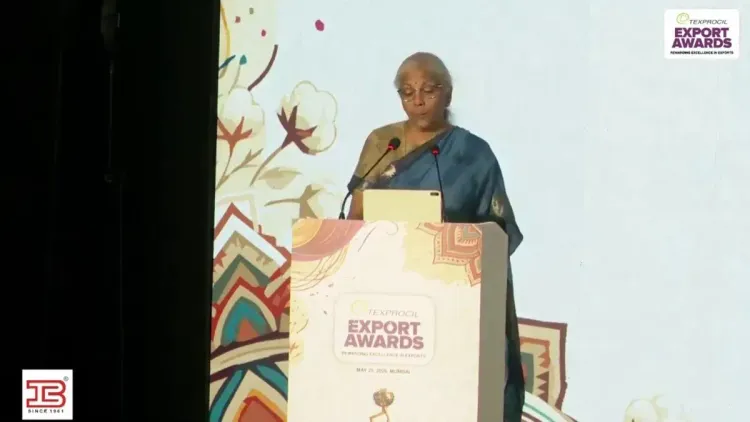
Finance Minister Nirmala Sitharaman, addressing an event in Mumbai on 25 May 2026, highlighted India's rise as the world's 6th largest textile exporter, with the sector employing 10 crore people and contributing 2.3% of GDP — framing it as a post-colonial success story.
Key Takeaways
Finance Minister Nirmala Sitharaman spoke in Mumbai on 25 May 2026 on India's textile sector transformation since independence.
India is the world's 6th largest exporter of textiles and apparel, holding roughly 4% of global trade.
The sector is the 2nd largest employer after agriculture , supporting around 10 crore livelihoods directly and indirectly.
Textiles contribute approximately 2.3% of India's GDP and about 12% of total export earnings.
India is the world's largest exporter of cotton yarn and the 2nd largest producer of silk globally.
The address was posted as the first in a thread, signalling further details may follow.
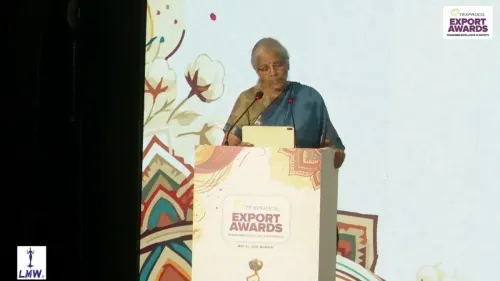
Union Finance Minister Nirmala Sitharaman on Monday, 25 May 2026, speaking in Mumbai, described India's textile industry as a transformation from colonial-era decline to a global success story, citing the sector's scale, employment footprint, and export contribution since 1947.
Context
Sitharaman framed the address around India's post-independence journey, stating: 'We have come a long way from the Colonial past and have proved that the textile industry can stand on its own. It has been a transformation of a story of sadness in 1947 to a story of success today.' The remarks were delivered in Mumbai, India's financial capital, and shared as part of a thread on her official account.
The minister cited a cluster of figures to anchor her argument: India is today the world's 6th largest exporter of textiles and apparel, holds roughly 4% of global textile and apparel trade, and is the world's largest exporter of cotton yarn and the 2nd largest producer of silk globally.
Policy Backdrop
The textile sector's modern policy architecture traces back to the National Textile Policy of 2000, which sought to modernise units and sharpen global competitiveness. The Amended Technology Upgradation Fund Scheme, relaunched in 2016, further pushed technology adoption across spinning, weaving, and processing units.
Since the 1991 economic reforms, successive governments have treated textiles as a strategic pillar, leveraging India's raw-material advantages in cotton and silk. The sector's performance is routinely cited by policymakers as evidence of manufacturing self-reliance and reduced import dependence — themes that align with the current government's broader industrial narrative.
Stakeholders and Impact
The scale of the sector's employment footprint is central to its political salience. Sitharaman noted that textiles and apparel is the 2nd largest employer after agriculture, supporting around 10 crore livelihoods directly and indirectly — a figure that spans textile workers, apparel exporters, and cotton farmers across multiple states.
The sector contributes approximately 2.3% of India's GDP and about 12% of total export earnings, according to the minister's statement. These numbers position textiles not merely as a legacy industry but as a live driver of merchandise export growth, even as India faces stiff competition from China and Bangladesh in global markets.
What's Next
Analysts and industry bodies will watch quarterly trade data from the Ministry of Commerce to track whether the 4% global share is expanding. Any fresh outlay for textile parks or extensions to the Production Linked Incentive (PLI) scheme in the next Union Budget will be the clearest signal of how the government intends to build on the performance Sitharaman highlighted. The Mumbai address, posted as the first in a thread, suggests further policy or sector-specific details may follow in subsequent posts.
Point of View
She elevates a routine sector-review into a nation-building frame — a rhetorical move that also pre-empts opposition critiques about industrial job creation. The 10-crore livelihoods figure, straddling rural cotton farmers and urban garment workers, signals that the government sees textiles as a cross-constituency asset. Watch for whether the thread's subsequent posts announce concrete policy measures, or whether the address remains aspirational.
NationPress
9 Oct 2026
Frequently Asked Questions
What did Nirmala Sitharaman say about India's textile industry in Mumbai?
Finance Minister Nirmala Sitharaman said India has transformed its textile sector from colonial-era decline into a global success, describing India as the world's 6th largest textile exporter supporting around 10 crore livelihoods.
How many people does India's textile sector employ?
According to Sitharaman's statement, the textile and apparel sector is the 2nd largest employer after agriculture in India, supporting around 10 crore livelihoods both directly and indirectly.
What is India's rank in global textile exports?
India is the world's 6th largest exporter of textiles and apparel, holds roughly 4% of global textile and apparel trade, and is the largest exporter of cotton yarn, as stated by the Finance Minister.
How much does the textile sector contribute to India's GDP?
The textile and apparel sector contributes approximately 2.3% of India's GDP and about 12% of the country's total export earnings, according to Sitharaman's Mumbai address.
What is India's rank in global silk production?
India is the 2nd largest producer of silk globally, as cited by Finance Minister Nirmala Sitharaman in her 25 May 2026 Mumbai speech.