FM Sitharaman: India textile exports hit $33.5 bn in FY26
Synopsis
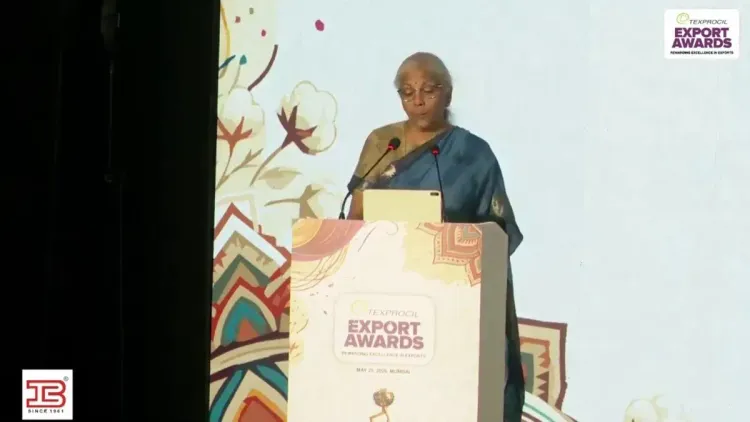
Union Finance Minister Nirmala Sitharaman, speaking in Mumbai on 25 May 2026, said India's textile and handicraft exports hit $33.5 billion in FY 2025-26 despite global trade headwinds, and called on the sector to accelerate toward reclaiming India's historic position as a world textile leader.
Key Takeaways
India's textile exports, including handicrafts, reached $33.5 billion in FY 2025-26 .
Finance Minister Nirmala Sitharaman made the remarks in Mumbai on 25 May 2026 .
She described the performance as 'particularly commendable' given unprecedented global headwinds and tariff disruption.
Sitharaman said India must 'run much faster' to reclaim its historical position as a world textile leader.
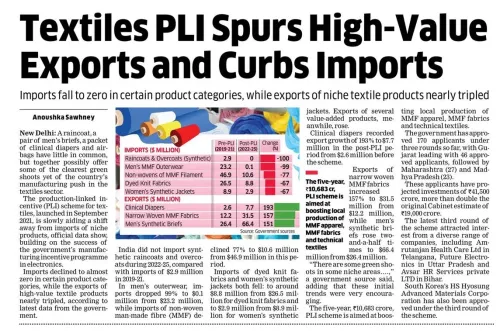
The sector is supported by the PLI scheme (2021) and the RoSCTL rebate mechanism.
The National Textile Policy and ongoing FTA negotiations with the UK and EU remain key near-term watchpoints.
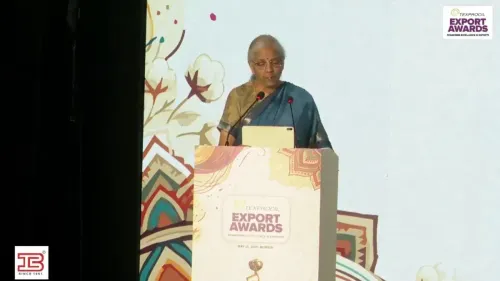
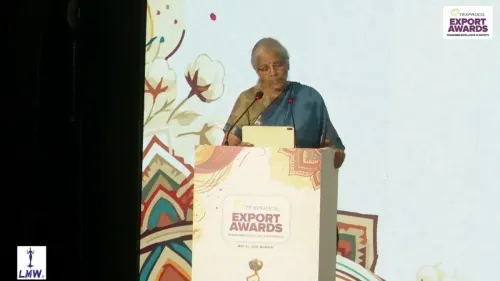
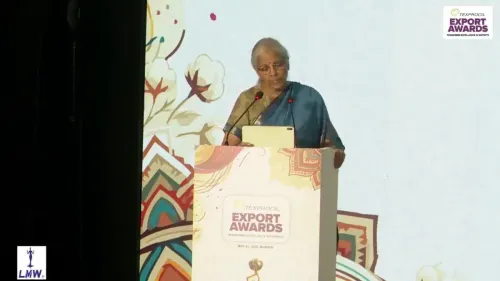
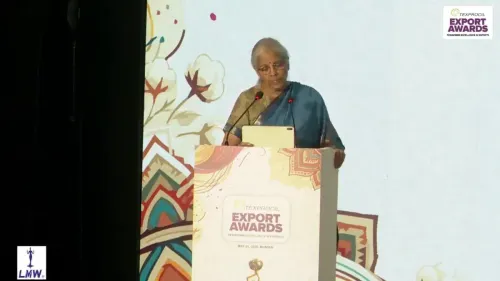
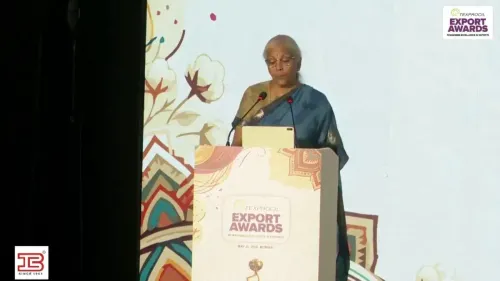
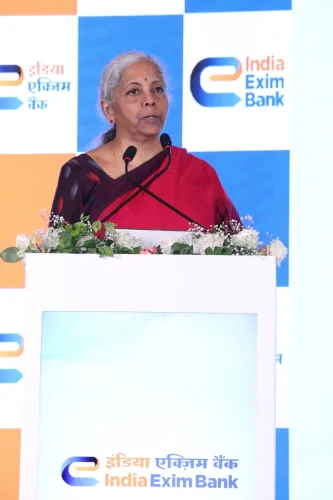
Union Finance Minister Nirmala Sitharaman, speaking in Mumbai on Monday, 25 May 2026, said India's textile exports — including handicrafts — reached $33.5 billion in FY 2025-26, calling the performance 'particularly commendable' given unprecedented global headwinds and tariff disruption.
Context
Sitharaman noted that Indian exporters 'held their ground' despite a turbulent global trade environment, describing the outcome as a demonstration of the sector's resilience. She was careful, however, to frame the number not as a ceiling but as a waypoint, stating that India must 'run much faster' if it is to reclaim its historical position as a world leader in textiles.
The remarks were delivered in Mumbai, a key hub for the textile and apparel trade, and formed part of a thread of posts from her official account, identified as the second in a series.
Policy Backdrop
India's textile sector has been a sustained policy priority across successive governments. The Production Linked Incentive (PLI) scheme for textiles and apparel, notified in 2021, was designed to attract fresh investment and scale up export capacity. Separately, the Rebate of State and Central Taxes and Levies (RoSCTL) scheme has been periodically revised to neutralise embedded tax costs for exporters, keeping Indian goods price-competitive in global markets.
Both instruments sit within the broader Atmanirbhar Bharat and Make in India frameworks, which have consistently positioned textiles as an employment-intensive sector capable of absorbing large-scale manufacturing investment. Global supply-chain realignments following 2020 opened windows for India to capture market share from competing nations, a dynamic that official statements have repeatedly highlighted.
Stakeholders and Impact
The $33.5 billion figure encompasses a wide ecosystem — garment manufacturers, fabric mills, handicraft artisans and export clusters concentrated in cities such as Tiruppur, Surat and Mumbai. For these communities, export performance directly translates into employment, wages and the viability of small and medium enterprises.
Sitharaman's acknowledgement of 'tariff disruption' as a headwind signals that the global trade environment has complicated export growth, making the sector's ability to hold its ground more significant in policy terms. Handicraft exporters, often operating in informal clusters, are particularly exposed to currency fluctuations and demand shifts in Western markets.
What's Next
The Finance Minister's call to 'run much faster' points toward unfinished policy business. The long-pending National Textile Policy remains a key deliverable that the sector has awaited for several years. Observers will also watch for any new incentives in the next Union Budget, as well as progress on free-trade agreements under negotiation with the United Kingdom and the European Union — both of which could materially improve market access for Indian textile exporters.
With the Finance Minister publicly benchmarking current performance against India's historical ambition as a global textile leader, the statement sets a clear political and policy expectation ahead of the next budget cycle and ongoing trade negotiations.
Point of View
She draws on a civilisational narrative that has proven effective in mobilising both industry and voter sentiment around manufacturing goals. The explicit reference to 'tariff disruption' and 'global headwinds' also provides the government political cover for any shortfall relative to stated targets, while keeping pressure on exporters and trade negotiators to perform. Taken together, the statement reads as groundwork for fresh policy interventions — whether in the next budget or via an FTA breakthrough — rather than a routine progress report.
NationPress
9 Oct 2026
Frequently Asked Questions
What were India's textile exports in FY 2025-26?
India's textile exports, including handicrafts, reached $33.5 billion in FY 2025-26, according to Union Finance Minister Nirmala Sitharaman's statement in Mumbai on 25 May 2026.
What did Nirmala Sitharaman say about the textile sector?
Sitharaman called the export performance 'particularly commendable' given global headwinds and tariff disruption, but said India must 'run much faster' to reclaim its historical position as a world textile leader.
What government schemes support India's textile exporters?
Key support mechanisms include the Production Linked Incentive (PLI) scheme for textiles and apparel (notified in 2021) and the RoSCTL rebate scheme, which neutralises embedded taxes to keep Indian exports competitive.
Why is the textile sector important for India's economy?
Textiles is one of India's most employment-intensive manufacturing sectors, involving millions of workers across garment factories, fabric mills and handicraft clusters in cities like Tiruppur , Surat and Mumbai .
What is the National Textile Policy and when will it be released?
The National Textile Policy is a long-pending framework meant to guide the sector's growth, investment and export strategy. As of mid-2026 it has not yet been officially notified, and its release is closely watched by industry stakeholders.