Sitharaman: India's Textile Moment Is Now
Synopsis
Finance Minister Nirmala Sitharaman, in Mumbai on 25 May 2026, said India's moment in the global textile order has arrived, pointing to supply-chain diversification away from China, expanding free trade agreements, and rising global demand for sustainable and authentic craft as converging opportunities.
Key Takeaways
Finance Minister Nirmala Sitharaman declared India's 'moment in the global textile order is now' while speaking in Mumbai on 25 May 2026 .
She cited three tailwinds: global diversification away from single-source suppliers, expanding free trade agreements , and rising consumer preference for authenticity and sustainability.
The PLI Scheme for Textiles (notified 2021 ) and bilateral trade pacts with the UAE and Australia form the existing policy backbone for this push.
India's handloom weavers, garment MSMEs, and textile exporters are the primary intended beneficiaries of this strategic positioning.
Ongoing EU and UK FTA negotiations and future duty-drawback decisions will determine the pace of India's textile export growth.
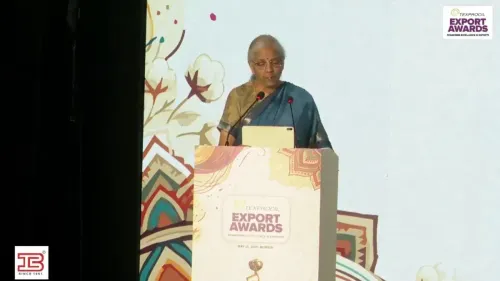
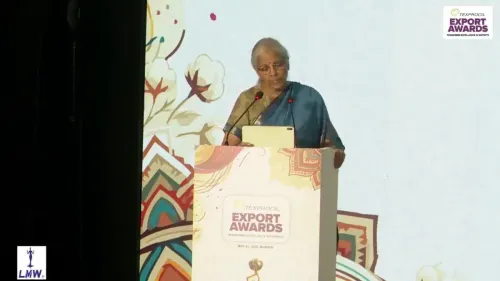
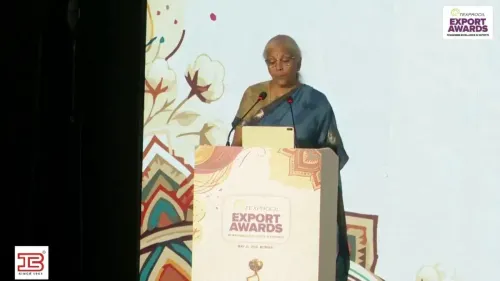
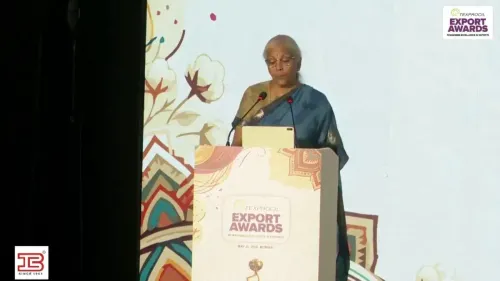
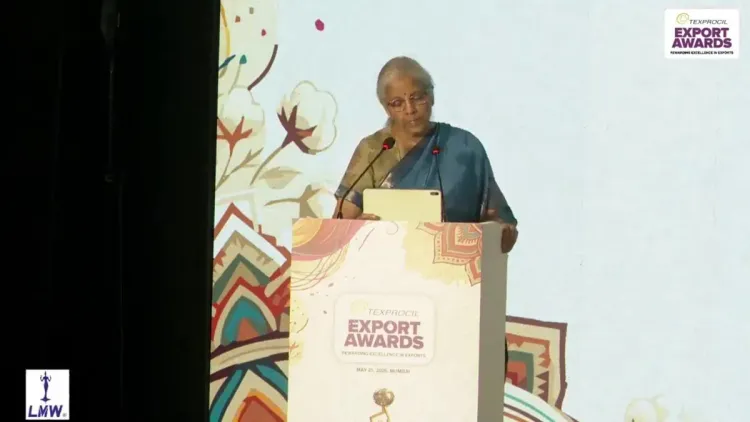
Union Finance Minister Nirmala Sitharaman on Monday, 25 May 2026, speaking in Mumbai, declared that India stands at a defining moment in the global textile order, citing supply-chain diversification, free trade agreements, and rising consumer demand for authentic and sustainable products as converging tailwinds for the country.
Context
Sitharaman invoked Prime Minister Narendra Modi's oft-repeated framing — that crises are also opportunities — to argue that global disruptions in textile supply chains present a strategic opening for India. Her remarks, part of a thread posted from her official handle, were delivered in Mumbai, India's commercial capital and a hub for the country's textile and apparel trade.
The post reads: 'But crises, as Hon'ble Prime Minister Shri Modi often reminds us, are also opportunities. India's moment in the global textile order is now.' It is the fourth in a series of posts from the same address, suggesting a structured policy communication on the sector.
Policy Backdrop
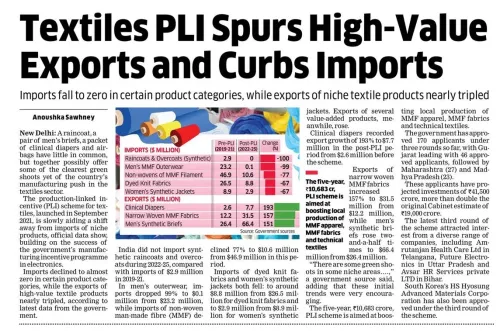
The remarks arrive against a backdrop of sustained government effort to position India as an alternative sourcing destination in global textiles. The Production Linked Incentive (PLI) Scheme for Textiles, notified in 2021, was designed to scale up manufacturing of man-made fibres and apparel for export markets, attracting fresh capital into a sector historically dominated by small and medium enterprises.
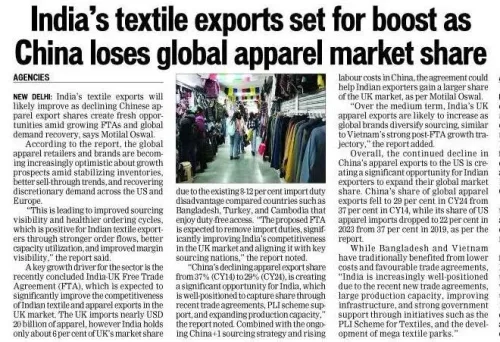
India has also leveraged bilateral trade architecture to open new doors for its textile exporters. The India-UAE Comprehensive Economic Partnership Agreement (CEPA), signed in February 2022, and the India-Australia Economic Cooperation and Trade Agreement (ECTA), which entered into force in December 2022, both provide preferential tariff treatment for garments and fabrics. Ongoing negotiations with the European Union and the United Kingdom could extend this advantage further.
Sitharaman specifically cited three global trends she said favour India: the world 'diversifying away from single-source dependencies' — a clear reference to the reduced reliance on China as the dominant textile supplier — expanding free trade access, and a global consumer shift toward 'authenticity, sustainability, and craft.' India's handloom traditions and geographically-tagged craft clusters are increasingly aligned with these buyer preferences in North America and Europe.
Stakeholders and Impact
The sectors most directly addressed by the Finance Minister's framing include textile exporters, garment-sector MSMEs, and handloom weavers — together representing millions of workers, with the handloom sector alone employing an estimated 35 lakh weavers across India. A successful capture of diversifying global orders could translate into significant employment and foreign-exchange gains.
For large integrated mills as well as small artisan clusters, the convergence of FTA-driven market access and shifting buyer preferences represents a structural, not merely cyclical, opportunity. Government schemes around sustainability certification and Geographical Indication tagging for Indian crafts further reinforce this positioning.
What's Next
The trajectory of India's textile ambitions will be tested on several fronts in the near term. The outcome of FTA negotiations with the EU and the UK will determine the scale of tariff advantage Indian exporters can access in two of the world's largest apparel markets. Monthly textile export data from the Commerce Ministry will serve as the near-term scorecard. Any revision to duty-drawback or the Remission of Duties and Taxes on Exported Products (RoDTEP) framework in the next Union Budget will also signal the government's fiscal commitment to the sector's growth ambitions.
Point of View
Lending political weight to what has been a technocratic export-promotion agenda. By anchoring the message in Prime Minister Modi's 'crisis as opportunity' rhetoric, she signals that textiles are being elevated from a sectoral concern to a flagship economic-nationalism narrative. The timing, in Mumbai before a likely industry audience, suggests the government is actively courting investment and confidence from the private sector. Whether the ambition translates into export-share gains will depend on the speed of FTA closures with the EU and UK, which remain the missing pieces in India's preferential-access architecture.
NationPress
21 Oct 2026
Frequently Asked Questions
What did Nirmala Sitharaman say about India's textile sector in Mumbai?
She said India's moment in the global textile order has arrived, citing supply-chain diversification away from single-source suppliers, free trade agreements, and rising global demand for sustainable and authentic products as trends that favour India.
Why is India seen as an alternative to China in global textiles?
Global buyers have been reducing dependence on China as a single dominant supplier since around 2020. India's large manufacturing base, craft traditions, and improving trade-agreement coverage make it a credible alternative sourcing destination.
What is the PLI Scheme for Textiles?
The Production Linked Incentive Scheme for Textiles was notified by the central government in 2021 to attract investment and scale up exports of man-made fibre apparel and technical textiles by offering financial incentives linked to incremental production.
Which free trade agreements help Indian textile exporters?
The India-UAE CEPA signed in February 2022 and the India-Australia ECTA, which entered into force in December 2022, both provide preferential tariff treatment for Indian garments and fabrics. Negotiations with the EU and UK could further expand this access.
Who benefits if India captures more global textile orders?
The primary beneficiaries would be textile exporters, garment-sector MSMEs, and handloom weavers — a combined workforce of millions — along with the broader economy through increased foreign-exchange earnings.