Sitharaman: Heritage crafts key to India's global growth
Synopsis
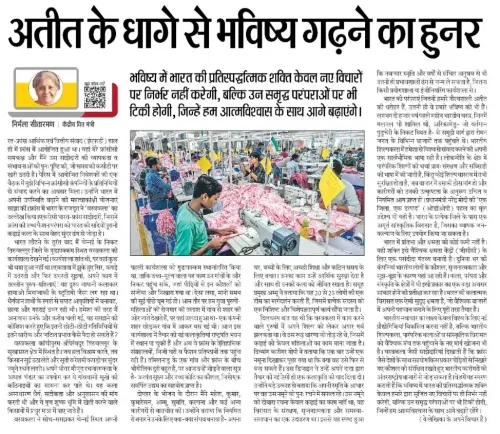
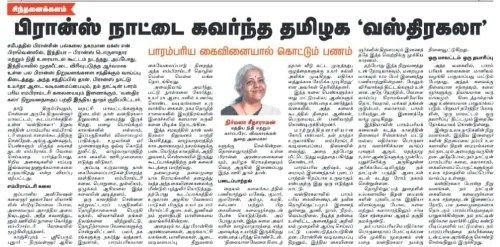
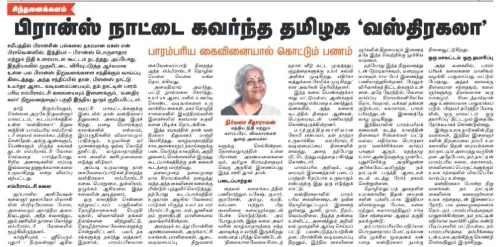
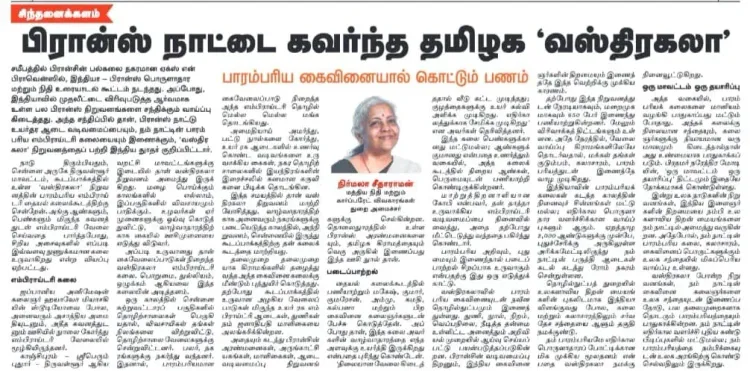
Union Finance Minister Nirmala Sitharaman, in a Dinamalar article dated 19 July 2026, argued India's economic future rests equally on exporting its traditional arts and handicrafts as on technology, citing Vastrakala's work linking Tamil Nadu artisans to global markets including France.
Key Takeaways
Union Finance Minister Nirmala Sitharaman authored an article in Tamil daily Dinamalar on 19 July 2026 on India's craft and cultural economy.
She argued India's future growth lies in both new innovation and confidently taking traditional heritage to the world stage.
Vastrakala was cited as a model organisation linking Indian artisans, particularly from Tamil Nadu , to global markets including France .
She drew a parallel between global corporations setting up Global Capability Centres in India and the global appetite for Indian traditional arts and handicrafts.
India's legal framework for protecting traditional crafts includes the Geographical Indications of Goods Act, 1999 , which underpins artisan export credibility.
Upcoming Union Budget decisions and India-France bilateral engagements will be key indicators of whether this policy framing translates into concrete support for artisan communities.
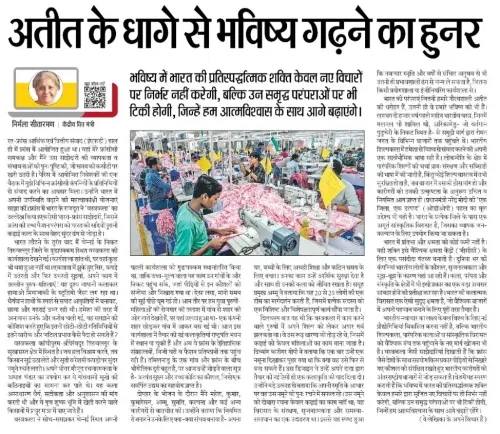
Union Finance Minister Nirmala Sitharaman, writing in the Tamil-language daily Dinamalar on Sunday, 19 July 2026, argued that India's future growth lies not only in technological innovation but equally in taking its traditional arts, culture, and handicrafts confidently to the world stage.
Context
In the article, Sitharaman observed that global corporations are already setting up Global Capability Centres (GCCs) in India, trusting the talent of Indian youth. She drew a parallel with the country's heritage economy, writing — 'நம் நாட்டின் பாரம்பரிய கலை, கலாசாரம், கைவினைப் பொருட்களுக்கும் உலக சந்தையில் மிகப்பெரிய வாய்ப்பு உள்ளது' ('Our country's traditional art, culture, and handicrafts also have enormous opportunity in the global market'). She specifically cited Vastrakala as a model organisation linking Indian craft artisans to international buyers while safeguarding multi-generational heritage.
The article, published in Dinamalar, one of Tamil Nadu's widely read Tamil-language dailies, reflects Sitharaman's continued engagement with Tamil-speaking audiences on economic and cultural themes. The Finance Minister has previously written and spoken in Tamil on policy matters.
Policy Backdrop
India's legal framework for protecting traditional crafts dates to the Geographical Indications of Goods (Registration and Protection) Act, 1999, which grants GI tags to regional handicraft and handloom products, offering artisans legal safeguards and export credibility. Tamil Nadu is home to several GI-tagged textiles and crafts, including Kanchipuram silk and Thanjavur paintings, which have found international audiences.
Sitharaman's framing aligns with a broader policy approach — pursued across successive governments — of treating heritage crafts as an economic asset alongside manufacturing and technology. Textile ministry cluster schemes and participation in international cultural-trade exhibitions have been consistent instruments of this strategy. The Finance Minister, who controls Union Budget allocations, is well placed to shape the fiscal architecture that supports artisan communities.
Vastrakala and the France Connection
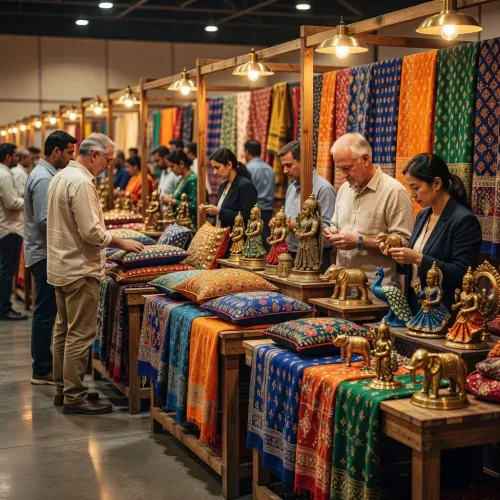
Vastrakala is an organisation focused on connecting Indian handicraft artisans — particularly those working in traditional textiles — with global markets. Research indicates that Tamil Nadu's traditional crafts showcased by Vastrakala have drawn interest from the French market, underlining the commercial viability of India's soft-power assets. Sitharaman's article highlights this as evidence that heritage and commerce are not competing priorities but complementary ones.
The minister's closing argument in the piece was pointed: 'நம் நாட்டின் எதிர்கால வளர்ச்சி புதிய கண்டுபிடிப்புகளில் மட்டுமல்ல; நம் பாரம்பரியத்தை நம்பிக்கையுடன் உலக அரங்கிற்கு கொண்டு செல்வதிலும் இருக்கிறது' — 'Our country's future growth lies not only in new discoveries; it also lies in confidently taking our heritage to the world stage.'
Stakeholders and Impact
The primary beneficiaries of the policy direction Sitharaman advocates are handicraft artisans and traditional textiles exporters, communities that have historically been underserved by mainstream industrial policy. Organisations like Vastrakala serve as market intermediaries, reducing the gap between village-level craft producers and international retail buyers.
For artisans in Tamil Nadu and beyond, increased global market access translates to more stable livelihoods and an incentive for younger generations to continue traditional crafts rather than abandon them for urban wage employment. Sitharaman's public endorsement in a widely read regional newspaper lends political weight to this ecosystem.
What's Next
Observers will watch whether Sitharaman's articulation of heritage crafts as a growth pillar finds expression in the next Union Budget through enhanced allocations for artisan cluster development, export promotion, or GI-tag infrastructure. Upcoming India-France bilateral engagements — given the France reference in the Vastrakala context — could also become a platform for formalising cultural-goods trade linkages. The article signals that the Finance Ministry views the creative and craft economy not as a welfare obligation but as a legitimate export and growth lever.
Point of View
She signals an intent to build political and policy consensus in a state where the BJP has historically struggled for traction. The Vastrakala-France example serves as a concrete proof point in what is otherwise a long-standing but under-resourced policy aspiration. If this framing is backed by Budget allocations or trade-agreement provisions, it could mark a meaningful shift in how India monetises its soft-power assets.
NationPress
18 Oct 2026
Frequently Asked Questions
What did Nirmala Sitharaman write in Dinamalar on 19 July 2026?
Sitharaman wrote an article in the Tamil daily Dinamalar arguing that India's future growth depends not only on technological innovation but also on confidently presenting its traditional arts, culture, and handicrafts to global markets, citing Vastrakala as a model organisation.
What is Vastrakala and what does it do?
Vastrakala is an organisation that connects Indian handicraft artisans, particularly those working in traditional textiles, with international buyers, while also working to preserve multi-generational craft traditions.
Which country has shown interest in Tamil Nadu's traditional crafts through Vastrakala?
France has been identified as a market that has shown interest in Tamil Nadu's traditional crafts showcased by Vastrakala, according to available research.
What is the GI tag and how does it protect Indian handicrafts?
The Geographical Indications of Goods (Registration and Protection) Act, 1999 grants GI tags to regional handicraft and handloom products, giving artisans legal protection and enhancing the credibility of their goods in export markets.
Why is a Finance Minister writing about traditional crafts and artisans?
As Finance Minister, Sitharaman controls Union Budget allocations for sectors including textiles and export promotion. Her public endorsement of heritage crafts as a growth pillar signals that artisan-linked industries may receive greater fiscal attention in upcoming policy and budget decisions.