CM Bhajanlal Sharma attends Hanuman Katha in Jaipur
Synopsis
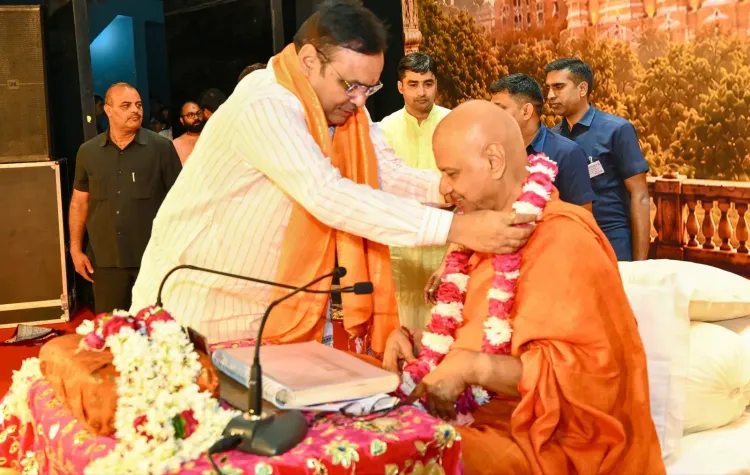
Chief Minister Bhajanlal Sharma attended a Hanuman Katha in Jaipur on 19 July 2026, declaring that PM Modi's leadership is giving India's Sanatan heritage global recognition and that the Rajasthan government is actively developing the state's major religious sites.
Key Takeaways
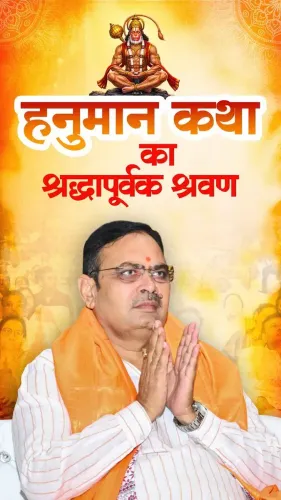
CM Bhajanlal Sharma devotedly attended a Hanuman Katha organised in Jaipur on 19 July 2026 .
He credited PM Narendra Modi's leadership for elevating India's cultural and Sanatan heritage on the global stage.
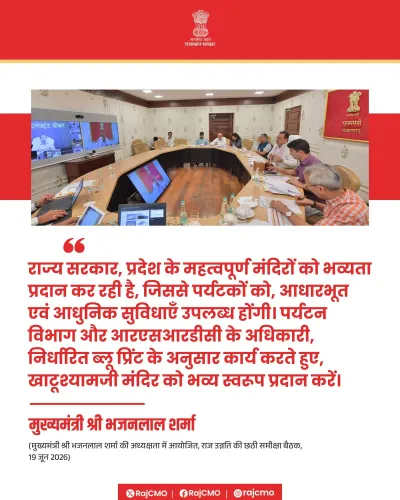
The Chief Minister reaffirmed the Rajasthan government's ongoing commitment to developing major religious sites across the state.
Rajasthan hosts key pilgrimage destinations including Pushkar and Nathdwara , which have received sustained state attention for conservation and infrastructure.
The central government's PRASAD scheme (launched 2014-15 ) has provided complementary infrastructure funding to pilgrimage centres in Rajasthan.
The post was tagged #आपणो_अग्रणी_राजस्थान , part of the state government's broader 'Leading Rajasthan' branding initiative.
The Chief Minister's Office of Rajasthan announced on Sunday, 19 July 2026, that Chief Minister Bhajanlal Sharma attended and devotedly listened to a Hanuman Katha organised in Jaipur, reaffirming the state government's commitment to preserving Rajasthan's religious and cultural heritage.
Context
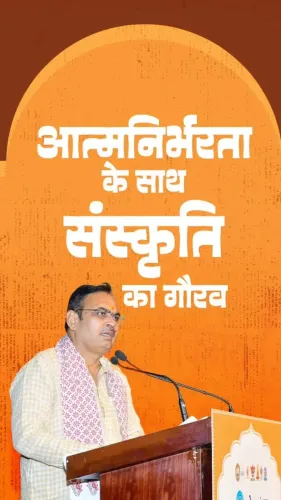
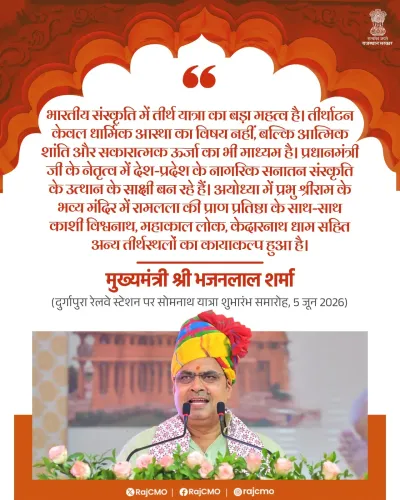
At the event, CM Bhajanlal Sharma stated that under the leadership of Prime Minister Narendra Modi, India is earning renewed global recognition for its cultural heritage and Sanatan traditions — 'भारत अपनी सांस्कृतिक विरासत और सनातन परंपरा के गौरव को वैश्विक स्तर पर नई पहचान दिला रहा है' ('India is giving new global identity to the pride of its cultural heritage and Sanatan tradition'). The Chief Minister's participation in the Katha underscored the alignment between personal religious observance and official state messaging on cultural identity.
Policy Backdrop
The Rajasthan government has consistently positioned religious site development and cultural conservation as policy priorities since CM Sharma took office in December 2023. The state is home to major pilgrimage destinations such as Pushkar and Nathdwara, both of which have received sustained state attention for conservation, access infrastructure, and visitor amenities. At the central level, the PRASAD scheme, launched in 2014-15, has channelled infrastructure funding to pilgrimage centres across the country, including several sites in Rajasthan, creating a complementary policy framework between the state and Union governments.
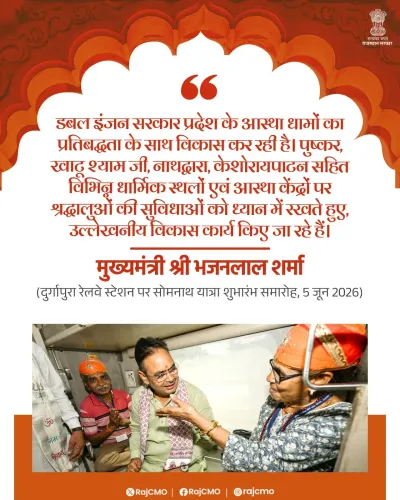
CM Sharma reiterated that the state government is continuously working for the development of major religious sites across Rajasthan and for the preservation of its cultural heritage — 'राज्य सरकार भी, प्रदेश के प्रमुख धार्मिक स्थलों के विकास एवं सांस्कृतिक विरासत के संरक्षण के लिए निरंतर कार्य कर रही है'.
Stakeholders and Impact
The state's emphasis on religious tourism and heritage conservation directly affects pilgrims visiting Rajasthan's temple circuits and the broader heritage tourism sector, which contributes significantly to the state's economy. Improved infrastructure at religious sites enhances accessibility for devotees while also attracting domestic and international cultural tourists. Faith-based tourism has emerged as a measurable economic driver in states that have invested in pilgrimage infrastructure over the past decade.
What's Next
Observers and stakeholders in Rajasthan's religious tourism sector will watch for concrete budget allocations and project tenders for specific religious sites in the coming fiscal cycle. The hashtag #आपणो_अग्रणी_राजस्थान ('Our Leading Rajasthan') used in the post reflects the government's broader branding push, suggesting that cultural heritage development will remain a visible plank of the administration's public communication. How these stated commitments translate into on-ground project announcements will be the key measure of follow-through.
Frequently Asked Questions
Why did CM Bhajanlal Sharma attend the Hanuman Katha in Jaipur?
CM Bhajanlal Sharma attended the Hanuman Katha in Jaipur on 19 July 2026 as part of his personal religious observance and to publicly reaffirm the Rajasthan government's commitment to cultural heritage and Sanatan traditions.
What did Bhajanlal Sharma say about PM Modi and cultural heritage?
CM Sharma stated that under PM Narendra Modi's leadership, India is earning new global recognition for its cultural heritage and Sanatan traditions, aligning state policy messaging with the Centre's cultural projection agenda.
What is the Rajasthan government doing for religious site development?
The Rajasthan government has stated it is continuously working on developing major religious sites across the state and preserving cultural heritage, with sites like Pushkar and Nathdwara receiving ongoing attention for infrastructure and conservation.
What is the PRASAD scheme and does it apply to Rajasthan?
The PRASAD scheme, launched by the central government in 2014-15, funds infrastructure upgrades at pilgrimage centres nationwide, and several religious sites in Rajasthan have benefited from this programme.
What does #आपणो_अग्रणी_राजस्थान mean?
The hashtag translates to 'Our Leading Rajasthan' and is part of the Rajasthan state government's branding campaign to project the state's development and cultural progress under the current administration.