CM Bhajanlal Highlights Pilgrimage's Place in Indian Culture
Synopsis
Rajasthan Chief Minister Bhajanlal Sharma has highlighted the central role of pilgrimage in Indian culture, signalling continued state focus on religious tourism. Rajasthan hosts major pilgrimage centres including Pushkar, Ajmer Sharif, and Nathdwara, and the message aligns with both the state's 2020 tourism policy and central schemes such as PRASAD and Swadesh Darshan.
Key Takeaways
The Chief Minister's Office of Rajasthan posted on 6 June 2026 affirming that pilgrimage holds great importance in Indian culture.
Chief Minister Bhajanlal Sharma has been in office since December 2023 following the BJP's victory in Rajasthan assembly elections.
Rajasthan is home to major pilgrimage sites including Pushkar , Ajmer Sharif Dargah , and Nathdwara , serving Hindu, Jain, and Sufi communities.
The Union government's PRASAD scheme , launched in 2014-15 , funds infrastructure development at identified pilgrimage sites across India.
Rajasthan's state tourism policy of 2020 prioritised religious and heritage circuits as key growth segments.
The post was shared under the campaign hashtag #आपणो_अग्रणी_राजस्थान ('Our Leading Rajasthan').
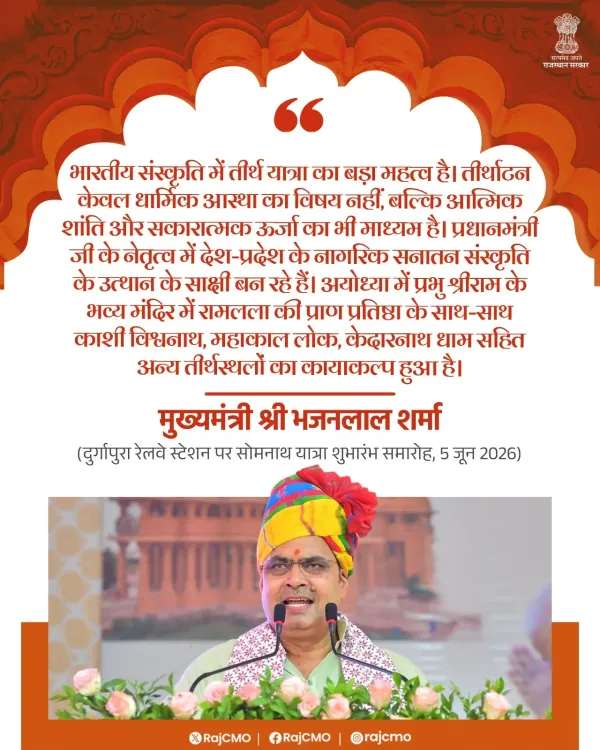
The Chief Minister's Office of Rajasthan posted on Saturday, 6 June 2026, invoking the deep cultural significance of pilgrimage in Indian tradition, with Chief Minister Bhajanlal Sharma underlining that tirtha yatra (pilgrimage) holds a place of great importance in Indian civilisation.
Context
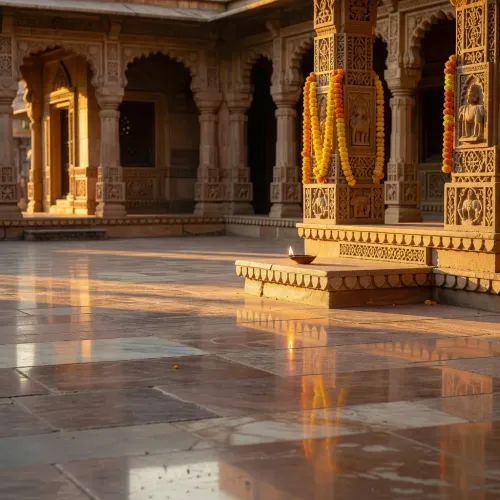
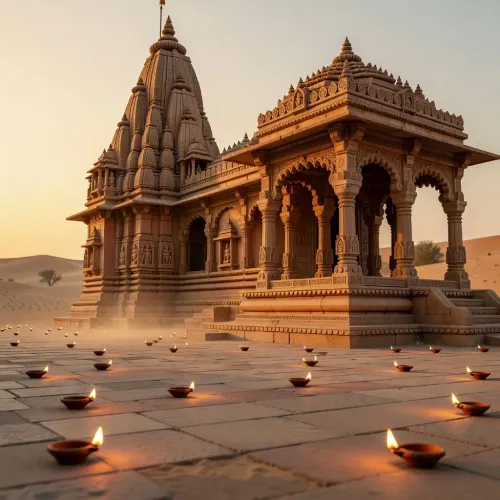
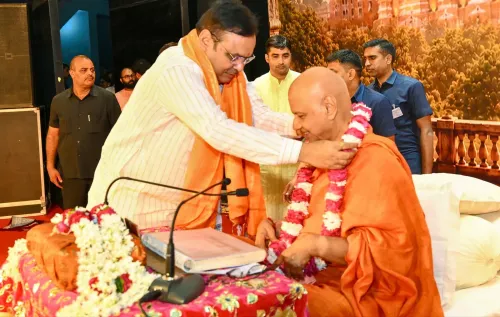
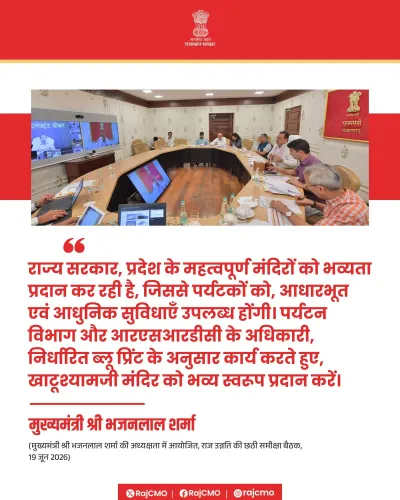
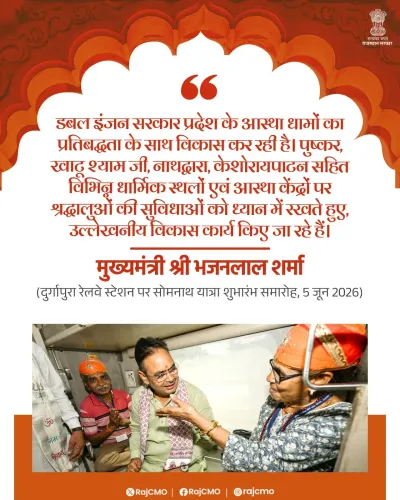
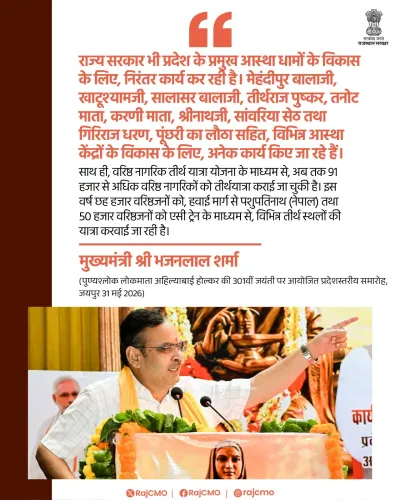
The post, shared under the hashtag #आपणो_अग्रणी_राजस्थान ('Our Leading Rajasthan'), states: 'Pilgrimage holds great importance in Indian culture.' The message is attributed directly to Chief Minister Bhajanlal Sharma and is accompanied by an image, reinforcing the government's cultural messaging. The framing positions tirtha yatra not merely as a religious act but as a cornerstone of Indian heritage and identity.
Rajasthan is home to some of India's most visited pilgrimage destinations, including Pushkar, the Ajmer Sharif Dargah, and Nathdwara, drawing millions of Hindu, Jain, and Sufi visitors annually. The state's geography and history make it a natural focal point for any government emphasis on spiritual tourism.
Policy Backdrop
The Union Ministry of Tourism launched the PRASAD scheme (Pilgrimage Rejuvenation and Spiritual Augmentation Drive) in 2014-15 to develop infrastructure at identified religious sites across India. The initiative has funded amenities, connectivity, and conservation at dozens of shrines nationwide.
Rajasthan's state tourism policy of 2020 explicitly emphasised religious and heritage circuits as priority segments, recognising that pilgrimage-linked footfall is a significant driver of local economies and hospitality revenue. The current government's messaging aligns with that policy lineage while adding a cultural-pride dimension through the 'Our Leading Rajasthan' campaign.
Stakeholders and Impact
The primary stakeholders are the millions of domestic pilgrims who visit Rajasthan's shrines each year, along with the hospitality, transport, and local trade sectors that depend on religious tourism. State-level advocacy for tirtha yatra can translate into budget allocations for road access, sanitation, and visitor facilities at pilgrimage sites.
Cultural organisations and religious trusts managing temples and dargahs also stand to benefit from increased government attention to pilgrimage infrastructure. The message resonates across religious communities given that Rajasthan hosts both Hindu and Sufi pilgrimage centres of national importance.
What's Next
Observers will watch for concrete follow-through in the form of new state projects targeting pilgrimage-site amenities, budget line items in the next Rajasthan state budget, or alignment with central government schemes such as Swadesh Darshan and PRASAD. Publication of updated Rajasthan tourism statistics for the current fiscal year will indicate whether pilgrimage circuits are delivering the visitor numbers the government's messaging anticipates.
As Indian states compete to position themselves as spiritual tourism destinations, Rajasthan's combination of diverse pilgrimage sites and active government branding could strengthen its case for central funding and private investment in the sector.
Point of View
The CMO widens its appeal across communities in a state with significant Muslim pilgrimage footfall at Ajmer Sharif. The 'Our Leading Rajasthan' hashtag signals an ongoing effort to build a governance brand ahead of future electoral cycles, with cultural identity as a key plank. The post's brevity leaves room for substantive policy announcements to follow, and observers will judge the messaging by whether infrastructure spending at pilgrimage sites actually increases.
NationPress
22 Oct 2026
Frequently Asked Questions
What did Rajasthan CM Bhajanlal Sharma say about pilgrimage?
Chief Minister Bhajanlal Sharma stated that pilgrimage — tirtha yatra — holds great importance in Indian culture, sharing the message through the official Rajasthan CMO account on 6 June 2026.
Which pilgrimage sites are located in Rajasthan?
Rajasthan is home to several major pilgrimage destinations, including Pushkar (one of the few Brahma temples in India), the Ajmer Sharif Dargah (a prominent Sufi shrine), and Nathdwara (a key Vaishnava temple), among many others.
What is the PRASAD scheme and how does it relate to Rajasthan?
The PRASAD scheme (Pilgrimage Rejuvenation and Spiritual Augmentation Drive) was launched by the Union Ministry of Tourism in 2014-15 to develop infrastructure at identified religious sites; Rajasthan's pilgrimage centres are among the beneficiaries of this central initiative.
What is Rajasthan's tourism policy on religious circuits?
Rajasthan's state tourism policy of 2020 explicitly prioritised religious and heritage circuits, recognising pilgrimage-linked visitor footfall as a major driver of the state's hospitality and local trade sectors.
Who is Bhajanlal Sharma and when did he become Chief Minister of Rajasthan?
Bhajanlal Sharma is a BJP leader who was sworn in as Chief Minister of Rajasthan in December 2023 after the party won the state assembly elections.