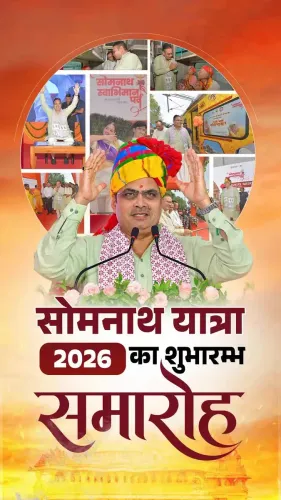
CM Bhajan Lal flags off elders for Somnath Dham pilgrimage
Synopsis
Rajasthan Chief Minister Bhajan Lal Sharma flagged off elderly devotees for a pilgrimage to Somnath Dham on 5 June 2026, calling service and respect for elders the foundation of Indian culture. The move fits a wider BJP-state pattern of government-sponsored Teerth Yatra schemes for senior citizens.
Key Takeaways
CM Bhajan Lal Sharma flagged off senior citizens for a pilgrimage to Somnath Dham, Gujarat on 5 June 2026 .
The initiative is framed around the cultural value of seva (service) and respect for elders.
Somnath Temple is one of the twelve Jyotirlingas and a premier Hindu pilgrimage destination.
Government-sponsored senior pilgrimage schemes have been a feature of BJP-ruled states since the mid-2010s.
The programme targets elderly citizens who may lack independent means to undertake long-distance religious travel.
Future expansion of the scheme — covering beneficiary numbers and additional destinations — remains to be formally announced.
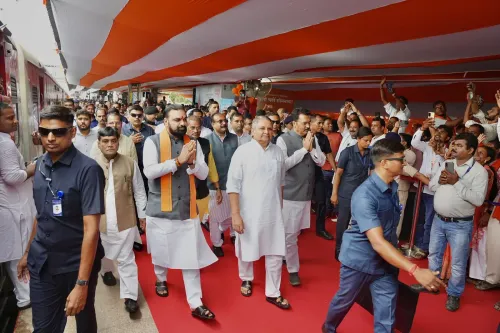
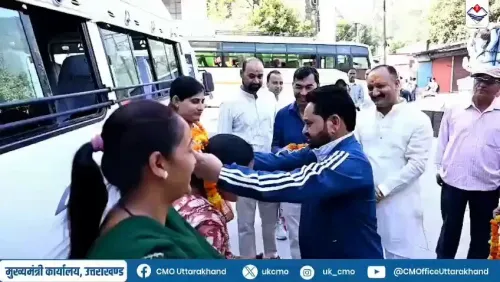
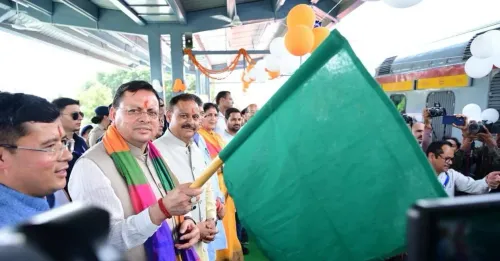
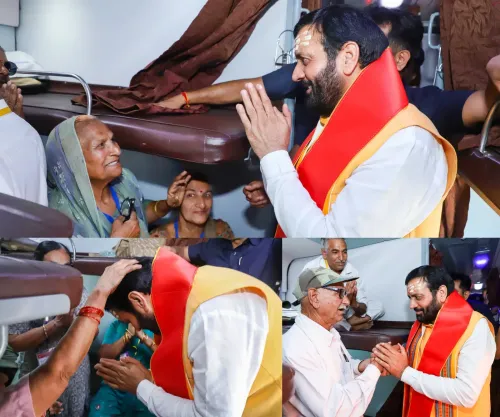
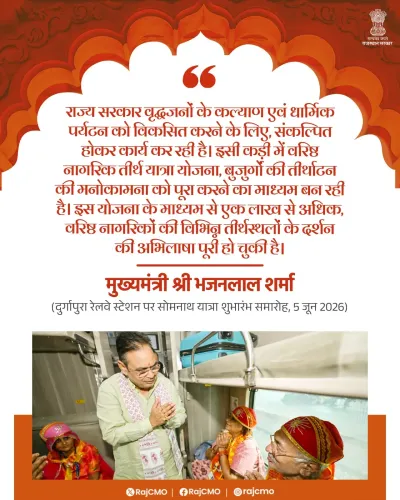
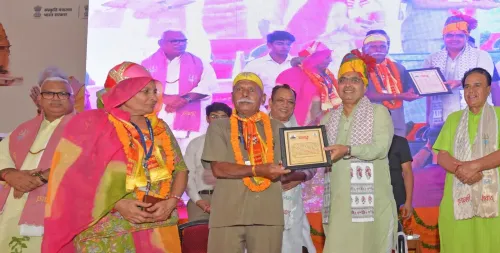
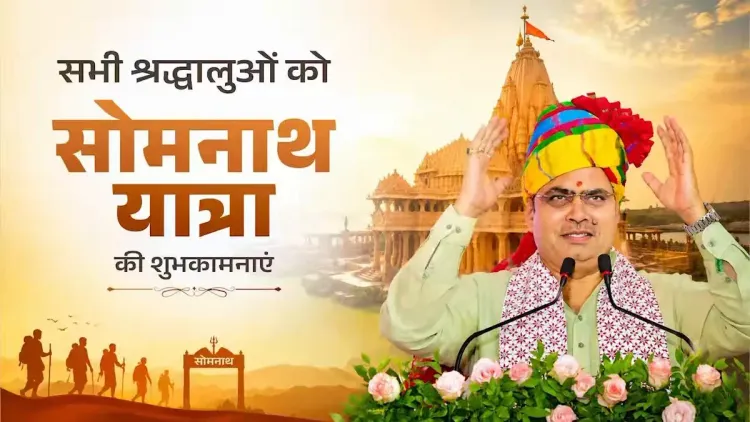
Rajasthan Chief Minister Bhajan Lal Sharma on Friday, 5 June 2026 flagged off a group of senior devotees for a pilgrimage to Somnath Dham in Gujarat, framing the initiative as an expression of the state government's commitment to honouring the elderly through faith-based welfare.
Context
Posting on X, CM Sharma wrote: 'बुजुर्गों की सेवा और सम्मान हमारी संस्कृति का मूल आधार है' ['Service and respect for elders is the fundamental basis of our culture']. He added that the yatra would connect the senior pilgrims with faith, spiritual peace, and merit, infusing 'new energy and positivity' into their lives.
The post was accompanied by a video, suggesting the flag-off was a formal public event. Somnath Temple, located in Gujarat's Gir Somnath district, is one of the twelve Jyotirlingas and among the most revered Hindu pilgrimage sites in the country.
Policy Backdrop
Government-sponsored senior-citizen pilgrimage schemes have been a recurring feature of welfare policy across Indian states since the mid-2010s. BJP-ruled states in particular have periodically organised such programmes, linking elder care with visits to prominent Hindu shrines including Vaishno Devi and Haridwar.
The Rajasthan government, since CM Sharma assumed office in December 2023, has positioned cultural and religious welfare as part of its broader social-delivery agenda. Teerth Yatra-type schemes are typically presented as low-cost, high-visibility interventions that address both the mobility constraints of elderly citizens and their aspirations for religious fulfilment.
Stakeholders and Impact
The primary beneficiaries are senior citizens from Rajasthan who may lack the financial means or physical support to undertake long-distance pilgrimages independently. State-organised travel typically covers logistics including transport, accommodation, and basic medical support for elderly participants.
For the Somnath Temple administration and the broader religious-tourism ecosystem in Gujarat, such state-sponsored groups represent a steady stream of devotees, particularly during non-peak seasons. The initiative also reinforces inter-state cooperation between Rajasthan and Gujarat, both governed by the BJP.
What's Next
Observers will watch for formal announcements on the scale of the programme — including total beneficiary numbers, frequency of future batches, and whether the scheme is being expanded to cover additional pilgrimage destinations beyond Somnath. Any structured policy framework or budget allocation tied to this initiative would signal a more institutionalised commitment to senior-citizen religious welfare in Rajasthan.
As India's elderly population grows, state governments face increasing pressure to design welfare programmes that go beyond pensions and healthcare. Pilgrimage schemes that combine cultural dignity with logistical support are likely to remain a visible part of that policy toolkit.
Point of View
Which explains their durability across multiple state governments. The broader pattern suggests these yatras are evolving from one-off gestures into structured policy instruments as demographic pressure from an ageing population intensifies.
NationPress
21 Oct 2026
Frequently Asked Questions
What is the Somnath Dham pilgrimage scheme launched by Rajasthan CM Bhajan Lal Sharma?
Rajasthan Chief Minister Bhajan Lal Sharma flagged off a group of senior citizens for a state-facilitated pilgrimage to Somnath Temple in Gujarat on 5 June 2026, framing it as a welfare initiative rooted in cultural respect for elders.
Where is Somnath Dham located?
Somnath Temple is located in the Gir Somnath district of Gujarat and is one of the twelve Jyotirlingas, making it one of the most sacred Hindu pilgrimage sites in India.
Does the Rajasthan government sponsor pilgrimages for senior citizens?
The Rajasthan government under CM Bhajan Lal Sharma has organised state-sponsored pilgrimages for elderly devotees; such Teerth Yatra-type schemes have been common across BJP-ruled states since the mid-2010s.
Who is Bhajan Lal Sharma?
Bhajan Lal Sharma is the Chief Minister of Rajasthan and a BJP leader who assumed office in December 2023.
Why do BJP-ruled states organise senior citizen pilgrimage schemes?
These schemes serve a dual purpose: they address the mobility and financial constraints of elderly citizens who wish to undertake religious travel, and they reinforce the governing party's cultural and social-welfare credentials.