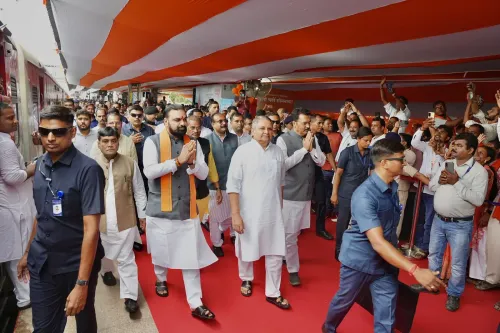
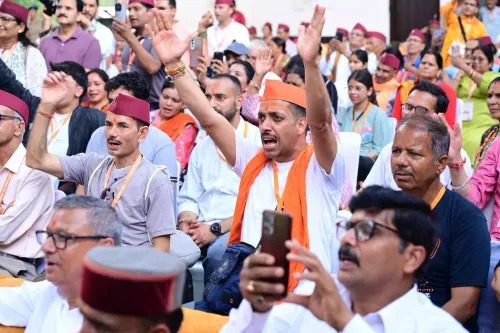
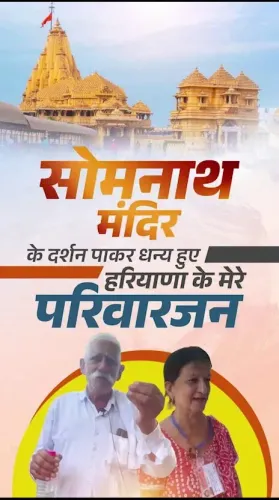
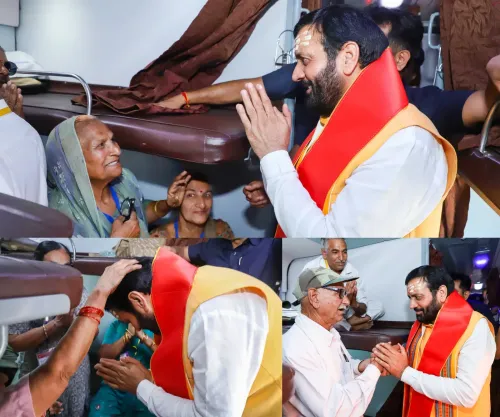
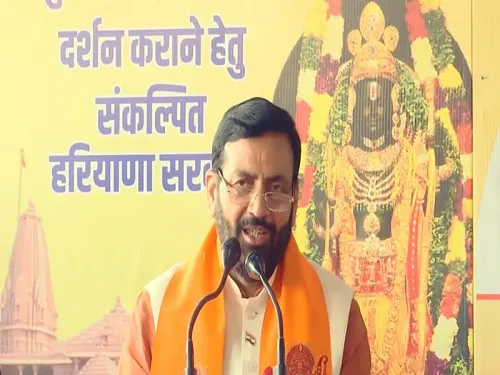
CM Saini Flags Off Special Train from Kurukshetra to Somnath
Synopsis
Haryana Chief Minister Nayab Singh Saini on June 8, 2026 flagged off a special train from Kurukshetra to the Somnath Jyotirlinga in Gujarat, boosting pilgrimage rail connectivity between northern and western India under the broader Bharat Gaurav tourism rail framework.
Key Takeaways
Haryana CM Nayab Singh Saini flagged off a special train from Kurukshetra to Somnath Jyotirlinga on June 8, 2026 .
Somnath in Gujarat is the first of the twelve sacred Jyotirlingas and a major Hindu pilgrimage destination.
The service creates a dedicated rail link between Haryana and Gujarat for religious travellers, reducing multi-leg journey burdens.
The move aligns with Indian Railways' Bharat Gaurav tourist train scheme launched in 2021 to promote pilgrimage and heritage tourism.
Pilgrims, local tourism operators, and hospitality businesses at both Kurukshetra and Somnath are the primary beneficiaries.
Future watch: whether the special service is converted into a permanent scheduled train and if additional Jyotirlinga routes follow.
Haryana Chief Minister Nayab Singh Saini on Monday, June 8, 2026, flagged off a special train from Kurukshetra to the Somnath Jyotirlinga in Gujarat, marking a new dedicated rail link between one of Haryana's most sacred cities and one of Hinduism's holiest shrines.
Context
Kurukshetra, the historic pilgrimage city in Haryana immortalised by the Mahabharata, has long been a hub for religious tourism in northern India. The city draws lakhs of pilgrims annually, particularly during solar eclipses and other auspicious occasions. The launch of a direct special train to Somnath strengthens its connection to the broader national pilgrimage circuit.
Somnath, located on the western coast of Gujarat, is the first of the twelve sacred Jyotirlingas (divine abodes of Lord Shiva) and one of the most visited religious sites in India. Pilgrims from across the country travel to the shrine, and improving rail connectivity to it has been a longstanding demand from northern states.
Policy Backdrop
Indian Railways launched the Bharat Gaurav tourist train scheme in 2021 to promote religious and heritage tourism through dedicated rail circuits. The scheme allows state governments and private operators to run themed trains connecting pilgrimage and heritage destinations, reducing dependence on irregular or overbooked general services.
Central and state governments have steadily expanded dedicated rail services to Jyotirlinga sites and other religious destinations since the mid-2010s, positioning pilgrimage infrastructure as an integral part of both railway modernisation and tourism policy. The Kurukshetra–Somnath link fits squarely within this pattern, bridging northern and western India for religious travellers.
Stakeholders and Impact
The primary beneficiaries are pilgrims from Haryana and neighbouring states who previously had no direct rail option to Somnath and relied on multi-leg journeys. A dedicated service reduces travel time, cost, and the logistical burden on elderly and economically weaker pilgrims who form a significant share of Jyotirlinga visitors.
The tourism and hospitality sectors in both Kurukshetra and Somnath stand to gain from increased footfall. Rail-linked pilgrimage routes have historically generated measurable upticks in local accommodation, food, and transport revenues at both origin and destination points.
What's Next
Attention will now turn to whether the special service becomes a permanent scheduled train or remains a seasonal offering. Authorities may also assess demand for extending the route or adding stoppages at other significant pilgrimage towns en route to Gujarat.
The rollout could also encourage similar state-sponsored rail initiatives connecting Haryana's religious sites — including Pehowa and Thanesar — with other Jyotirlinga shrines across the country, as state governments increasingly compete to position themselves as facilitators of affordable pilgrimage travel.
Point of View
Where facilitating access to sacred sites doubles as a welfare measure for lower-income pilgrims and a visible cultural statement. For Saini, the optics are particularly well-calibrated — Kurukshetra's Mahabharata heritage and Somnath's status as the premier Jyotirlinga create a symbolically potent pairing that resonates deeply with the party's core voter base. The real test will be ridership numbers and whether the service survives beyond its inaugural run to become a sustained infrastructure asset.
NationPress
23 Oct 2026
Frequently Asked Questions
What is the special train flagged off by Haryana CM Nayab Saini?
It is a special train service launched on June 8, 2026, connecting Kurukshetra in Haryana to the Somnath Jyotirlinga in Gujarat, flagged off by Chief Minister Nayab Singh Saini to improve pilgrimage rail connectivity.
What is the Somnath Jyotirlinga?
Somnath is the first of the twelve sacred Jyotirlingas — divine abodes of Lord Shiva — located on the western coast of Gujarat. It is one of the most visited Hindu pilgrimage sites in India.
What is the Bharat Gaurav train scheme?
The Bharat Gaurav tourist train scheme was launched by Indian Railways in 2021 to promote religious and heritage tourism through dedicated rail circuits, allowing state governments and operators to run themed trains on pilgrimage routes.
Why is Kurukshetra significant for pilgrims?
Kurukshetra is a historic city in Haryana associated with the events of the Mahabharata. It is a major pilgrimage hub in northern India, drawing lakhs of visitors annually for religious and cultural reasons.
Will the Kurukshetra to Somnath train become a permanent service?
That has not been confirmed. Authorities are expected to assess demand before deciding whether to convert the special train into a permanent scheduled service or extend its route to other pilgrimage towns.