Rajasthan Budget 2026-27 Earmarks Funds for Religious Tourism
Synopsis
The Chief Minister's Office of Rajasthan announced on 31 July 2026 that the state's 2026-27 budget contains significant provisions to boost religious tourism — a sector central to the state's economy and a key priority for CM Bhajan Lal Sharma's BJP government.
Key Takeaways
The Rajasthan 2026-27 state budget includes dedicated provisions to accelerate religious tourism, the CMO announced on 31 July 2026 .
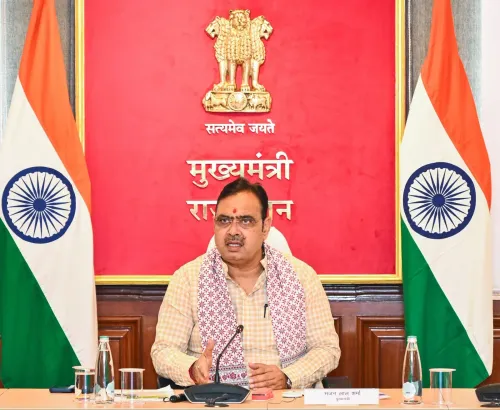
Chief Minister Bhajan Lal Sharma (BJP, in office since December 2023 ) is the driving political figure behind the initiative.
Rajasthan's pilgrimage economy spans Hindu, Jain and Sufi sites, making it one of India's most diverse religious tourism destinations.
The announcement aligns with a broader BJP-state playbook linking shrine infrastructure to local employment and revenue generation.
Scheme-wise allocations and project timelines will only be clear once the full budget documents are formally tabled.
Rajasthan's state budget for 2026-27 has set aside dedicated provisions to accelerate religious tourism across the state, the Chief Minister's Office of Rajasthan announced on Friday, 31 July 2026. The move signals a deliberate push by the Bhajan Lal Sharma government to harness the state's dense pilgrimage geography as an economic engine.
What the budget targets
The CMO's post, tagged to Chief Minister Bhajan Lal Sharma and carrying the campaign hashtag #आपणो_अग्रणी_राजस्थान ('Our Leading Rajasthan'), states that the budget includes 'important provisions to give new momentum to religious tourism.' No scheme-wise figures were disclosed in the post itself — those details are expected once the full budget documents are tabled.
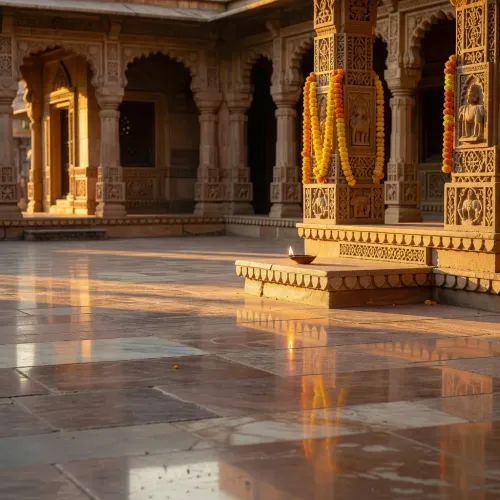
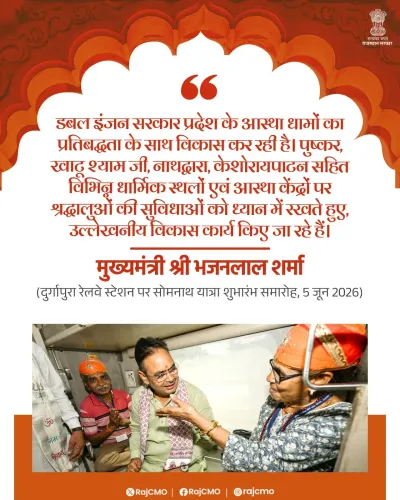
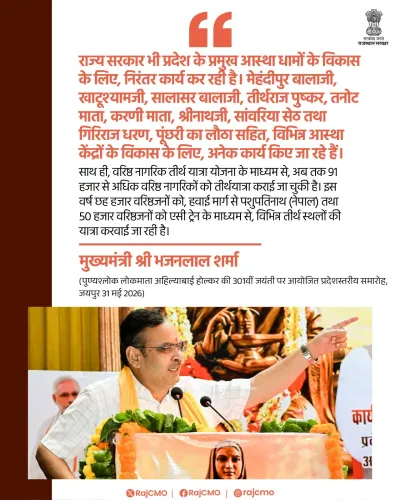
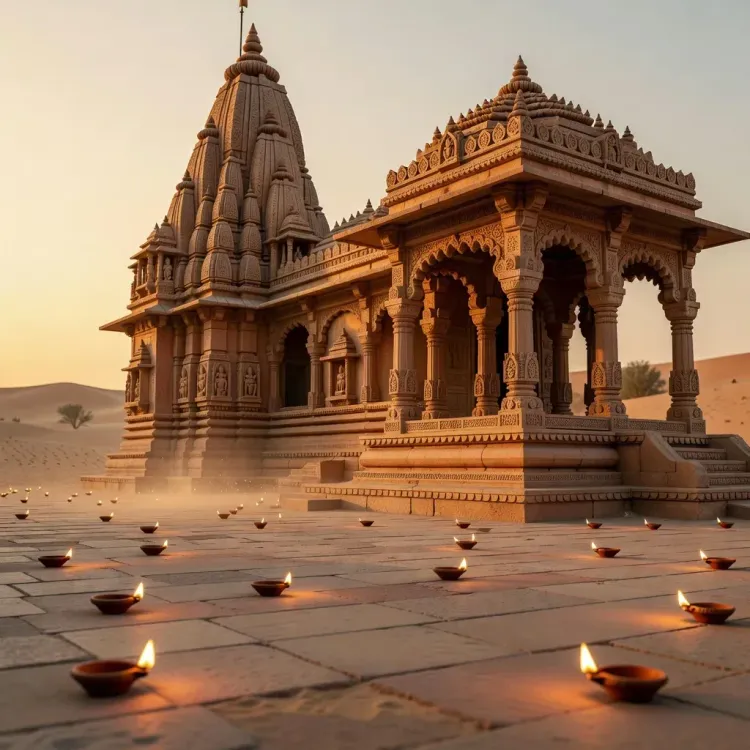
Rajasthan hosts an unusually rich spread of pilgrimage sites: Hindu shrines such as Pushkar, Nathdwara and Khatu Shyam Ji; Jain tirthas including Ranakpur and Dilwara; and Sufi dargahs anchored by Ajmer Sharif. Together they draw millions of visitors annually and feed a wide ecosystem of hospitality, transport and local craft.
BJP's pilgrimage-infrastructure playbook
The allocation fits a pattern visible across BJP-governed states: linking temple and shrine infrastructure with local employment and state revenue. Uttar Pradesh and Madhya Pradesh have pursued similar strategies — corridor development, pilgrim amenity centres, dedicated transport links — with measurable effects on footfall and district-level income. Rajasthan now appears to be deepening that same playbook.
For the Sharma government, which took office in December 2023, this budget provision also carries a political logic: religious tourism is visible, popular and delivers tangible local benefits — new roads, cleaner ghats, better lighting — that reach voters directly. The Devasthan and Tourism departments will be the ones to watch for project-level details and timelines.
The specifics will matter enormously. A headline provision without follow-through funding or execution capacity changes little on the ground. When the full budget documents land, the numbers attached to pilgrimage circuits — and the departments accountable for them — will tell the real story.
Point of View
Local commerce and state revenue. It also reinforces a political calculus: shrine infrastructure is tangible, popular and cuts across caste and class lines. The real test will come when scheme-wise allocations and timelines are published, revealing whether this is structural investment or headline optics. Rajasthan's multi-faith pilgrimage geography — Hindu, Jain and Sufi — gives it an unusually broad base to work from, which is both an opportunity and an administrative challenge.
NationPress
15 Sept 2026
Frequently Asked Questions
What did the Rajasthan 2026-27 budget announce for religious tourism?
The Rajasthan government has included dedicated provisions in the 2026-27 state budget to give 'new momentum' to religious tourism, according to the Chief Minister's Office. Specific scheme-wise allocations are expected once the full budget documents are tabled.
Who is Bhajan Lal Sharma?
Bhajan Lal Sharma is the Chief Minister of Rajasthan from the Bharatiya Janata Party, in office since December 2023.
Which religious sites in Rajasthan could benefit from the budget provisions?
Rajasthan hosts major Hindu shrines like Pushkar, Nathdwara and Khatu Shyam Ji, Jain tirthas such as Ranakpur and Dilwara, and the Ajmer Sharif Sufi dargah — all of which are significant pilgrimage destinations that have historically received state tourism support.
Which Rajasthan department handles religious tourism development?
The Devasthan Department and the Tourism Department of Rajasthan are the primary bodies responsible for pilgrimage site development and tourism infrastructure in the state.
How does Rajasthan's religious tourism budget compare with other BJP states?
Rajasthan's push mirrors similar strategies in BJP-governed Uttar Pradesh and Madhya Pradesh, where pilgrimage corridor development has been linked to local employment and increased tourist revenue. Rajasthan's multi-faith site diversity gives it a broader base than most.