PM Modi backs Indian craftsmanship as economic driver via ODOP and global tie-ups
Synopsis
A company that moved from Chennai to a drought-prone village to revive centuries-old embroidery traditions — and now supplies French haute couture houses — is at the centre of a Finance Minister's article that PM Modi amplified on Sunday. The Vastrakala story is the government's sharpest argument yet that India's craft economy can be both a cultural preservation project and a high-value export play.
Key Takeaways
PM Modi on 19 July shared an article by Finance Minister Nirmala Sitharaman highlighting traditional Indian craftsmanship as an economic growth driver.
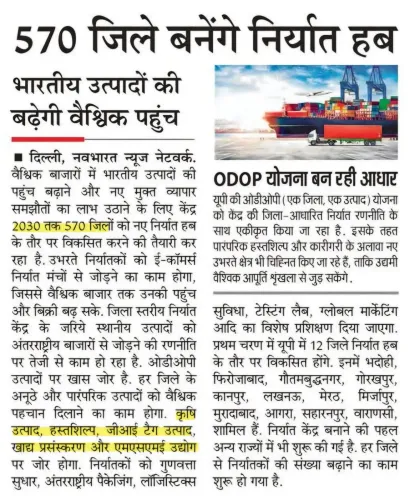
The Centre's 'One District, One Product' (ODOP) initiative is central to giving local crafts market access and global visibility.
Vastrakala , based in Gudapakkam, Tiruvallur district , pairs French haute couture with India's embroidery heritage in an Indo-French collaboration.
The company relocated from Chennai to a village to bring high-value work closer to communities where the skills originated.
The Kanchipuram-Sriperumbudur-Tiruvallur belt has a centuries-old tradition of needlework that historically sustained farming communities during droughts.
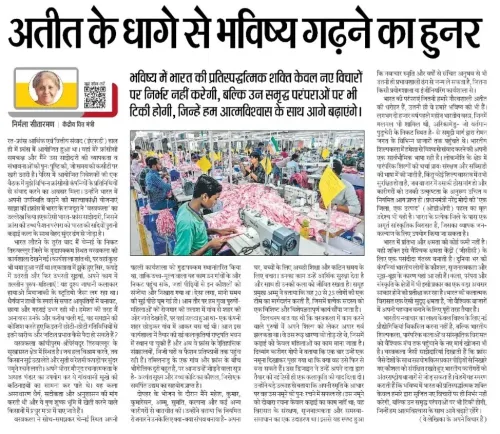
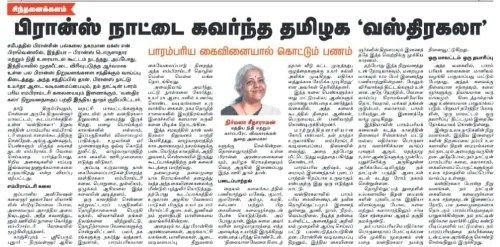
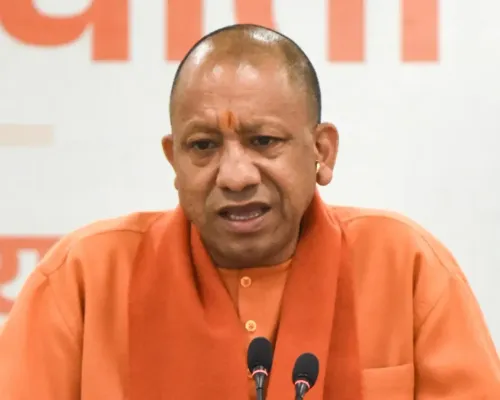
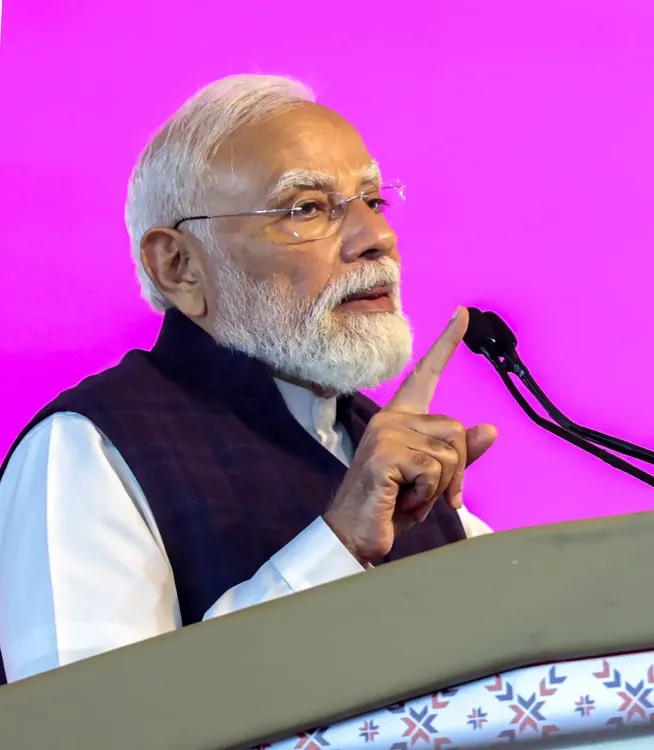
Prime Minister Narendra Modi on Sunday, 19 July spotlighted how traditional Indian craftsmanship can fuel economic growth through innovation and cross-border partnerships, sharing an article by Finance Minister Nirmala Sitharaman that traces a compelling on-ground story from the villages of Tamil Nadu. The post, shared from the Office of the Prime Minister of India's official X account, drew attention to the Centre's 'One District, One Product' (ODOP) initiative as a vehicle for connecting local artisans to global markets.
The ODOP Push and Its Goals
The ODOP initiative, championed by the Centre, aims to give each district a distinct craft or product identity, helping local producers gain market access, generate sustainable livelihoods, preserve cultural heritage, and sharpen India's global competitiveness. Finance Minister Sitharaman's article uses the story of Vastrakala — an Indo-French collaborative venture — as a case study in how such partnerships can translate policy intent into artisan prosperity.
Vastrakala: Where French Haute Couture Meets Indian Embroidery
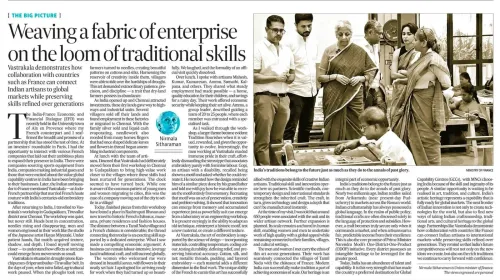
Vastrakala, based in Gudapakkam in Tiruvallur district near Chennai, is a partnership that marries French haute couture with India's centuries-old embroidery traditions. Finance Minister Sitharaman first heard of the venture at an investors' meeting she attended in Paris, where the Indian Ambassador to France cited it as a model for connecting Indian artisans to high-value global markets.
After returning to India, Sitharaman visited Vastrakala's workshop in Gudapakkam. Notably, the company had deliberately relocated from its original premises in Chennai to this village — a reversal of the more familiar pattern of rural workers migrating to cities. The Finance Minister described it as a company 'moving out of the city to settle in a village.'
The Historical Roots of Dry-Land Craftsmanship
Sitharaman's article situates Vastrakala within a deeper historical context. The workshop sits in the Kanchipuram-Sriperumbudur-Tiruvallur belt, a drought-prone region where needlework was historically a lifeline when agricultural cycles faltered.
'In the days of yore, when rains failed, agricultural work paused. When the ploughs took rest, farmers turned to needles, creating beautiful patterns on cottons and silks. Harnessing the reservoir of creativity inside them, villagers were able to tide over the hardships of drought. This art demanded extraordinary patience, precision, and discipline — a trait that dry-land farmers possess in abundance,' Sitharaman wrote.
How Urbanisation Eroded a Living Tradition
The Finance Minister also charted how rapid industrialisation chipped away at this heritage. As Chennai attracted investment and dry lands gave way to highways and factories, many villagers sold their land and shifted to industrial employment or migrated to the city.
'With the family silver sold and liquid cash evaporating, needlework also receded from many homes; fingers that had once shaped delicate leaves and flowers in thread began assembling industrial components,' Sitharaman wrote. Vastrakala's decision to set up in Gudapakkam is, in that context, an attempt to reverse that cultural erosion by bringing premium work back to the source of the skill.
What This Signals for India's Craft Economy
This comes amid a broader government push to position India's artisan economy as an export and soft-power asset. The ODOP framework, combined with bilateral partnerships such as the one with France, represents an effort to move Indian handicrafts up the value chain — from local bazaars to global luxury supply chains. Whether the Vastrakala model can be replicated at scale across India's thousands of craft clusters remains the central question for policymakers and industry bodies alike.
Point of View
But a single Indo-French embroidery venture does not validate the ODOP framework at scale. India has over 700 districts and thousands of craft clusters; the gap between a photogenic success story and a replicable policy outcome is significant. The more pointed question — which mainstream coverage sidesteps — is whether ODOP disbursements are reaching artisans directly or being absorbed by intermediaries, and whether the scheme has a credible export-linkage mechanism beyond bilateral goodwill. Sitharaman's article is well-written advocacy; the accountability test is the data on artisan income and export volumes, which the government has yet to publish in a consolidated form.
NationPress
18 Oct 2026
Frequently Asked Questions
What is the 'One District, One Product' (ODOP) initiative?
ODOP is a Central government programme that assigns each district a signature craft or product, helping local producers gain market access, build brand identity, and create sustainable livelihoods. It is designed to preserve cultural heritage while integrating India's artisan economy into national and global supply chains.
What is Vastrakala and where is it located?
Vastrakala is an Indo-French collaborative venture based in Gudapakkam, Tiruvallur district, near Chennai, Tamil Nadu. It combines French haute couture design with India's centuries-old embroidery traditions, connecting village artisans to high-value international fashion markets.
Why did PM Modi highlight Vastrakala on 19 July?
PM Modi shared Finance Minister Nirmala Sitharaman's article on 19 July to illustrate how traditional Indian craftsmanship, supported by ODOP and global partnerships, can drive economic growth and preserve heritage. The Vastrakala example was cited as a model of reverse migration — a company moving from a city to a village to source traditional skills.
Who are the artisans behind Vastrakala's embroidery tradition?
The artisans come from the Kanchipuram-Sriperumbudur-Tiruvallur belt, a drought-prone region where needlework on cottons and silks was historically a livelihood supplement during failed agricultural seasons. Rapid urbanisation had eroded the tradition, which Vastrakala's village-based model seeks to revive.
How does the Indo-French partnership benefit Indian artisans?
According to Finance Minister Sitharaman, the partnership links Indian village embroiderers to French luxury fashion houses, providing high-value, consistent work that was previously unavailable locally. The model also reverses urban migration by bringing skilled employment back to rural communities.