Can Nepal's Minister Gain India's Support for Increased Power Exports to Bangladesh?
Click to start listening
Synopsis
In a significant diplomatic move, Nepal's Energy Minister seeks India's collaboration to expand electricity exports to Bangladesh. This request not only highlights Nepal's growing energy capabilities but also its intricate relations with both India and Bangladesh. Dive into the details of the meeting and the implications for regional energy dynamics.
Key Takeaways
- Nepal is seeking to increase electricity exports to Bangladesh.
- Current exports stand at 40 MW, with a request for an additional 20 MW.
- The initiative involves India's transmission infrastructure.
- Regional energy cooperation is a key focus of Nepal's energy strategy.
- Ongoing projects supported by India's EXIM Bank are crucial for Nepal's energy development.
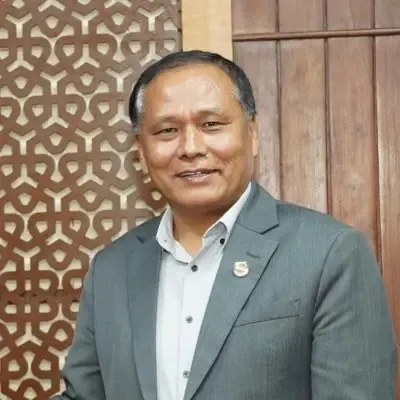
Kathmandu, Dec 9 (NationPress) Nepal’s Minister for Energy, Water Resources, and Irrigation Kul Man Ghising on Tuesday appealed to India to permit the export of an additional 20 megawatts of electricity to Bangladesh utilizing India's transmission infrastructure.
According to a tripartite agreement among Nepal, India, and Bangladesh, Nepal has been supplying 40 MW of electricity to Bangladesh from June 15 to November 15 annually since the previous year.
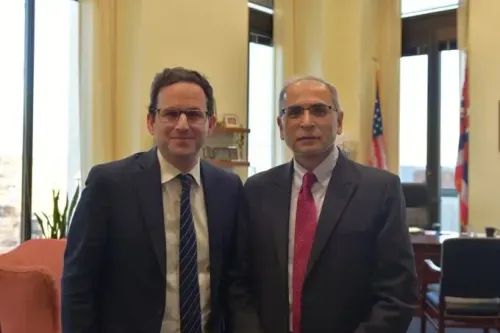
This request was made during his meeting on Tuesday with Munu Mahawar, Additional Secretary (North) at India’s Ministry of External Affairs, as reported by Minister Ghising's secretariat.
Nepal’s appeal aligns with an understanding reached with Bangladesh during the energy-secretary-level Joint Steering Committee meeting in Dhaka at the end of November.
Under the bilateral arrangement, Bangladesh is set to purchase an additional 40MW of electricity from Nepal upon fulfilling the requisite procedures.
Nepali officials indicate that further electricity can be exported to Bangladesh via the current transmission infrastructure, contingent on India's approval for its use.
However, uncertainty lingers regarding India's response, especially in light of the strained relationship between India and Bangladesh since last year, when Bangladeshi Prime Minister Sheikh Hasina sought refuge in India following a violent uprising against her governance in Bangladesh.
Bangladesh was notably excluded from the recent South Asia (Bhutan, India, and Nepal) Power Summit in New Delhi, organized by the Confederation of Indian Industry (CII).
During the Tuesday meeting, Nepal’s Energy Minister also sought additional financing through the Line of Credit (LoC) mechanism of the Export-Import (EXIM) Bank of India to construct transmission lines. Significant projects like the Koshi Corridor in eastern Nepal and the Modi–Lekhnath transmission line in western Nepal were established with funding from the LoC of EXIM Bank, India.
The 132 kV Solu Corridor project was jointly inaugurated by the Prime Ministers of both nations on April 2, 2022, during former Prime Minister Sher Bahadur Deuba's visit to New Delhi.
This Solu Corridor project consists of a 90-kilometre-long, 132 kV double-circuit transmission line and a network of substations that connect remote areas of northeastern Nepal to the national electricity grid. The corridor is deemed essential for evacuating power produced by hydropower plants in the northeastern Solu region and enhancing overall grid reliability.
Minister Ghising also called on India to eliminate the existing requirement for Nepal to renew approval annually for electricity exports to India’s Day-Ahead and Real-Time markets, suggesting a one-time approval instead.
The two sides also addressed various challenges facing the power projects initiated by Indian companies. Minister Ghising stated that his ministry, along with the Investment Board Nepal, is working to resolve issues related to the utilization of forest land for the 669MW Lower Arun and 900MW Arun 3 projects.
SLVN Limited, a state-owned Indian enterprise, is developing these two projects along the Arun River in eastern Nepal.
Additionally, Additional Secretary Mahawar held a meeting with Nepal’s Interim Prime Minister Sushila Karki to discuss various facets of Nepal-India relations, as reported by the Prime Minister’s Office.
Point of View
Nepal's proactive approach to energy exports aligns with its long-term vision of becoming a significant energy player in the region. This initiative not only fosters economic ties with Bangladesh but also strengthens Nepal's bargaining power with India, ensuring a mutually beneficial energy partnership. It is crucial for Nepal to navigate these diplomatic waters carefully, given the complexities of regional politics.
NationPress
11/12/2025
Frequently Asked Questions
What is the purpose of Nepal’s request to India?
Nepal’s request aims to secure permission from India to export an additional 20 megawatts of electricity to Bangladesh, enhancing regional energy cooperation.
How much electricity is Nepal currently exporting to Bangladesh?
Nepal has been exporting 40 megawatts of electricity to Bangladesh from June 15 to November 15 each year since last year.
What are the implications of this request for Nepal-India relations?
The request could strengthen Nepal's energy exports and improve its standing in regional politics, but it also depends on the current dynamics of Nepal-India-Bangladesh relations.
What projects have been financed by India's EXIM Bank?
Major projects like the Koshi Corridor and Modi–Lekhnath transmission line in Nepal were constructed with funding from the Line of Credit of India's EXIM Bank.
What is the significance of the Solu Corridor project?
The Solu Corridor project is vital for evacuating hydropower generated in northeastern Nepal, connecting remote regions to the national grid and improving grid reliability.