Is US Policy Shifting Between Confrontation and Conciliation Towards India and China?
Synopsis
The dynamic between the US, India, and China reveals a complex web of trade policies and political maneuvering. With tariffs in place and strategic partnerships at stake, how will this affect global markets and bilateral relations? Dive into the shifting sands of US foreign policy.
Key Takeaways
The US has imposed significant tariffs on India, particularly affecting rice exports.
Indian rice exports are relatively small in the US market.
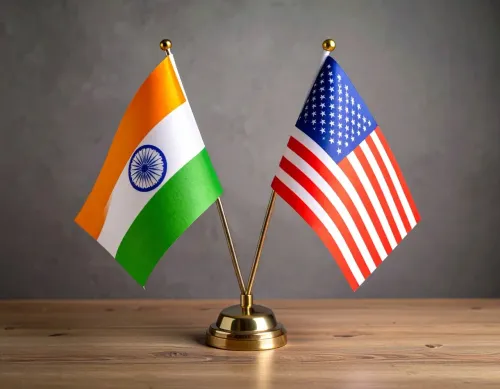
The US is pushing for a strategic partnership with India amidst rising tensions with China.
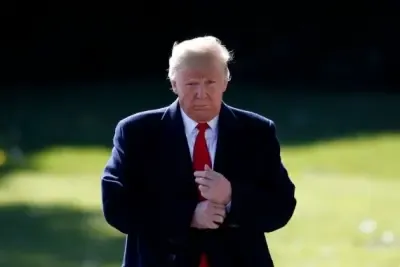
President Trump's policies reflect a mix of confrontation and conciliation.
The US aims to align with allies to counter any single competitor's dominance.
New Delhi, Dec 11 (NationPress) The United States is steadfast in its refusal to engage in any trade that could potentially impact "MAGA" interests, from oil to rice. A punitive tariff has already been levied on India for acquiring "sanctioned" Russian oil, raising the cumulative "reciprocal tariff" to 50 percent across various commodities.
Instead, the US is pressuring New Delhi to purchase American oil, even at a premium. While it seeks access for American agricultural products in India, the opposite is not reciprocated.
US President Donald Trump's primary concern regarding Indian rice exports stems from claims that India is "dumping" rice into the American market, undermining US farmers and lowering domestic prices. He has threatened to impose new tariffs on Indian rice to safeguard US agriculture.
The term "dumping" refers to Indian exports perceived to disrupt competition, with US rice farmers complaining that imports from India, Thailand, and Vietnam are "depressing prices".
New Delhi already faces significant US tariffs on its exports. With the White House indicating additional duties specifically targeting Indian rice, this could complicate ongoing bilateral trade negotiations. Analysts suggest that these threats may be more politically motivated than economically logical.
The US market accounts for only a small fraction of Indian rice exports (about 2.74 lakh tons out of 60.65 lakh tons exported in 2024-25), and higher tariffs may adversely affect American consumers more than Indian exporters, especially for premium basmati rice.
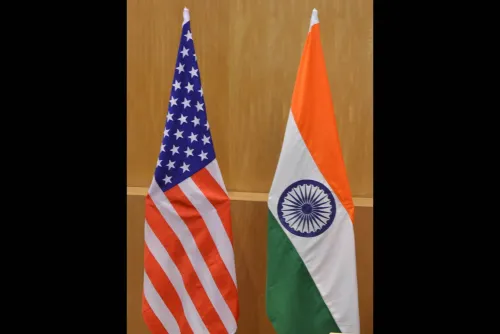
Meanwhile, a White House document highlights the importance of trade and strategic partnership with New Delhi.
The 'National Security Strategy of the United States of America, November 2025' indicates a desire to align actions with allies to prevent the dominance of any single competitor nation.
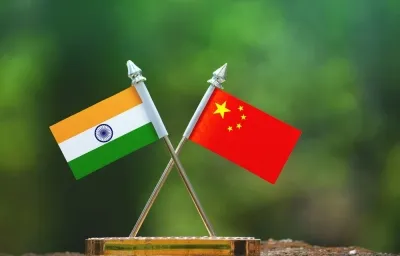
Washington's foreign policy is fluctuating between confrontation and conciliation, blending tariffs, strategic agreements, and selective outreach that are reshaping its relationships with both India and China.
The outcome is closer tactical cooperation with India in certain areas, yet also points of friction; with China, a blend of competition and transactional engagement.
After imposing tariffs on China up to 130 percent and halting bilateral trade discussions, President Trump recently revived the "G2" concept in Busan, South Korea, on October 30.
Prior to his meeting with President Xi Jinping of China, he posted on Truth Social: "THE G2 WILL BE CONVENING SHORTLY!" and characterized the summit as a “great one” that would usher in “everlasting peace”. Subsequent discussions resulted in China committing to purchase American soybeans and relaxing restrictions on rare earth exports.
Approximately a month later, the White House published a document expressing its interest in aligning with mutual goals to prevent the dominance of "any single competitor nation".
It further stated the intent to encourage New Delhi's contributions to Indo-Pacific security through ongoing quadrilateral cooperation with Australia, Japan, and the United States.
This final note sends a significant message to the other three leaders of the Quad. The White House's stance toward Beijing has been both confrontational and transactional. While the US National Security Strategy identifies China as a primary strategic rival, recent decisions—like allowing certain AI chip exports under strict conditions—illustrate selective engagement where US economic interests align.
While punitive actions drive partners toward hedging, transactional openings facilitate short-term cooperation on specific issues. The triangular relationship between the US, India, and China is one of the most critical aspects of modern geopolitics.
Washington's strategy towards New Delhi and Beijing highlights both the opportunities and challenges facing American policy in Asia. India is portrayed as a partner and a key player in the Indo-Pacific, whereas China is depicted as the main strategic competitor. This difference in portrayal shapes how President Trump navigates relations with the two nations.
Point of View
It's crucial to recognize the delicate balance in US-India-China relations. The interplay of tariffs and strategic partnerships reflects broader geopolitical trends. It's essential to remain vigilant and informed as these dynamics evolve, ensuring that we capture the narrative with integrity and accuracy.
NationPress
29 Sept 2026
Frequently Asked Questions
What are the main concerns of the US regarding Indian rice exports?
The US is concerned about Indian rice being "dumped" in its market, which is perceived to undercut American farmers and depress domestic prices.
How significant is the US market for Indian rice?
The US market represents only a small fraction of Indian rice exports, accounting for about 2.74 lakh tons out of 60.65 lakh tons exported in 2024–25.
What is the 'G2' concept mentioned by President Trump?
The 'G2' concept refers to a proposed collaboration between the United States and China to address global issues, which President Trump has recently revived.
What does the current US National Security Strategy state about China?
The current US National Security Strategy identifies China as a primary strategic competitor and outlines a desire to prevent its dominance.
What impact do tariffs have on US-India relations?
Tariffs complicate trade negotiations and can lead to friction between the US and India, while also affecting American consumers.