Nepal stays on FATF grey list; watchdog flags AML gaps in June 2025 review
Synopsis
Nepal remains on the FATF grey list more than a year after its February 2025 listing, with the global watchdog flagging unfinished work on hundi crackdowns, AML prosecutions, and cross-agency coordination. With the IMF also citing capacity gaps and a high-level APG delegation having visited Kathmandu, the pressure on Nepal to deliver operational — not just legislative — results is intensifying.
Key Takeaways
Nepal has remained on the FATF grey list , first placed there in February 2025 over AML/CFT deficiencies.
FATF's latest review acknowledged steps taken but flagged ongoing gaps in supervision of commercial banks, cooperatives, casinos, real estate , and hundi operators .
Nepal must demonstrate a measurable increase in money laundering investigations and prosecutions , not just regulatory reform.
An APG delegation visited Kathmandu and met Finance Minister Swarnim Wagle and Nepal Rastra Bank Governor Bishwo Nath Poudel , securing fresh political commitments.
The IMF flagged capacity constraints and helped amend Nepal's Asset (Money) Laundering Prevention Act under its assistance programme.
Grey-list status raises compliance costs and cross-border scrutiny but does not impose financial sanctions on Nepal.
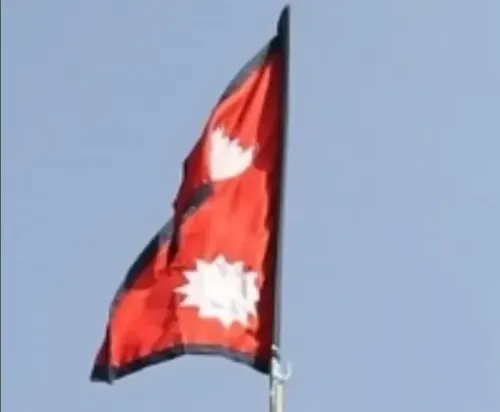
Nepal has remained on the Financial Action Task Force (FATF) grey list — the global watchdog's roster of jurisdictions under increased monitoring — as the organisation's latest review confirmed that Kathmandu still has strategic deficiencies to address in its anti-money laundering (AML) and counter-terrorist financing (CFT) framework. The country was first placed on the list in February 2025 after FATF identified shortcomings in Nepal's financial crime compliance regime.
What FATF's Latest Review Found
In its most recent update, FATF acknowledged that Nepal has taken steps to address technical compliance gaps — particularly in its targeted financial sanctions regime covering terrorist financing and proliferation financing — since making a high-level political commitment to reform in February 2025.
However, the watchdog made clear that significant work remains. FATF has directed Nepal to improve its understanding of key money laundering and terrorist financing risks, enhance risk-based supervision of commercial banks, high-risk cooperatives, casinos, dealers in precious metals and stones, and the real estate sector.
Notably, FATF specifically called out the need to identify and sanction illegal money or value transfer services — commonly known as hundi operators — without hindering financial inclusion. This reflects a delicate balance Kathmandu must strike between cracking down on informal channels and preserving access to remittances, which are a critical lifeline for Nepal's economy.
Key Gaps Nepal Must Close
The Paris-based watchdog highlighted several additional areas requiring urgent action. These include strengthening the capacity and coordination of law enforcement and regulatory agencies responsible for investigating money laundering cases, and demonstrating a measurable increase in actual money laundering investigations and prosecutions — not just legislative reform on paper.
FATF also expects Nepal to improve its ability to identify, trace, freeze, seize, and confiscate the proceeds and instrumentalities of crime, in line with the country's risk profile. These are operational benchmarks, not merely regulatory ones — a distinction the watchdog is increasingly emphasising across all grey-listed jurisdictions.
APG Visit and Political Commitment
Following Nepal's grey-listing, an Asia/Pacific Group on Money Laundering (APG) delegation visited Kathmandu and met with senior officials including Finance Minister Swarnim Wagle, Nepal Rastra Bank Governor Bishwo Nath Poudel, and the police chief. The APG said Nepal's leaders expressed clear political commitment to fast-tracking the required AML/CFT reforms.
'A clear outcome from the visit is that Nepal's leaders and technical staff demonstrate refreshed commitment and targeted strategies to drive forward urgent actions to meet the FATF's International Co-operation Review Group (ICRG) action plan,' the APG said. It added that 'the prioritisation of AML/CFT complements the government's wide-ranging agenda of good governance and wider reforms to underpin economic growth and financial integrity.'
IMF Flags Capacity Constraints, Offers Support
The International Monetary Fund (IMF), in its latest Article IV report on Nepal, said the country's AML/CFT framework faces significant challenges, including capacity constraints and fragmented coordination among multiple agencies that limit effective implementation.
Under its assistance programme, the IMF's Legal Department helped amend Nepal's Asset (Money) Laundering Prevention Act, establishing a stronger legislative foundation ahead of FATF's intensive monitoring. The IMF legal team has also been assisting authorities with legal drafting and updated language for money laundering prevention rules focused on implementing United Nations Security Council Resolutions (UNSCRs).
What Being on the Grey List Means
FATF stressed that grey-list inclusion does not trigger enhanced due diligence requirements or financial sanctions against Nepal. Instead, it encourages countries and financial institutions to apply a risk-based approach when assessing transactions and business relationships. The watchdog also cautioned against 'de-risking' practices that could disrupt legitimate financial flows, including humanitarian assistance and remittances.
Being on the grey list does, however, increase scrutiny of cross-border financial transactions and can raise compliance costs for banks and businesses operating in or with Nepal. FATF reviews and updates its grey list three times a year. Besides Nepal, the latest round also reviewed the progress of Algeria, Angola, Bolivia, Bulgaria, Cameroon, Cote d'Ivoire, Congo, Haiti, Kenya, Lao PDR, Lebanon, Monaco, Namibia, South Sudan, Syria, Venezuela, Vietnam, the Virgin Islands (UK), and Yemen.
Nepal's path off the grey list depends on demonstrating concrete operational outcomes — not just legislative intent — in the months ahead.
Point of View
But FATF's specific call-out of hundi operators and the lack of measurable prosecutions signals that the watchdog is no longer satisfied with process milestones. For a remittance-dependent economy, the hundi problem is particularly thorny — crack down too hard and financial inclusion suffers; move too slowly and the grey list stays. The IMF's involvement in legal drafting is unusual and underscores how deep the capacity deficit runs. Nepal's next FATF review will be a credibility test for the entire reform programme, not just a compliance checkpoint.
NationPress
21 Jun 2026
Frequently Asked Questions
Why is Nepal on the FATF grey list?
Nepal was placed on the FATF grey list in February 2025 after the watchdog identified shortcomings in the country's anti-money laundering and counter-terrorist financing framework, including weak supervision of banks, cooperatives, and informal money transfer channels. The grey list signals that a country is under increased monitoring while it works to fix identified deficiencies.
What does the FATF grey list mean for Nepal's economy?
Grey-list status increases scrutiny of Nepal's cross-border financial transactions and can raise compliance costs for banks and businesses, but it does not trigger economic sanctions or mandatory enhanced due diligence. The bigger risk is reputational — correspondent banks may apply extra caution, potentially affecting trade finance and remittance flows.
What reforms has Nepal undertaken since being grey-listed?
Nepal has taken steps to address technical compliance gaps in its targeted financial sanctions regime for terrorist financing and proliferation financing. The Asset (Money) Laundering Prevention Act was also amended with IMF support. However, FATF says operational gaps — including low prosecution rates and weak supervision of casinos and real estate — remain unresolved.
What are hundi operators and why does FATF flag them?
Hundi operators run informal money or value transfer services outside the regulated banking system. FATF has asked Nepal to identify and sanction illegal hundi operations while being careful not to disrupt legitimate financial inclusion. For Nepal, where remittances account for a large share of GDP, this balance is particularly sensitive.
When could Nepal be removed from the FATF grey list?
Nepal's removal depends on demonstrating concrete operational outcomes — including measurable increases in money laundering investigations and prosecutions, and improved cross-agency coordination — across future FATF reviews. FATF updates its grey list three times a year, and no specific removal timeline has been indicated.