How Did Gen-Z Protests and Political Turmoil Lead Nepal into Economic Slowdown in 2025?
Synopsis
Nepal's political landscape has dramatically shifted due to the Gen-Z protests against corruption, leading to a government collapse and impending elections. Amid economic turmoil, the rise of new political forces signals a potential change in Nepal's governance. Will this movement redefine the future of Nepali politics?
Key Takeaways
Political instability in Nepal has escalated following Gen-Z protests.
Corruption allegations against the previous government triggered widespread unrest.
New political alliances are forming, potentially reshaping Nepal's governance.
Economic growth is projected to decline significantly as a result of the protests.
Negotiations are underway with Gen-Z groups to address the fallout from the unrest.
Kathmandu, Dec 31 (NationPress) As 2025 commenced, Nepal was supported by a robust government boasting a near two-thirds majority, represented by its two major political entities — the Nepali Congress (NC) and the Communist Party of Nepal (Unified Marxist-Leninist), commonly known as CPN (UML).
After experiencing a tumultuous period with three governments in just eighteen months — all under the leadership of former Prime Minister Pushpa Kamal Dahal, also referred to as Prachanda, either with the support of the Nepali Congress or the CPN (UML) — the two dominant parties united to establish a government led by UML Chair K P Sharma Oli in July 2024.
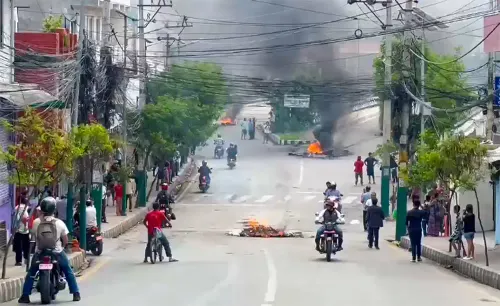
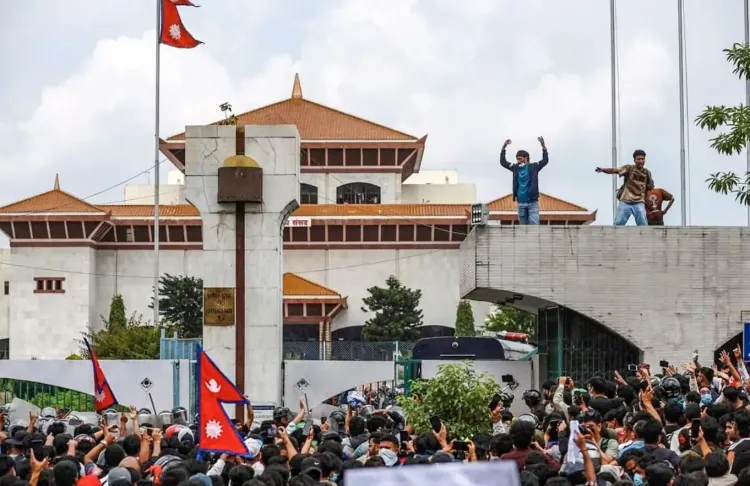
However, this super-majority administration, which governed amid serious allegations of high-profile corruption, crumbled under the pressure of the Gen-Z movement that erupted in early September 2025. The Oli-led government fell within a mere 24 hours after protests commenced in Kathmandu on September 8.
A brutal response to the protestors resulted in 20 fatalities on the first day alone, contributing to a total of 77 deaths related to the Gen-Z movement. This violent crackdown incited further unrest the subsequent day, compelling Oli to resign.
Oli was airlifted to a military barracks outside Kathmandu for his safety, while other prominent leaders also received military protection. The movement led to extensive damage to both government and private properties, with damages estimated at over NPR 84 billion.
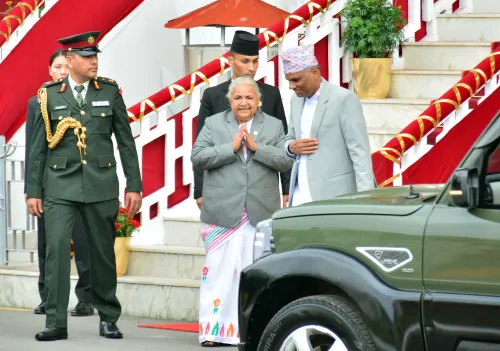
The Gen-Z protests facilitated the rise of the current interim government led by Sushila Karki, the dissolution of the House of Representatives, and the announcement of new elections set for March 5 next year.
“The public was disillusioned with rampant corruption, and the arrogance of then Prime Minister K P Sharma Oli enraged Gen-Z youths, prompting them to take to the streets against his administration,” Lokesh Dhakal, a Nepali Congress leader and political analyst, shared with IANS. “The government’s excessive force against youths — many of whom were protesting in school and college attire — backfired.”
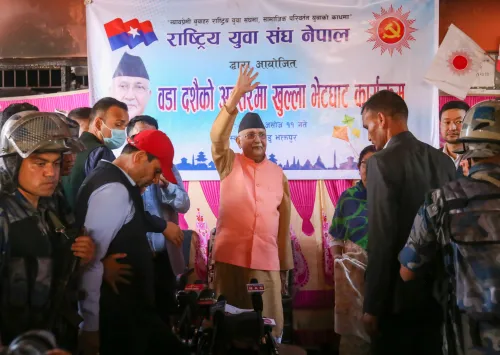
In the aftermath of the Gen-Z protests, there emerged a significant call for the leaders of traditional political parties to step down. This discourse permeated the Nepali Congress, the UML, and the former CPN (Maoist Centre), which has since transitioned into the Nepali Communist Party following mergers with CPN (Unified Socialist) and others.
Despite being ousted from the Prime Ministerial role by the Gen-Z movement, Oli found a degree of political comfort after being re-elected at the UML’s 11th General Convention. He expressed no remorse regarding the alleged misgovernance or the heavy-handed tactics used against the Gen-Z protests.
Former Prime Minister Sher Bahadur Deuba has also not shown any immediate desire to relinquish his party leadership. He has disregarded calls to hold a party general convention prior to the elections, as he is ineligible to run for party president again under party rules. Prachanda, similarly, has refused to step down as chair of the former Maoist Centre despite internal pressures, choosing instead to pursue party mergers that would secure his leadership.
“Based on their behavior, I have yet to see any major political party or its leaders genuinely reflect on their mistakes,” Dhakal remarked.
He noted that while the Gen-Z protests against corruption were justified, the vandalism and arson that resulted in the destruction of billions of rupees in government and private property indicated that undesirable elements had infiltrated the movement.
The year also saw several new political parties strengthening their presence, particularly following the Gen-Z protests.
In the 2022 parliamentary elections, the Rastriya Swatantra Party (RSP), established by former media figure Rabi Lamichhane, emerged as the fourth-largest political entity.
Lamichhane, who enjoys substantial youth support, faced fraud allegations related to cooperative institutions after entering politics and was imprisoned. Recently released on bail following a court ruling, he has been working to unite Gen-Z leaders and new political forces to bolster his party ahead of the elections.
Lamichhane has successfully integrated popular figures such as Kathmandu Mayor Balen Shah and Kul Man Ghising, Minister for Energy, Physical Infrastructure and Urban Development, into the party. He has extended the Prime Ministerial candidacy to Shah.
According to the agreement between the RSP and Shah, Shah will assume the roles of parliamentary leader and Prime Ministerial candidate post the upcoming House of Representatives election.
This agreement marks a significant step for Shah, transitioning from city mayor to a potential national leader. Ghising, recognized for eliminating up to 18 hours of load-shedding, is also among Nepal’s most popular public figures. His Ujyalo Nepal Party has merged with the RSP, with Ghising now serving as the party’s senior vice-chair.
It is widely anticipated that the alliance of these three prominent leaders could pose a challenge to the traditional political party dominance — the Nepali Congress led by Sher Bahadur Deuba, the CPN (UML) led by KP Sharma Oli, and the Nepali Communist Party led by Pushpa Kamal Dahal.
“While we may not penetrate the core supporters of old political parties, we anticipate gaining support from many voters, including disenchanted supporters of those parties,” stated Anup Upadhyaya, the former chair of the Ujyalo Nepal Party, which merged with the RSP. “The primary attraction of the RSP lies in the collaboration of three influential leaders, positioning the party to emerge as the largest political force after the forthcoming elections.”
RSP Treasurer Lima Adhikari remarked to IANS that the party continues to work towards integrating alternative forces and individuals contributing to the nation into its framework. “The Gen-Z movement demonstrated that the populace is profoundly dissatisfied with old parties and their corrupt practices,” she stated. “The nation is in search of innovative ideas and leadership, and the RSP is uniquely positioned to fulfill that need.”
As the RSP consolidates new forces, traditional parties are increasingly sensing a threat.
The Nepali Communist Party — primarily formed through the merger of the former CPN (Maoist Centre) and CPN (Unified Socialist) — has already absorbed over a dozen fringe parties.
Simultaneously, leaders of the Nepali Congress and CPN (UML), the first and second-largest parties in the dissolved House of Representatives, have initiated discussions regarding collaboration.
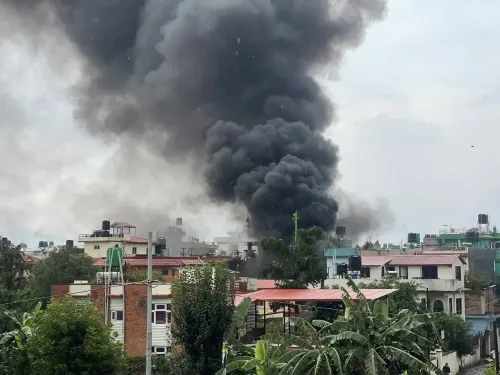
On the economic front, Nepal commenced 2025 with various policy and legal reforms designed to attract investment. However, alleged corruption and misgovernance incited Gen-Z youths to protest on September 8. The two-day protests resulted in numerous fatalities and extensive destruction of both public and private property. Government buildings in Singha Durbar, the Supreme Court, the President's Office, and multiple government offices and police posts nationwide were attacked.
Almost two dozen Bhat-Bhateni outlets, the country’s largest retail chain, Hotel Hilton Kathmandu, warehouses, vehicle showrooms belonging to the Chaudhary Group owned by the nation’s only billionaire, Binod Chaudhary, and numerous other private properties were vandalized and set ablaze.
The Asian Development Bank (ADB), in its Nepal: Macroeconomic Update, noted that the unrest of September 8–9 severely undermined private-sector confidence. Nepal’s economy is projected to expand by only three percent in the fiscal year 2025–26, a decline from 4.6 percent the preceding year — effectively half of the government’s target.
Manufacturing growth is forecasted to plunge sharply to 1.7 percent this fiscal year from 3.8 percent the previous year, primarily hindered by escalating political uncertainty that has stalled production.
“As uncertainty clouds the investment climate, both domestic and foreign investors are likely to adopt a cautious stance, delaying capital investments and project commitments,” the ADB cautioned.
Nepal's private sector representatives express greater concern regarding the current government’s indifference in taking action against those allegedly involved in vandalism and arson. Private sector representative bodies previously expressed dissatisfaction that the police declined to register complaints against those responsible for attacks on private properties.
“From the private sector's viewpoint, personal and investment security are essential to encourage investment within the country,” Birendraj Pandey, President of the Confederation of Nepalese Industries (CNI), a representative body for the private sector, informed IANS. “Our hope as the private sector is that the government will hold accountable those involved in the arson and vandalism. Impunity will lead to recurring incidents in the future. It is vital to establish the rule of law.”
Nevertheless, a recent agreement between the government and Gen-Z groups implies that individuals not implicated in vandalism and arson during the initial inquiry would not face imprisonment.
Senior Economist Keshav Acharya indicated that the private sector would remain hesitant to invest as long as the political environment remains feudal and the government fails to ensure that attacks on the private sector will not recur.
Whether the scheduled elections, if conducted, could usher in political stability remains uncertain. Nepal has consistently remained in a state of flux, even with a majority government holding nearly a two-thirds majority.
“Should the polls yield a fragmented outcome, the nation is likely to endure another bout of political instability,” Acharya informed IANS.
However, the private sector holds out hope that political leaders will take lessons from the events surrounding the Gen-Z movement. “Undoubtedly, the assaults on the private sector posed a significant setback for the investment climate in the country. Let’s hope this Gen-Z uprising will also create an opportunity to foster good governance and cultivate a favorable investment environment.
Point of View
It is essential to recognize the profound implications of the Gen-Z protests in shaping Nepal's political landscape. This event highlights a critical juncture where the youth's demand for accountability and transparency cannot be ignored. The momentum for change is palpable, and it is crucial for traditional political entities to respond meaningfully to the aspirations of the younger generation.
NationPress
20 Sept 2026
Frequently Asked Questions
What triggered the Gen-Z protests in Nepal?
The Gen-Z protests were triggered by widespread dissatisfaction with corruption and the government's heavy-handed tactics against youth movements.
What are the consequences of the protests?
The protests led to the collapse of the Oli-led government, numerous fatalities, and significant property damage, prompting the formation of an interim government and calls for new elections.
How did the political landscape change due to the protests?
The protests have catalyzed the emergence of new political parties and alliances, challenging the dominance of traditional political entities in Nepal.
What is the economic forecast for Nepal following the unrest?
The Asian Development Bank projects Nepal's economy to grow by only three percent in the fiscal year 2025-26, significantly lower than previous years due to the impact of the protests.
What steps are being taken to address the unrest?
The government is negotiating with Gen-Z groups and has made agreements to ensure that individuals not involved in vandalism during the protests would not face imprisonment.