Will Nepal Meet Its Economic Growth Target?

Synopsis
In a startling revelation, Nepal's Central Bank has acknowledged that the country is unlikely to meet its economic growth target for the fiscal year 2025–26, impacted by severe weather conditions and political unrest. This article delves into the implications of these developments on Nepal's economy and tourism sector.
Key Takeaways
Nepal's growth target for 2025–26 is at risk due to adverse weather and political events.
The World Bank has revised Nepal's growth forecast down to 2.1%.
Political instability from the Gen-Z protests has caused infrastructure damage.
Inflation projections have been lowered to 4%.
Foreign tourist arrivals are recovering despite earlier setbacks.
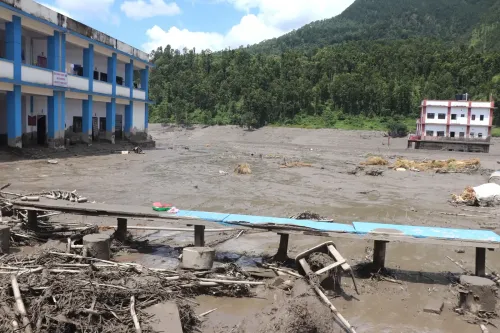
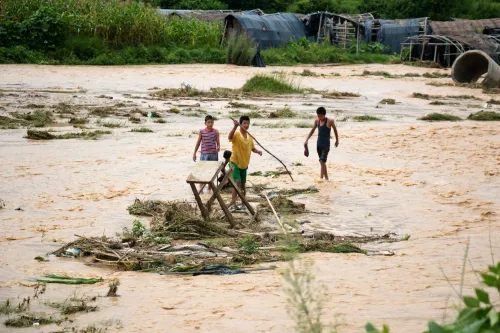
Kathmandu, Dec 1 (NationPress) Nepal is now facing significant challenges in achieving its targeted economic growth for the fiscal year 2025–26, primarily due to the delayed monsoon, floods, and landslides that have severely impacted the nation’s agriculture and various other sectors, as reported by the Nepal Central Bank on Monday.
This marks the first time that a government entity has indicated that the growth target is unlikely to be met, despite earlier downward revisions of Nepal’s growth forecasts by international organizations like the World Bank.
The Nepali administration initially set a 6% economic growth target during the budget presentation at the end of May.
According to the Nepal Rastra Bank (NRB), which released the first quarterly review of its monetary policy, “The late monsoon for paddy transplantation coupled with heavy rainfall that caused floods and landslides has adversely affected agriculture and numerous other sectors. Therefore, economic growth in this fiscal year will likely fall short of the original target.”
While the NRB did not provide a specific growth estimate, the World Bank recently slashed its economic growth prediction for Nepal to 2.1%, down from a prior forecast of 4.6%, citing disruptions from public unrest in September and subsequent political instability.
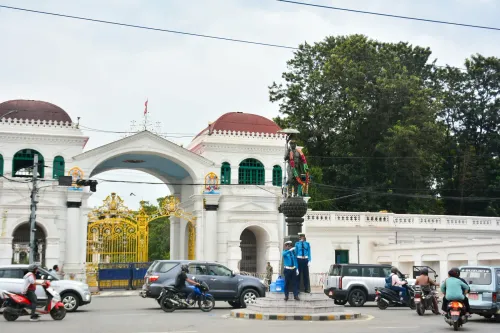
During the Gen-Z protests in early September, Nepal experienced significant damage to both public and private infrastructure, along with the loss of lives among demonstrators. The protests, initiated by unorganized youth groups, led to the downfall of the then-powerful government headed by former Prime Minister K P Sharma Oli, paving the way for the current administration under Prime Minister Sushila Karki.
The World Bank noted that the projected economic slowdown is expected to primarily affect the services sector. Tourism is anticipated to decline sharply due to a substantial fall in international tourist arrivals, compounded by the negative impacts on the insurance industry from asset losses.
Nonetheless, the NRB indicated that the influx of foreign tourists was not as adversely affected as initially feared, despite damage to hotel properties during the protests.
Luxury hotels such as the Hyatt Regency and Hilton suffered extensive damage during the unrest, with the Hilton being completely destroyed and the Hyatt currently closed for maintenance. According to the Hotel Association of Nepal, the vandalism and arson in Kathmandu and surrounding areas have caused damages estimated at NPR 25 billion.
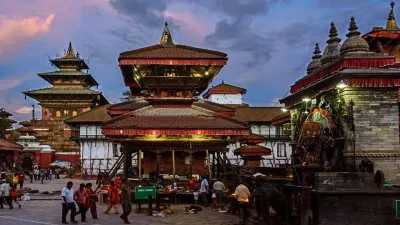
“Nepal has seen an increase in foreign tourist numbers as travelers seem confident in the nation’s peace and security,” stated the NRB. The Nepal Tourism Board reported that 944,000 foreign tourists visited Nepal in the first ten months of 2025, a slight increase from 941,000 during the same timeframe in 2024. While there was an 18.3% decline in foreign tourist arrivals in September due to the Gen-Z protests, October showed a year-on-year recovery.
The NRB has also revised its inflation projections downwards. Although the bank aims to keep inflation at 5%, it now anticipates an average rate of 4% in its latest monetary policy review.
Factors such as lower inflation rates in India and further decreases in international oil prices are expected to help reduce inflation in Nepal. As of mid-October, Nepal's inflation rate had dropped to 1.67%. The Reserve Bank of India predicts that inflation in India will remain at 2.6% for the fiscal year 2025–26. Given Nepal's reliance on imports from India, fluctuations in India's inflation significantly impact Nepal's economic conditions.
Point of View
I recognize the importance of transparent economic reporting. The current challenges faced by Nepal's economy, stemming from natural disasters and political upheaval, require a cautious and proactive approach from policymakers. It is imperative for the government to prioritize recovery strategies to mitigate the impact of these setbacks on the nation's growth trajectory.
NationPress
8 Oct 2026
Frequently Asked Questions
What factors are affecting Nepal's economic growth?
Nepal's economic growth is being impacted by delayed monsoon rains, floods, landslides, and political unrest which have severely affected agriculture and other sectors.
What is the revised growth estimate for Nepal by the World Bank?
The World Bank has lowered its economic growth projection for Nepal to 2.1%, down from a previous estimate of 4.6%.
How have the Gen-Z protests influenced the economy?
The Gen-Z protests led to significant damage to infrastructure and political instability, which have adversely affected economic activity and tourism.
What is the current inflation rate in Nepal?
Nepal's Central Bank has projected an average inflation rate of 4% for the current fiscal year, lower than the initial target of 5%.
How are foreign tourist arrivals trending in Nepal?
Despite a temporary decline during the protests, foreign tourist arrivals have rebounded, with 944,000 visitors reported in the first ten months of 2025.