Intelligence Agencies Investigate New Threats to Punjab's Stability Amid Tactical Escalation
Synopsis
A little-known group, Tehreek-e-Taliban Hindustan, has claimed responsibility for the killing of police officers in Punjab. Intelligence agencies suspect renewed attempts to destabilize the region through tactical means, reflecting the ISI's desperation to revive the Khalistan movement amidst international cooperation against it.
Key Takeaways
Tehreek-e-Taliban Hindustan claims responsibility for police killings in Punjab.
Intelligence agencies suspect renewed efforts to destabilize the region.
The ISI is allegedly trying to revive the Khalistan movement .
Recent attacks on police and security establishments indicate a troubling trend.
International cooperation is increasing to combat Khalistani elements.
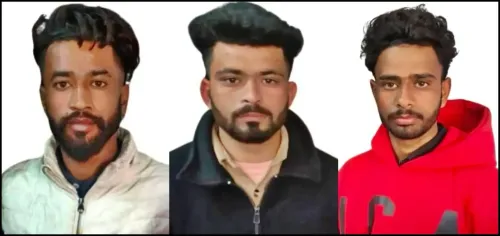
New Delhi, Feb 25 (NationPress) A relatively obscure organization known as the Tehreek-e-Taliban Hindustan (TTH) has taken responsibility for the recent murder of police officers at a border post in Punjab. This incident has prompted Intelligence agencies to suspect that there are fresh attempts to destabilize Punjab through tactical means.
On February 22, two members of the Punjab Police, who were stationed near the India-Pakistan border, were discovered dead with gunshot wounds.
The deceased, Gurnam Singh and Ashok Kumar, served as an Assistant Sub-Inspector and a Home Guard, respectively, and were present at the border outpost in Gurdaspur, Punjab, when the tragedy occurred.
As investigations are underway and authorities strive to uncover the details, the TTH has asserted its involvement in the attack.
This complicates the investigation since the TTH is not a widely recognized group. The name suggests a potential association with the Tehreek-e-Taliban Pakistan (TTP).
An official from the Intelligence Bureau has stated that there is no evidence linking the TTP and TTH.
This operation seems aimed specifically at targeting Indian security forces. Given the current dynamics between the ISI and TTP, it appears unlikely that Pakistan would orchestrate such an attack through the TTP or its affiliates.
The official added that these murders occur during a period when the ISI is increasingly eager to reignite the Khalistan movement in India. Groups associated with Khalistan are under pressure to mobilize in Punjab and rejuvenate the movement.
Simultaneously, India, along with Canada and to some extent the United Kingdom (UK), is collaborating to eliminate the Khalistani cause.
Over time, both the UK and Canada have been lenient towards these factions operating within their territories. However, the situation has shifted, and both countries have agreed to assist India in curtailing the menace.
These developments have not only intensified pressure on the ISI-backed Khalistani groups but have also heightened scrutiny on them.
An official remarked that the so-called TTH is merely a front for a Pakistani terror organization. It's plausible that a group linked to Khalistan may have executed the Gurdaspur assault.
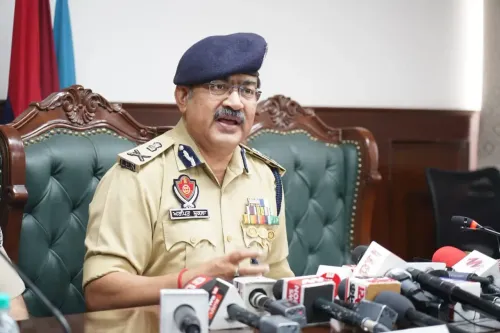
The Punjab Police has dismissed the TTH's claim, asserting that all angles are under investigation, including links to smuggling, cross-border terrorism, and personal vendettas.
Intelligence agencies have indicated that the ISI is growing increasingly desperate to rejuvenate the Khalistan movement in Punjab.
They are likely to employ all available resources to disrupt stability in the region. Officials have noted an emerging pattern.
The Gurdaspur murders are not isolated incidents. In recent months, multiple cases of attacks on police stations and security personnel have been documented.
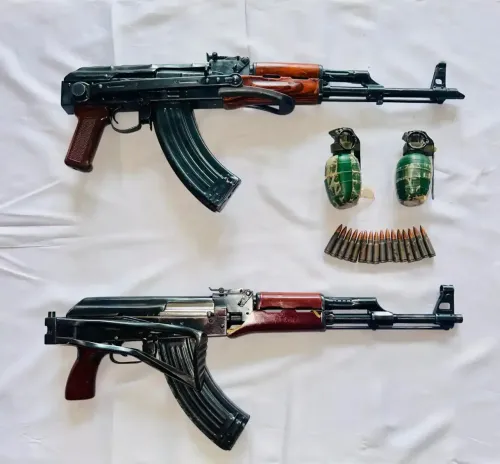
Explosives have been utilized in assaults on police stations and outposts in Ajnala, Nawanshahr, Majitha, Batala, Amritsar, and Gurdaspur.
The ISI has been collaborating with international drug syndicates, overseas operatives, and gangsters to disrupt peace in Punjab.
The recent Gurdaspur operation may also be linked to the gangster-terror nexus.
Numerous cases related to this nexus are currently under investigation by the National Investigation Agency (NIA). To deflect attention from the Khalistani terror groups and the gangster-terror nexus, the ISI appears to be fabricating entities like the TTH.
This serves to redirect focus, according to an official.
The Gurdaspur attack seems to have been meticulously planned. The post is generally manned by two local police officers and two from the Border Security Force (BSF). On the day of the incident, the BSF personnel were absent due to a departmental event near Amritsar.
The assailants were evidently aware of this situation and the absence of CCTV coverage at the post.
Intelligence agencies caution that the ISI is likely to intensify its operations and continue targeting security personnel.
Pakistani agencies have also enhanced their drone operations, deploying sophisticated drones to drop arms and ammunition along with narcotics into Punjab.
The frequency of drone incursions is expected to increase as the ISI accelerates its efforts to revive the Khalistan movement on a significant scale, another official noted.
Point of View
The situation in Punjab demands urgent attention. The involvement of the Tehreek-e-Taliban Hindustan in violent acts emphasizes the ongoing challenges faced by Indian security agencies. A thorough investigation is critical to uncover the underlying motives and connections behind this incident.
NationPress
5 Oct 2026
Frequently Asked Questions
What is the Tehreek-e-Taliban Hindustan?
The Tehreek-e-Taliban Hindustan (TTH) is a lesser-known group that recently claimed responsibility for the murder of police personnel in Punjab.
How did the Punjab Police respond to the TTH's claim?
The Punjab Police have rejected the claim by the TTH, asserting that they are exploring all angles, including smuggling and cross-border terror links.
What is the current situation regarding the Khalistan movement?
The ISI is reportedly desperate to revive the Khalistan movement in Punjab, while India collaborates with other nations to combat this threat.
Are the TTH and TTP connected?
An Intelligence Bureau official has stated that there is no evidence linking the Tehreek-e-Taliban Pakistan (TTP) with the TTH.
What measures are being taken to address the situation?
Intelligence agencies are closely monitoring the situation and investigating the involvement of various groups in the recent attacks.