Nepal Premier League 2026 kicks off with ICC nod, Warner and Russell among stars
Synopsis
Nepal's biggest cricket event just got a global stamp of approval. The NPL's third edition opens with ICC recognition making every stat count officially, David Warner and Andre Russell headlining an A-list international roster, Nepal's first-ever DRS deployment, and a revenue target of NPR 700 million — nearly triple the inaugural edition's haul. South Asia's newest franchise league is no longer a regional curiosity.
Key Takeaways
The Nepal Premier League (NPL) 2026 opened on 26 October at Tribhuvan University International Cricket Stadium, Kathmandu , running until 21 November .
The ICC officially recognised the NPL on 16 October , meaning performances now count towards players' official T20 statistics .
International stars including David Warner , Andre Russell , Shakib Al Hasan , and David Miller are among the overseas players.
Nepal will use the Decision Review System (DRS) for the first time in a domestic franchise tournament this edition.
CAN targets revenue of NPR 700 million from sponsorships and ticket sales, up from NPR 473.6 million in the second edition.
Total business transactions during the tournament are estimated at around NPR 1.5 billion , according to CAN treasurer Padma Bahadur Khadka .
The third edition of the Nepal Premier League (NPL) gets underway on Monday, 26 October at the Tribhuvan University International Cricket Stadium in Kathmandu, marking the most ambitious edition yet of Nepal's flagship franchise T20 competition. Defending champions Lumbini Lions face last season's runners-up Sudurpaschim Royals in the opening fixture, with the eight-team tournament running through 21 November.
ICC Recognition Changes the Stakes
The single biggest development ahead of this edition is official recognition from the International Cricket Council (ICC), granted on 16 October. The ICC's endorsement means that all performances in the NPL will now count towards players' official T20 international statistics — a landmark shift that significantly raises the competition's credibility for overseas professionals. This comes after two editions of rapid growth in corporate sponsorship and broadcast interest, and it positions the NPL alongside recognised franchise leagues across Asia.
Star-Studded International Lineup
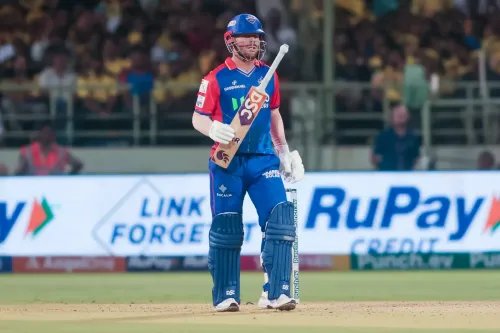
Former Australia captain David Warner leads the foreign contingent, representing Kathmandu Gorkhas. West Indies powerhouse Andre Russell, alongside Sri Lanka's Angelo Mathews and Charith Asalanka, has signed with Biratnagar Kings. West Indies pair Sherfane Rutherford and Fabian Allen will turn out for Sudurpaschim Royals.
Bangladesh all-rounders Shakib Al Hasan, Mohammad Saifuddin, and Mehidy Hasan are with Pokhara Avengers. Karnali Yaks feature South Africa's David Miller, Pakistan's Hussain Talat and Sahibzada Farhan, and Bangladesh players Ariful Islam and Akbar Ali. Lumbini Lions include Bangladesh's Sami Hossain, Australia's D'Arcy Short, and Sri Lanka's Niroshan Dickwella. The full eight-team field also includes Biratnagar Kings, Chitwan Rhinos, Janakpur Bolts, Karnali Yaks, and Pokhara Avengers.
Nepal's First Use of DRS
This edition will also see Nepal introduce the Decision Review System (DRS) for the first time in domestic franchise cricket — another marker of the tournament's maturation. The technology, which allows players to challenge on-field umpiring decisions using video and ball-tracking data, has long been standard in top-tier international cricket but is new to Nepal's domestic circuit.
Economic Impact and Revenue Targets
Cricket Association of Nepal (CAN) secretary Paras Khadka described the NPL as having evolved into a full-fledged industry within three years, while cautioning that substantial infrastructure investment remains necessary. CAN projects revenue from sponsorships and ticket sales of approximately NPR 700 million this edition — significantly ahead of prior years. Of that, sponsorship revenue alone is expected to reach NPR 200 million.
CAN treasurer Padma Bahadur Khadka said: 'As the teams are expected to spend a similar amount, business transactions worth around NPR 1.5 billion will take place during this month.' To put the trajectory in context: the inaugural edition generated NPR 276.96 million, which rose to NPR 473.6 million in the second edition. Rising hotel bookings, merchandise sales, corporate branding, and participation from major business houses are all expected to amplify the tournament's economic footprint this year.
Nepal's Prime Minister Balendra Shah welcomed the event, calling the NPL a major celebration of Nepali sport and extending a greeting to the international players and commentators joining the tournament. With ICC recognition now in place and an increasingly competitive international roster, the NPL's ambition to become South Asia's next marquee franchise league looks more credible than at any point in its short history.
Point of View
Which is precisely the currency that attracts marquee overseas players. The revenue trajectory, from NPR 277 million to a projected NPR 700 million in just three editions, signals genuine commercial momentum rather than hype. Yet the CAN secretary's caveat about infrastructure investment is the story beneath the story: without quality facilities and broadcast infrastructure to match the ambition, the NPL risks a ceiling that talent alone cannot break through. Nepal sits at a pivotal moment — the window to institutionalise this growth is open, but not indefinitely.
NationPress
26 Oct 2026
Frequently Asked Questions
When and where does the Nepal Premier League 2026 begin?
The NPL 2026 begins on 26 October at the Tribhuvan University International Cricket Stadium in Kathmandu, with defending champions Lumbini Lions facing Sudurpaschim Royals in the opening match. The tournament runs through 21 November across eight franchise teams.
Why is ICC recognition of the NPL significant?
The ICC officially recognised the NPL on 16 October, meaning all performances in the tournament now count towards players' official T20 international statistics. This raises the league's credibility for overseas professionals and places it alongside other recognised franchise competitions in Asia.
Which international cricket stars are playing in the NPL 2026?
Former Australia captain David Warner plays for Kathmandu Gorkhas, while Andre Russell, Angelo Mathews and Charith Asalanka join Biratnagar Kings. Shakib Al Hasan, Mehidy Hasan and Mohammad Saifuddin are with Pokhara Avengers, and David Miller represents Karnali Yaks, among other international signings.
What is the revenue target for NPL 2026?
The Cricket Association of Nepal (CAN) expects revenue from sponsorships and ticket sales to reach approximately NPR 700 million this edition. CAN treasurer Padma Bahadur Khadka projected total business transactions of around NPR 1.5 billion during the tournament's run.
What is new about the NPL 2026 compared to previous editions?
The NPL 2026 introduces the Decision Review System (DRS) for the first time in Nepal's domestic franchise cricket, alongside its newly acquired ICC recognition. Both developments signal the league's growing technical and institutional maturity relative to its first two editions.