Delhi Police busts ₹30 crore online shopping scam, arrests 7
Synopsis
A ₹30 crore cyber fraud ring was cracked open by Delhi Police after a college student lost ₹6,450 buying a kurti on Instagram. Seven accused are now in custody, 25 shell bank accounts exposed, and 27 fraud complaints from across India linked to a single syndicate — all traced back to one NCRP complaint.
Key Takeaways
Delhi Police busted a cyber fraud network linked to transactions worth over ₹30 crore .
The case began with a complaint by Fatima , a Ramjas College, Delhi University student, who lost ₹6,450 in an Instagram shopping fraud.
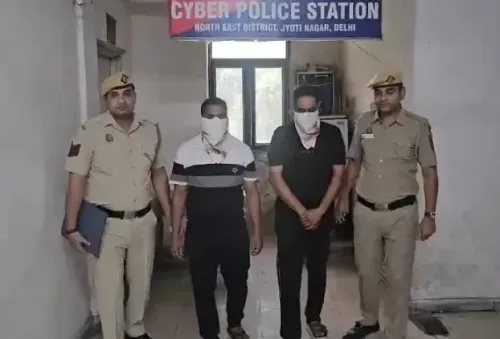
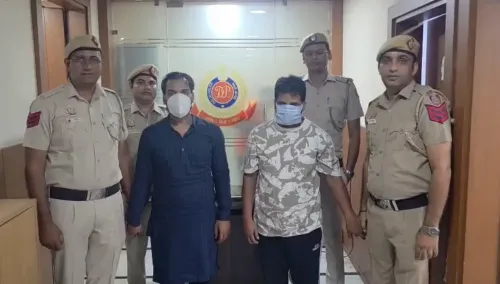
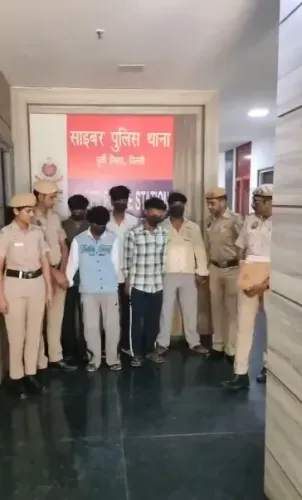
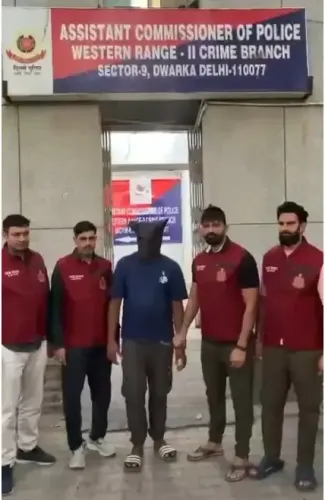
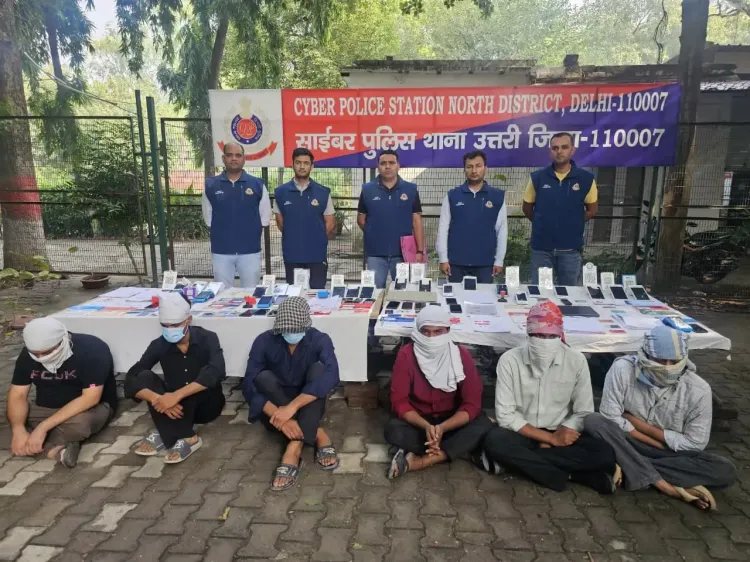
Seven accused were arrested in raids at Greater Noida (16 October) and Kanpur (21 October) .
Approximately 25 bank accounts in fictitious names were used to route cybercrime proceeds.
The probe has linked 27 cyber fraud complaints from multiple states to the same syndicate.
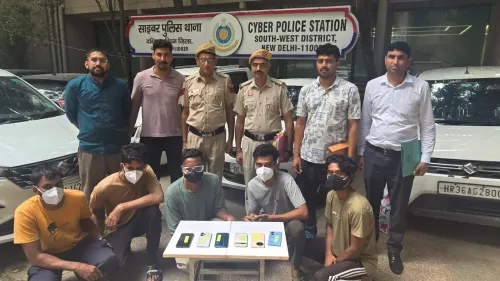
Recoveries include 39 POS machines , 45 SIM cards , 20 mobile phones , and 33 debit cards .
Delhi Police have dismantled a major cyber fraud syndicate linked to transactions worth over ₹30 crore, arresting seven accused in connection with an online shopping scam that first surfaced after a Delhi University student filed a complaint on the National Cybercrime Reporting Portal (NCRP). The arrests follow coordinated raids in Greater Noida and Kanpur, with the probe now connecting 27 cyber fraud complaints from across multiple states to the same network.
How the Scam Unfolded
Fatima, a student of Ramjas College, Delhi University, and a resident of Prayagraj, Uttar Pradesh, came across an advertisement for a kurti on an Instagram account named 'Kavya_kurti_hub'. She was redirected to a WhatsApp number, where she placed an order worth ₹799 and paid ₹400 in advance via a QR code.
She subsequently received a call regarding parcel delivery, during which the caller asked her to provide a passcode. The seller then persuaded her to make further payments — allegedly to generate the code and process a refundable charge. She transferred ₹1,150, ₹2,000, ₹2,650, and ₹650 in separate transactions. In total, she was defrauded of ₹6,450. Neither the parcel arrived nor was any money refunded. The complaint was registered at the Cyber Police Station, North District, on 4 September.
Trail of Digital Evidence
Investigators analysed nearly 200 mobile numbers, IMEI numbers, banking transactions, and digital records obtained from platforms including Flipkart, Zomato, and Blue Dart. The cheated funds were traced through Pine Labs Merchant to a Canara Bank account linked to Kizentech Solutions Pvt. Ltd. in Greater Noida.
Approximately 25 bank accounts, allegedly opened in the names of fictitious firms and individuals, were identified as conduits for routing cybercrime proceeds. During interrogation, investigators found that the accused allegedly set up shell firms, opened current accounts, and supplied them to other syndicate members in exchange for monthly payments and commissions.
Seven Arrests, Key Accused Identified
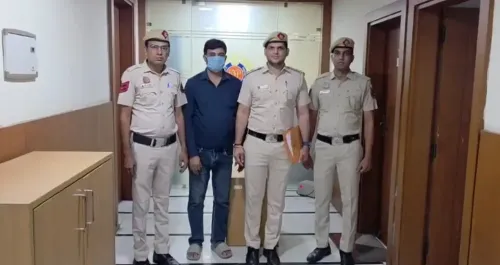
Following extensive technical surveillance, police conducted coordinated raids in Greater Noida on 16 October and arrested six accused: Aditya Mishra, Ayush Verma, Abhishek Pal, Himanshu Rana, Rahul Kumar, and Gaurav Pandey. A seventh accused, Udit Pratap Singh Bhadauriya, was arrested from Kanpur on 21 October.
According to police, Gaurav Pandey, an MBA graduate, allegedly played a pivotal role in arranging and supplying bank accounts to cyber fraudsters. The operation was led by SI Arvind Yadav under the supervision of senior North District police officers.
Recoveries and Scale of the Network
Police recovered 20 mobile phones, 45 SIM cards, 39 point-of-sale (POS) machines, 33 debit cards, 28 cheque books, 15 scanners, two laptops, five stamps, seven Aadhaar cards, five PAN cards, and 21 bank-related documents. The volume of POS machines and SIM cards points to a well-organised, multi-layer operation rather than an opportunistic fraud ring.
This case is part of a broader pattern of Instagram-based shopping frauds that exploit low-priced impulse purchases — typically clothing or accessories — to build false trust before extracting larger sums. The use of QR codes and fabricated 'passcode' pretexts to trigger repeat payments has been flagged by cybercrime units across several states this year.
Investigation Ongoing
Police said further investigation is underway to identify additional members of the network and establish links with other cyber fraud cases across states. The widening probe suggests the ₹30 crore figure could climb as more transactions are mapped to the syndicate.
Point of View
25 shell accounts, 39 POS machines — underlines how professionalised Instagram-based fraud has become, with MBA-educated operatives running what are effectively financial supply chains for cybercriminals. What is notable is that the entire syndicate unravelled from a single ₹6,450 complaint by a college student: a reminder that NCRP reporting, when acted upon swiftly, can yield disproportionate results. The deeper concern is that 27 complaints from multiple states were already in the system before this bust; the question is why the network was not flagged earlier through inter-state coordination. As long as KYC loopholes allow shell current accounts to be opened at scale, disrupting one node will simply shift operations to the next.
NationPress
26 Oct 2026
Frequently Asked Questions
What is the Delhi Police online shopping scam case about?
Delhi Police have busted a cyber fraud syndicate linked to transactions worth over ₹30 crore, arresting seven accused after a Delhi University student reported being cheated of ₹6,450 through a fake Instagram shopping account. The investigation has since connected 27 fraud complaints from across multiple states to the same network.
How did the Instagram shopping fraud work?
The fraudsters operated a fake Instagram account ('Kavya_kurti_hub') advertising kurtis at low prices. After redirecting buyers to WhatsApp, they collected advance payments via QR codes and then fabricated a 'passcode delivery' pretext to extract multiple additional transfers before cutting off contact.
Who were the seven accused arrested by Delhi Police?
Six accused — Aditya Mishra, Ayush Verma, Abhishek Pal, Himanshu Rana, Rahul Kumar, and Gaurav Pandey — were arrested in Greater Noida on 16 October. A seventh, Udit Pratap Singh Bhadauriya, was arrested from Kanpur on 21 October. Gaurav Pandey, an MBA graduate, allegedly supplied bank accounts to the fraud syndicate.
How was the fraud money traced by Delhi Police?
Investigators tracked the cheated funds through Pine Labs Merchant to a Canara Bank account linked to Kizentech Solutions Pvt. Ltd. in Greater Noida. They also analysed nearly 200 mobile numbers, IMEI data, and records from platforms including Flipkart, Zomato, and Blue Dart to map the network.
What precautions can online shoppers take to avoid Instagram scams?
Shoppers should avoid paying via QR codes to unverified sellers and should never make additional payments on the pretext of 'passcodes' or 'refundable charges' — a common fraud trigger. Any suspected cyber fraud should be reported immediately on the National Cybercrime Reporting Portal (NCRP) at cybercrime.gov.in.