NSA Doval Meets UAE President, Strengthens India-UAE Strategic Ties
Synopsis
NSA Ajit Doval's high-level meeting with UAE President Sheikh Mohamed bin Zayed marks India's second top-level diplomatic push to the Gulf in weeks — amid a West Asia crisis triggered by the killing of Iran's Supreme Leader and the closure of the Strait of Hormuz, threatening India's energy security and 3.5 million diaspora.
Key Takeaways
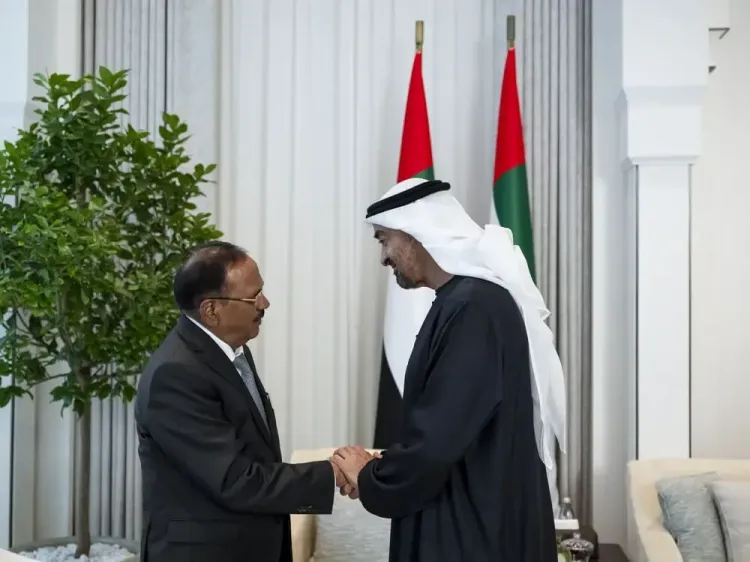
NSA Ajit Doval met UAE President Sheikh Mohamed bin Zayed Al Nahyan in Abu Dhabi on April 26, 2025 , conveying PM Modi's greetings.
This is India's second high-level visit to the UAE in April 2025 , following EAM Jaishankar's two-day visit earlier in the month.
Talks focused on deepening the India-UAE Comprehensive Strategic Partnership and the evolving West Asia regional situation .
The West Asia crisis escalated after a US-Israel joint strike on February 28 killed Iran's Supreme Leader Ayatollah Ali Khamenei , triggering Iranian military retaliation and closure of the Strait of Hormuz .
EAM Jaishankar had earlier thanked the UAE for protecting the welfare of nearly 3.5 million Indian nationals living in the Gulf amid the conflict.
India's diplomatic push signals growing concern over energy security , diaspora safety , and regional stability as core national security priorities.
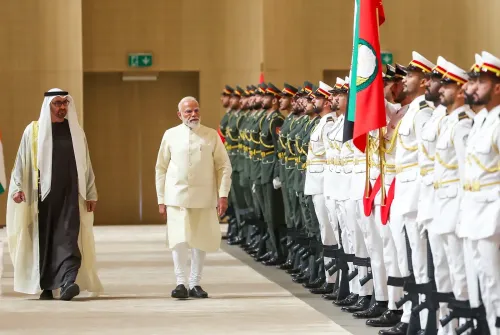
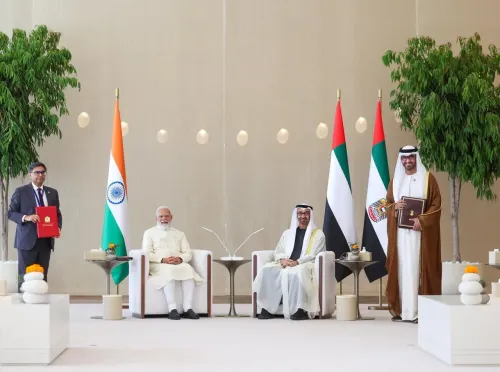
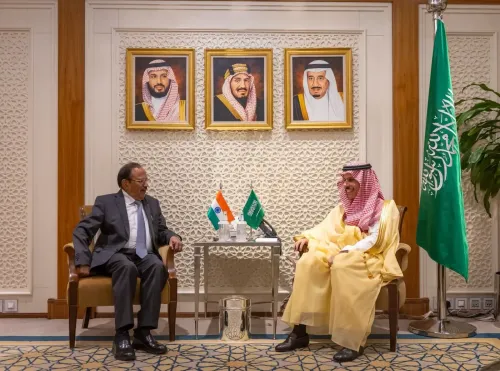
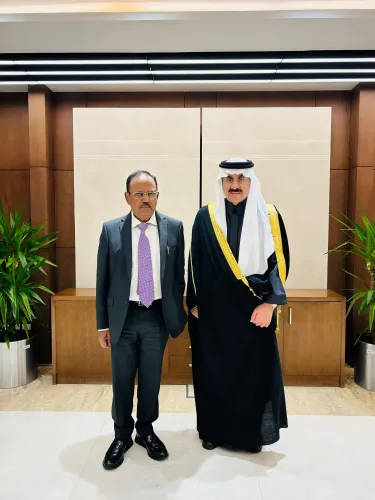
National Security Advisor (NSA) Ajit Doval made a high-level official visit to Abu Dhabi on Sunday, April 26, calling on UAE President Sheikh Mohamed bin Zayed Al Nahyan to strengthen the India-UAE Comprehensive Strategic Partnership. During the meeting, NSA Doval conveyed the greetings of Prime Minister Narendra Modi and held wide-ranging discussions on deepening bilateral cooperation, the volatile regional situation in West Asia, and other matters of shared concern.
High-Level Diplomatic Engagement
The Indian Embassy in the UAE confirmed the visit via an official post on X (formerly Twitter), stating: "NSA Ajit Doval paid an official visit to the UAE. He called on President HH Sheikh Mohamed bin Zayed Al Nahyan. Conveyed greetings of PM Narendra Modi. Measures to deepen Comprehensive Strategic Partnership, the regional situation, and other issues of mutual interest were discussed."
This visit marks the second high-level diplomatic engagement from India to the UAE within a single month, signalling the growing urgency and depth of the bilateral relationship at a time of significant regional instability.
Jaishankar's Earlier Visit Sets the Stage
Earlier this month, External Affairs Minister (EAM) S. Jaishankar undertook a two-day visit to the UAE, during which he also called on President Sheikh Mohamed bin Zayed Al Nahyan in Abu Dhabi. EAM Jaishankar conveyed Prime Minister Modi's greetings and expressed India's gratitude for the UAE's efforts in ensuring the safety and well-being of the Indian community amid the ongoing West Asia conflict.
Notably, Crown Prince of Dubai, Sheikh Hamdan bin Mohammed bin Rashid Al Maktoum, was also present during Jaishankar's meeting with the UAE President, underscoring the importance both nations attach to these engagements.
EAM Jaishankar posted on X: "Deeply honoured to call on President of UAE HH Sheikh Mohamed bin Zayed Al Nahyan in Abu Dhabi today. Conveyed warm greetings of Prime Minister Narendra Modi and our gratitude for ensuring well-being of the Indian community during the West Asia conflict. Thank him for his guidance on further strengthening the India-UAE Comprehensive Strategic Partnership."
India-UAE Talks on West Asia Crisis
On April 11, EAM Jaishankar held substantive talks with UAE Deputy Prime Minister and Foreign Minister Sheikh Abdullah bin Zayed Al Nahyan, focusing on the rapidly evolving situation in West Asia and its broader global implications. The discussions reflected India's proactive diplomatic posture in the region at a time of unprecedented volatility.
Jaishankar expressed confidence in the trajectory of bilateral relations, stating on X: "A real pleasure to meet DPM and FM of UAE Sheikh Abdullah bin Zayed Al Nahyan in Abu Dhabi this evening. Our conversation focused on the evolving regional situation and its implications. Conveyed our deep appreciation for ensuring the well-being of the Indian community in the UAE. Confident that our Comprehensive Strategic Partnership will advance further."
The EAM also interacted with members of the Indian diaspora in the UAE, highlighting the Indian government's sustained efforts to protect and support its nationals amid the regional conflict.
The West Asia Crisis: Background and Stakes
Tensions in West Asia escalated dramatically after the United States and Israel carried out a joint military operation against Iran on February 28. The strikes resulted in the death of Iran's former Supreme Leader, Ayatollah Ali Khamenei, triggering a large-scale Iranian military response against both Israel and US bases located across Gulf nations.
The conflict also led to the closure of the Strait of Hormuz, a critical global energy chokepoint, setting off a severe global energy crisis with ripple effects on economies worldwide, including India.
Strategic Significance for India
India's back-to-back high-level engagements with the UAE — first by the EAM and now by the NSA — reflect New Delhi's recognition of Abu Dhabi as a pivotal partner in navigating the West Asia crisis. The UAE is home to nearly 3.5 million Indian nationals, making diaspora welfare a core diplomatic priority.
Beyond humanitarian concerns, the India-UAE Comprehensive Strategic Partnership, established in 2017 and elevated in 2022, covers trade, energy, defence, and investment — all of which face pressure due to the ongoing regional conflict. India's energy security, heavily dependent on Gulf imports, is directly at stake.
As the West Asia conflict continues to evolve, further high-level diplomatic exchanges between India and key Gulf partners are expected, with New Delhi positioning itself as a stable, constructive voice in a region gripped by uncertainty.
Point of View
Now the NSA — is not routine protocol; it is a calibrated strategic signal. With the Strait of Hormuz closed and India's energy imports under threat, New Delhi is leveraging its deep ties with Abu Dhabi to secure both its diaspora and its economic lifelines. What the mainstream narrative misses is the NSA's role here: Doval's presence signals that this is no longer just a foreign policy conversation — it has entered the domain of national security. India is quietly but decisively building a Gulf crisis management architecture.
NationPress
16 Sept 2026
Frequently Asked Questions
Why did NSA Ajit Doval visit UAE on April 26, 2025?
NSA Ajit Doval visited the UAE to call on President Sheikh Mohamed bin Zayed Al Nahyan and discuss measures to strengthen the India-UAE Comprehensive Strategic Partnership. He also conveyed the greetings of Prime Minister Narendra Modi and discussed the regional situation in West Asia.
What is the India-UAE Comprehensive Strategic Partnership?
The India-UAE Comprehensive Strategic Partnership is a high-level bilateral framework established in 2017 and elevated in 2022, covering trade, energy, defence, investment, and people-to-people ties. It forms the backbone of one of India's most important Gulf relationships.
What is the West Asia conflict mentioned in the India-UAE talks?
The West Asia conflict refers to a large-scale military escalation that began after a joint US-Israel strike on Iran on February 28 killed Iran's Supreme Leader Ayatollah Ali Khamenei. Iran retaliated against Israel and US Gulf bases, and the closure of the Strait of Hormuz triggered a global energy crisis.
How many Indians live in the UAE and why does it matter diplomatically?
Approximately 3.5 million Indian nationals reside in the UAE, making it one of the largest Indian diaspora communities in the world. Their safety and welfare is a central concern driving India's high-level diplomatic engagement with Abu Dhabi amid the West Asia conflict.
Was this NSA Doval's first visit to the UAE in 2025?
This visit by NSA Doval came as the second high-level Indian diplomatic engagement with the UAE in April 2025 alone, following EAM S. Jaishankar's two-day visit earlier in the month. It signals the elevated urgency of India's Gulf diplomacy amid the ongoing regional crisis.