Will KP Sharma Oli Prevail Against Balen in Jhapa-5 Elections?
Synopsis
As Nepal's parliamentary elections approach on March 5, the spotlight is on the Jhapa-5 constituency, where KP Sharma Oli faces Balendra Shah, known as Balen. This contest symbolizes a clash between established political order and new forces, shaping the future of Nepali politics. Will Balen's fresh perspective resonate with voters?
Key Takeaways
KP Sharma Oli faces a significant challenge from Balen in Jhapa-5.
The election symbolizes the battle between old and new political ideologies.
Social media influences voter engagement and public perception.
Voter turnout in this constituency is crucial for both candidates.
Jhapa-5 has historically favored Oli, but shifting dynamics may favor Balen.
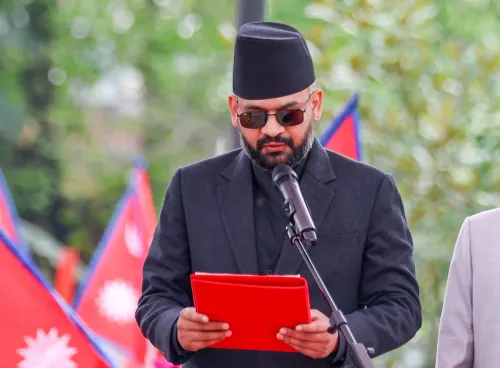
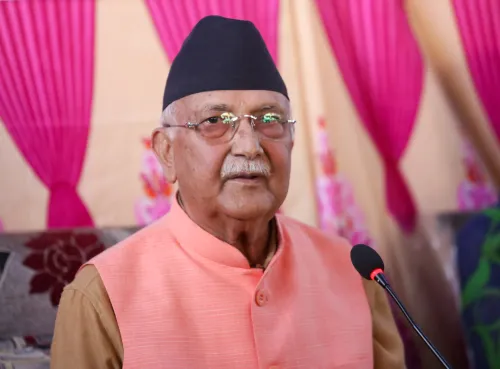
New Delhi, Feb 20 (NationPress) As the parliamentary elections approach in Nepal on March 5, all attention is focused on the Jhapa-5 constituency, where former Prime Minister KP Sharma Oli faces off against engineer-turned-rapper-turn-politician Balendra Shah, commonly known as Balen.
In previous elections, Oli was known for his extensive travels, addressing large rallies nationwide and establishing himself as a prominent figure capable of garnering votes across the country. This election marks Oli's eighth attempt in Jhapa, a region where he first won a seat 34 years ago. However, he is now perceived as being “confined to his own constituency,” indicating shifts in the political landscape, according to a report from the Kathmandu Post.
“Following Balen's resignation as Kathmandu's mayor to challenge Oli in Jhapa-5, the former Prime Minister has had limited opportunities to campaign for his party members elsewhere,” it noted this week.
Balen made history as the first independent candidate to assume the role of mayor of the capital, serving as the 15th mayor of Kathmandu Metropolitan City from May 2022 until his resignation in January this year.
During the last year’s youth protests, while serving as Prime Minister in a coalition government with the UML-Nepali Congress, Oli faced significant turmoil, leading to numerous fatalities and injuries during clashes with law enforcement.
After resigning in September 2025 amid public unrest, Balen became a symbol of support for Gen Z activists. Known for his “explosive opinions” shared primarily on social media, he commands a substantial following online. Balen actively supported the youth protesters and gained traction after the government lifted restrictions on social media.
Many social media users view him as the “voice of a new generation,” believing he would prioritize the nation’s welfare over personal gain, as reported last year. His tenure as mayor featured intense confrontations with the CPN-UML, according to a report by Republica last month.
“The conflicts spilled into social media, where Balen frequently used sharp satire against Oli. The latter responded with visible anger on public platforms,” the report stated.
“This long-standing verbal conflict has now transitioned to the electoral arena. By joining the Rastriya Swatantra Party (RSP), Balen has entered Oli's traditional stronghold in Jhapa-5. The RSP positions Balen as a potential future prime minister, framing this contest as a significant ideological battle: Oli, representing the established political order, versus Balen, the emerging force, making it a focal point of the March 5 House of Representatives election,” it added.
The Jhapa-5 constituency is characterized as a “stronghold of communist voters” and has historically been viewed as Oli's political fortress, where his past commanding victories present a substantial challenge for Balen.
Nonetheless, the report suggests that Balen may find opportunities among the “swing voters” evident in the 2023 election.
This time around, 163,379 voters are registered in Jhapa-5, and their decision will not only determine the outcome of this intense competition but could also influence the political futures of both candidates.
Point of View
It is crucial for the electorate to carefully assess both candidates. KP Sharma Oli has a long history of leadership, yet faces challenges from the emerging voice of the youth, Balen. This election is pivotal, not just for the candidates, but for the direction of Nepal's political landscape. The Nation stands with the commitment to inform and empower voters to make the best choices for their future.
NationPress
15 Oct 2026
Frequently Asked Questions
Who is Balendra Shah?
Balendra Shah, commonly known as Balen, is an engineer-turned-rapper and politician who previously served as Kathmandu's mayor.
What is the significance of the Jhapa-5 constituency?
Jhapa-5 is historically a stronghold for KP Sharma Oli and is crucial for the parliamentary elections in Nepal.
Why is the election on March 5 important?
The election will determine not only the representation of Jhapa-5 but also the future political landscape of Nepal.
What does Balen represent in these elections?
Balen represents a new generation of leadership and has gained popularity among younger voters.
How has social media influenced this election?
Social media has played a vital role in shaping public opinion and providing a platform for candidates to engage with voters.