Should South Korea's Opposition Leader Demand Special Counsel Probes?
Synopsis
In a significant political move, South Korean Opposition leader Jang Dong-hyeok is calling for independent special counsel probes into allegations against the ruling Democratic Party and its ties to the Unification Church. This article explores the implications of these demands amidst ongoing controversies and the challenges facing the current administration.
Key Takeaways
Jang Dong-hyeok calls for special counsel probes into the ruling party.
Allegations involve ties with the Unification Church and bribery.
Concerns raised over economic issues affecting the public.
Independent investigations are essential for accountability.
Political tensions continue to rise ahead of local elections.
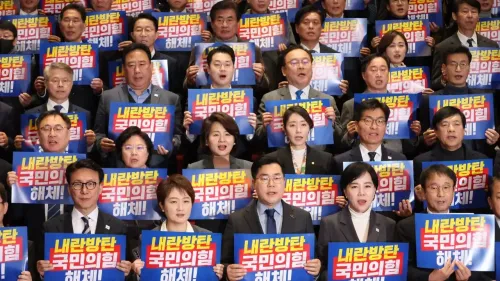
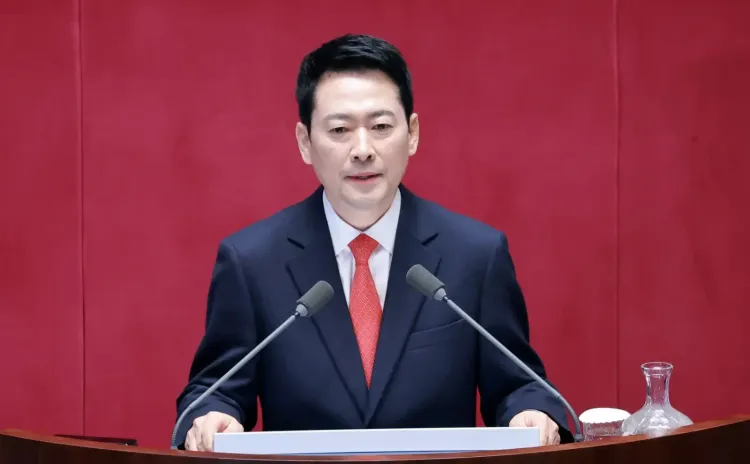
Seoul, Feb 4 (NationPress) The leader of South Korean Opposition, Jang Dong-hyeok, has urged for the initiation of independent special counsel investigations into the alleged connections between the Unification Church and lawmakers from the ruling Democratic Party (DP), along with bribery claims tied to the DP nominations.
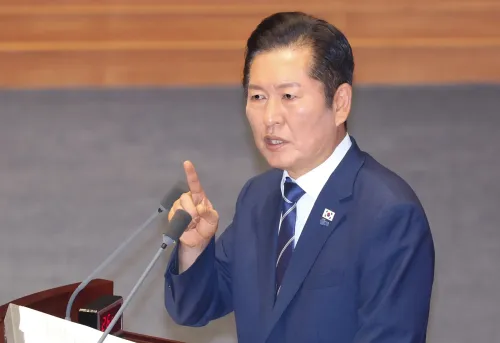
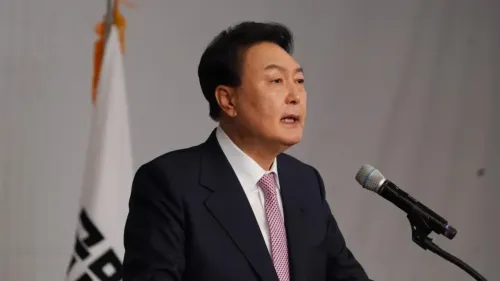
During a speech at the National Assembly, Jang, representing the main opposition People Power Party, also insisted on a thorough investigation regarding the prosecution's controversial choice last November to forgo an appeal in a land development corruption case that involves President Lee Jae Myung.
Jang's remarks came as the DP is advocating for a wide-ranging special counsel inquiry that could consolidate three distinct probes into former President Yoon Suk Yeol's unsuccessful martial law attempt in December 2024, allegations against former first lady Kim Keon Hee, and the death of a young Marine.
"There are numerous instances where special counsel investigations are genuinely necessary," Jang stated during his address as the head of a parliamentary negotiation group, pushing for three distinct probes targeting the DP and the Lee administration.
He accused President Lee and the DP of attempting to undermine liberal democracy and destabilize the judiciary system.
According to Jang, the recent three special counsel probes concluded with a whimper after extensive investigations into opposition lawmakers, claiming that the DP is seeking another round of investigations for political advantage ahead of the local elections in June.
Legally, a special counsel investigation is initiated by the passage of a bill in the National Assembly, followed by the president appointing a special prosecutor from candidates recommended by political parties or third parties, as reported by the Yonhap news agency.
Last month, Jang conducted an eight-day hunger strike to compel the DP to agree to independent counsel investigations regarding allegations that certain DP lawmakers received political donations from the Unification Church and were involved in bribery related to nominations.
In his address, Jang also expressed concerns about inflationary pressures, the depreciating local currency, skyrocketing housing costs in the Seoul metropolitan region, and increasing trade pressures from the United States. He proposed a one-on-one meeting with President Lee to address these pressing issues.
"Let’s put aside political disagreements, recognize the economic challenges and the impact on people's livelihoods, and collaboratively seek solutions," Jang remarked.
Although Lee had invited Jang to a meeting with representatives from both ruling and opposition parties last month, Jang declined, instead advocating for separate discussions.
Point of View
It's imperative to recognize that political accountability is crucial in any democratic society. Jang Dong-hyeok's call for special counsel investigations reflects a demand for transparency and integrity in governance. The ongoing tensions between the ruling party and the opposition highlight the need for independent oversight to ensure that allegations of misconduct are thoroughly examined.
NationPress
17 Sept 2026
Frequently Asked Questions
What are the main allegations against the ruling Democratic Party?
The allegations include ties with the Unification Church and bribery linked to party nominations.
Who is Jang Dong-hyeok?
Jang Dong-hyeok is the leader of the South Korean opposition party, the People Power Party.
What is the significance of special counsel probes?
Special counsel probes are crucial for independent investigations into allegations of misconduct within political parties.
What did Jang demand in his speech?
He demanded separate probes into the DP's alleged misconduct and an independent investigation into a land development corruption case involving President Lee.
What issues did Jang raise regarding the economy?
He addressed concerns about inflation, currency depreciation, rising housing prices, and trade pressures from the U.S.