US indictment: Jaggu Bhagwanpuria gang lured Indian youth with fake visas, paid ₹20,000 for murder
Synopsis
A 44-page US federal indictment has blown open the alleged recruitment playbook of the Jaggu Bhagwanpuria gang — a Punjab-origin syndicate that reportedly paid Indian youth as little as ₹20,000 to commit murder, used fake visa promises to expand internationally, and built a network of over 1,000 members across multiple continents. One suspect was arrested by the FBI in Vermont this week.
Key Takeaways
A 44-page US federal indictment charges 15 defendants , including alleged gang leader Jaggu Bhagwanpuria , with running a transnational organised crime network.
The gang allegedly paid recruits as little as ₹20,000 ($200) to commit murder and deliberately targeted minors to exploit lower criminal penalties.
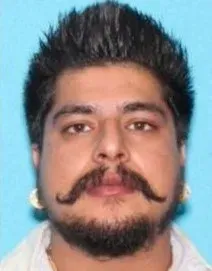
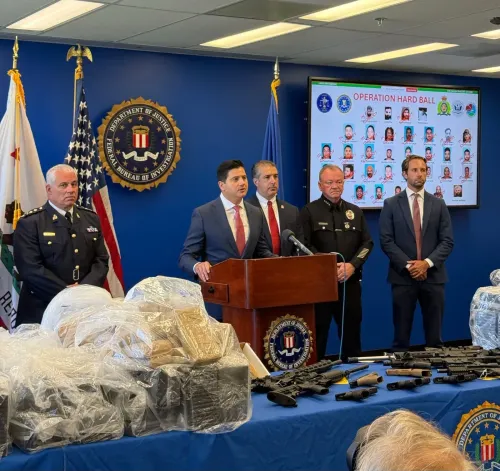
Indian national Nitish Kaushal was arrested by the FBI in Vermont this week after being placed on its Most Wanted list.
The organisation allegedly grew to over 1,000 members worldwide , including more than 100 in the United States , engaging in murder, drug trafficking, extortion, and money laundering.
Prosecutors allege the group originated in Punjab and broke away from the Lawrence Bishnoi organised crime group before expanding to the US, Canada, UK, Europe, Australia, and New Zealand.
Allegations of coordination with corrupt Punjab law enforcement officials to fabricate cases against rivals remain unproven in court.
A US federal indictment has revealed that the Jaggu Bhagwanpuria Organised Crime Group, a transnational criminal syndicate with roots in Punjab, India, allegedly recruited vulnerable young Indians by promising money, power, and migration opportunities to countries including the United States and Canada — while reportedly paying some recruits as little as ₹20,000 (approximately $200) to commit murder on behalf of the organisation. The 44-page indictment, filed in the US District Court for the Central District of California, charges 15 defendants and offers an unusually detailed look into the alleged recruitment machinery of a criminal network that prosecutors say now spans multiple continents.
The Indictment and Key Arrests
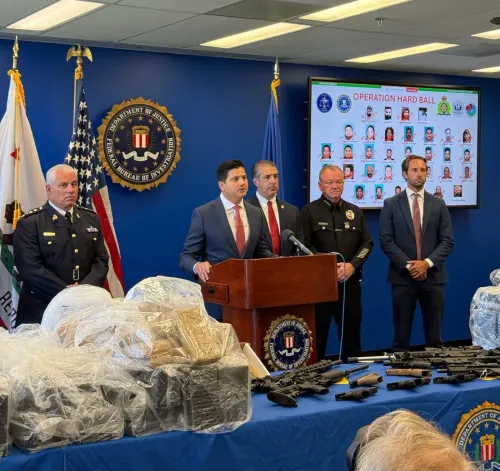
The court filing charges 15 individuals, including alleged gang leader Jaggu Bhagwanpuria and Indian national Nitish Kaushal, who was arrested by the Federal Bureau of Investigation (FBI) in Vermont this week after being placed on its Most Wanted list. Prosecutors allege that Bhagwanpuria initially operated under the Lawrence Bishnoi organised crime group before breaking away to build an independent international criminal network headquartered in India, with members spread across the United States, Canada, the United Kingdom, Europe, Australia, and New Zealand.
How the Gang Allegedly Recruited Youth
According to the indictment, the organisation deliberately targeted 'vulnerable, disadvantaged populations in India' and specifically sought to recruit minors, exploiting the fact that juveniles face lower criminal penalties for violent offences. Recruitment coordinators allegedly lured young people with promises of money, notoriety, power, and the ability to escape India. In certain parts of the country, the group reportedly paid recruits as little as ₹20,000 — roughly $200 — to carry out killings on the organisation's behalf.
Prosecutors further allege that recruiters actively sought individuals who could qualify for student visas or foreign work visas. Members who proved their loyalty were allegedly rewarded by being sent to operate in foreign countries, effectively using legitimate visa pathways as a cover for overseas criminal expansion.
Scale of Operations and Criminal Activities
The indictment alleges the organisation eventually grew to more than 1,000 members and associates worldwide, including over 100 in the United States alone. Members allegedly engaged in a broad range of criminal activities: murder, kidnapping, drug trafficking, extortion, firearms trafficking, money laundering, and human smuggling. Prosecutors contend that proceeds from these activities were routinely funnelled back to the organisation's leadership in India.
The gang allegedly accepted murder-for-hire contracts, established drug trafficking routes across North America, smuggled firearms into Canada, and coordinated violent crimes remotely from India using encrypted communication platforms and contraband mobile phones. Members reportedly gathered personal information about victims' relatives in India and threatened family members to enforce extortion demands.
Internal Discipline and Alleged Corruption
The indictment paints a picture of an organisation that used violence not only against rivals but also to maintain internal order. Members allegedly understood it was 'difficult, if not impossible' to leave the group, and believed that perceived disloyalty could result in harm to themselves or their family members in India. Prosecutors allege the organisation threatened — and in some cases carried out — violence against members who were suspected of cooperating with law enforcement.
Additionally, the indictment alleges that gang members worked with corrupt law enforcement officials in Punjab, providing false information against rivals to generate fabricated criminal cases, which were then used as leverage to extort money from victims. Those allegations remain unproven in court.
What Happens Next
The case, filed in the Central District of California, is expected to proceed through the US federal court system. The arrest of Nitish Kaushal in Vermont marks one of the first confirmed FBI apprehensions linked to the indictment. Legal proceedings against the remaining defendants — many of whom are believed to be operating outside the United States — are likely to involve international law enforcement cooperation. The indictment's allegations, while sweeping, remain charges and have not been proven in court.
Point of View
But for what it maps: a structured pipeline that converts economic desperation in Punjab into overseas criminal manpower. The ₹20,000-per-murder figure is not an anomaly — it is a recruitment price point, which tells you something about the depth of vulnerability being exploited. That the gang allegedly used legitimate student and work visa channels for expansion should prompt a harder look at how transnational crime syndicates exploit legal migration infrastructure. The alleged Punjab police nexus, if proven, would be the most damaging element — it would suggest that the state's law enforcement was not merely absent but actively complicit in the gang's consolidation.
NationPress
18 Jul 2026
Frequently Asked Questions
What is the Jaggu Bhagwanpuria Organised Crime Group?
The Jaggu Bhagwanpuria Organised Crime Group is a transnational criminal syndicate that allegedly originated in Punjab, India, under the leadership of Jaggu Bhagwanpuria. According to a US federal indictment, it broke away from the Lawrence Bishnoi organised crime group and expanded into an international network with over 1,000 members across the US, Canada, UK, Europe, Australia, and New Zealand.
What does the US indictment allege about how the gang recruited members?
The indictment alleges the gang targeted vulnerable and disadvantaged young people in India, promising money, notoriety, power, and opportunities to migrate abroad. Recruiters reportedly sought individuals eligible for student or work visas, and the group allegedly paid some recruits as little as ₹20,000 ($200) to commit murder. Minors were deliberately targeted because they face lower criminal penalties.
Who has been arrested in connection with the indictment?
Indian national Nitish Kaushal was arrested by the FBI in Vermont this week after being placed on its Most Wanted list. The indictment charges 15 defendants in total, including alleged gang leader Jaggu Bhagwanpuria, though not all have been apprehended.
What criminal activities is the gang accused of?
Prosecutors allege the organisation engaged in murder, kidnapping, drug trafficking, extortion, firearms trafficking, money laundering, and human smuggling. The gang allegedly accepted murder-for-hire contracts, established drug routes across North America, smuggled firearms into Canada, and used encrypted platforms to coordinate crimes remotely from India.
Are the allegations in the indictment proven?
No. The charges in the indictment are allegations and have not been proven in court. The indictment itself notes that certain allegations — including those involving corrupt Punjab law enforcement officials — remain unproven. All defendants are presumed innocent until proven guilty.