Pakistan-Afghanistan border weapons seizures expose smuggling networks
Synopsis
Back-to-back weapons seizures on Afghanistan's eastern frontier — including M4s, AK-47s, and suppressed handguns at Torkham — are doing more than intercepting arms. They are exposing a structural breakdown in Pakistan-Afghanistan relations, with Kabul alleging ISI facilitation and Islamabad's Urumqi demands falling flat. The Durand Line is becoming a fault line.
Key Takeaways
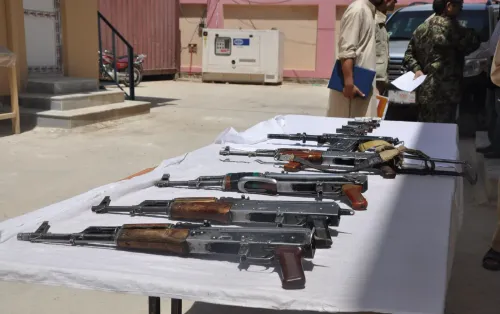
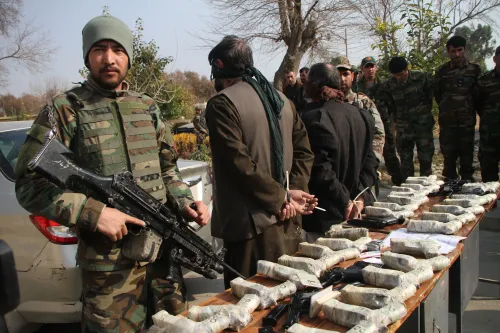
Afghan border forces seized 26 weapons including M4 rifles and AK-47s in Dand wa Patan , allegedly smuggled from Pakistan .
A separate cache — including suppressors and specialised handguns — was intercepted at Torkham , reportedly intended for covert attacks inside Afghanistan.
Afghan security circles allege elements of Pakistan's intelligence establishment facilitated the transfers; Pakistan has not formally responded.
Urumqi talks in China failed to produce a diplomatic reset, with both sides holding entrenched positions.
Pakistan reportedly demanded Afghan action against the Tehrik-i-Taliban Pakistan (TTP) and Baloch insurgents — a demand Kabul rejected as externally imposing Islamabad's domestic security burden.
Analysts describe Pakistan's approach as a 'strategic boomerang' rooted in decades of reliance on proxy actors.
Afghan border forces have intercepted multiple weapons caches allegedly smuggled from Pakistani territory, exposing what analysts describe as deep-rooted cross-border smuggling networks and widening the diplomatic fracture between Islamabad and Kabul. The seizures, occurring in quick succession, are being read not as isolated law-enforcement successes but as 'warning flares' illuminating a pattern too consistent to dismiss.
Key Seizures Along the Eastern Frontier
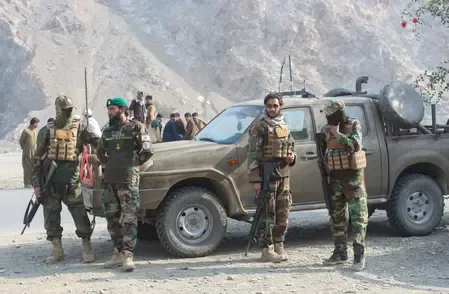
In the rugged terrain of Dand wa Patan, Taliban border units acting on what they described as 'precise intelligence' intercepted a shipment containing 26 weapons — including M4 rifles and AK-47s. The operation was conducted by the 3rd Border Brigade under cover of night, according to a detailed account in Eurasia Review. Only days earlier, a separate cache was seized at Torkham, comprising specialised handguns, suppressors, and equipment reportedly intended for covert attacks inside Afghanistan.
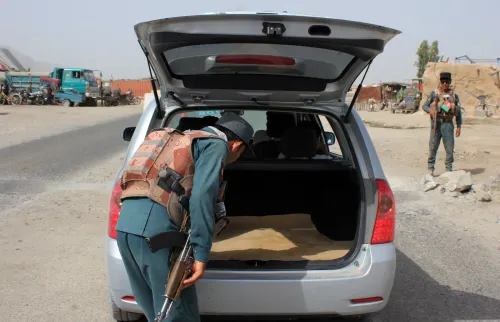
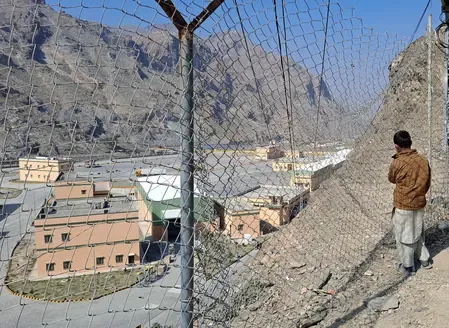
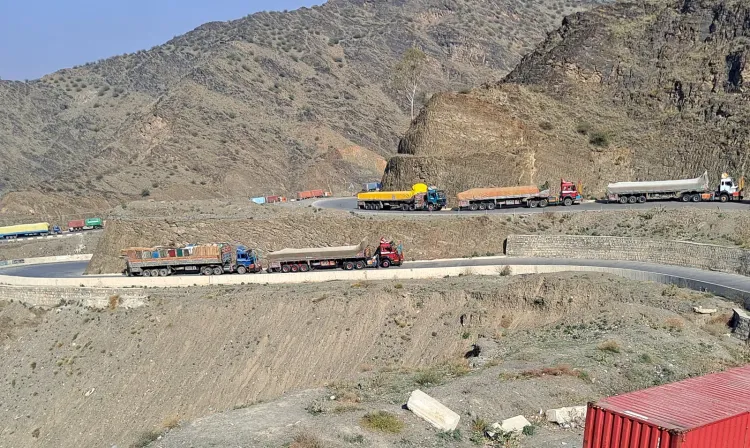
Notably, the Torkham crossing is one of the most heavily monitored transit points along the Durand Line — making the interception there particularly significant. This is not the first such incident; analysts tracking the region describe it as the latest chapter in a recurring pattern.
Allegations Against Pakistan's Intelligence Establishment
The seizures have intensified allegations within Afghan security circles that elements of Pakistan's intelligence establishment may have facilitated or permitted these weapons transfers. According to Eurasia Review, these claims remain contested, but their persistence reflects a long history of covert manoeuvring, proxy dynamics, and strategic ambiguity along the Durand Line.
'Even the suggestion of such involvement is enough to deepen the diplomatic rift,' the report noted. Pakistan has not formally responded to the specific allegations tied to these seizures.
Urumqi Talks Fail to Bridge the Gap
Amid the rising tensions, the recent Urumqi talks held in China were expected to provide a diplomatic reset between the two neighbours. Instead, according to reports, they reflected the entrenched positions of both sides. Pakistani officials reportedly advanced a familiar set of demands — calling on Afghan authorities to take action against the Tehrik-i-Taliban Pakistan (TTP) and Baloch insurgents, designate them as terrorists, and conduct operations against them on Afghan soil.
The Afghan delegation pushed back firmly. Their position, as reported, was unambiguous: Pakistan's domestic security challenges must be addressed within Pakistan's own institutional framework. 'If Islamabad has evidence, it should present it, not rely on sweeping accusations or pressure tactics,' the report quoted the Afghan stance. This approach, the report noted, aligns with a broader principle in international security — no state can be expected to serve as an external enforcement arm for another country's internal insurgencies.
Pakistan's Pattern of Externalising Blame
The Eurasia Review report characterised Pakistan's response as reflecting a recurring pattern of externalising blame — framing cross-border militancy as a problem originating in Afghanistan rather than confronting structural issues within its own borders. The report described Islamabad's position at the Urumqi talks as a 'maximalist position', effectively placing Pakistan's internal security challenges on Kabul's shoulders.
'This narrative may be politically convenient, but it obscures deeper drivers of instability: socioeconomic marginalisation, fragmented governance, and decades of reliance on proxy actors that have produced a dangerous strategic boomerang,' the report highlighted. This comes amid a broader deterioration in bilateral ties, with both countries trading accusations over cross-border militancy with increasing frequency.
What Comes Next
With the Urumqi talks producing no breakthrough and weapons interceptions continuing, the Afghanistan-Pakistan relationship appears locked in a cycle of mutual suspicion. The international community, particularly China — which hosted the recent dialogue — faces growing pressure to facilitate a more substantive engagement. Whether Islamabad and Kabul can move beyond entrenched positions to address the structural roots of border instability remains the central question.
Point of View
Long built on strategic ambiguity, is now generating blowback it cannot contain diplomatically. Islamabad's maximalist demands at Urumqi — asking Kabul to police the TTP on Afghan soil — reflect a fundamental unwillingness to reckon with the domestic roots of its militancy problem. The Durand Line has never been a settled boundary; it is now also becoming an accountability gap. China, which hosted the Urumqi talks, has a direct stake in stabilising this corridor for its Belt and Road investments — its silence on the impasse is itself a signal worth watching.
NationPress
16 Oct 2026
Frequently Asked Questions
What weapons were seized by Afghan forces from alleged Pakistani smuggling networks?
Afghan border forces seized 26 weapons including M4 rifles and AK-47s in Dand wa Patan, and a separate cache at Torkham comprising specialised handguns, suppressors, and equipment reportedly intended for covert attacks inside Afghanistan. Both seizures were attributed to alleged smuggling from Pakistani territory.
What are the allegations against Pakistan's intelligence establishment?
Afghan security circles allege that elements within Pakistan's intelligence establishment may have facilitated or permitted the weapons transfers. According to Eurasia Review, these claims remain contested but reflect a long history of proxy dynamics along the Durand Line.
What happened at the Urumqi talks between Pakistan and Afghanistan?
The Urumqi talks, held in China and intended as a diplomatic reset, instead reflected entrenched positions on both sides. Pakistan reportedly demanded Afghan action against the TTP and Baloch insurgents, while the Afghan delegation rejected this as placing Islamabad's domestic security burden on Kabul.
Why is the Afghanistan-Pakistan relationship so strained?
The relationship is strained by mutual accusations over cross-border militancy, contested allegations of intelligence involvement in arms smuggling, and unresolved disputes over the Durand Line. Analysts point to decades of proxy reliance and fragmented governance as structural drivers of the instability.
What is the significance of the Torkham seizure?
Torkham is one of the most heavily monitored transit crossings along the Durand Line, making a successful weapons interception there particularly notable. The cache reportedly included suppressors and equipment designed for covert operations, suggesting a level of operational sophistication beyond ordinary smuggling.