Pakistan backs China on Taiwan 'by every means': US Indo-Pacific strategy under scrutiny
Synopsis
Pakistan's formal backing of China's Taiwan reunification goal 'by every possible means' — enshrined in a Beijing joint statement — exposes a glaring contradiction at the heart of US foreign policy: Washington is simultaneously praising Islamabad and watching it anchor itself to the very power America's Indo-Pacific strategy is designed to counterbalance. A new think-tank report warns the cost could be paid in credibility with India.
Key Takeaways
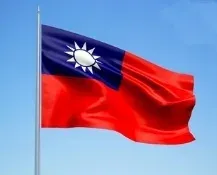
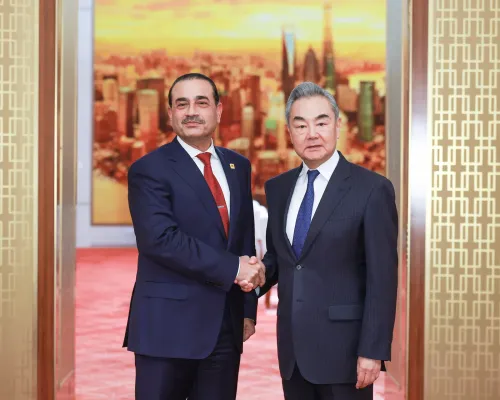
Pakistan formally endorsed China's Taiwan reunification goal, including 'by every possible means', in a joint statement following a high-level meeting in Beijing .
The Politeia Research Foundation report, published 18 June , warns this directly undermines US Indo-Pacific strategy on Taiwan , the South China Sea , and freedom of navigation.
US President Donald Trump has repeatedly praised Pakistani Army Chief General Asim Munir and PM Shehbaz Sharif , deepening tactical US-Pakistan engagement.
US Secretary of State Marco Rubio described India as a 'strategic alliance' partner during his recent New Delhi visit, underscoring the contradiction in Washington's dual approach.
The report urges US officials to reassess engagement with Pakistan to avoid 'shooting itself in the foot' on Indo-Pacific commitments and the India partnership.
Pakistan's formal endorsement of China's position on Taiwan — including support for reunification 'by every possible means' — is drawing sharp scrutiny from strategic analysts, who warn it directly undermines US Indo-Pacific strategy even as Washington deepens tactical engagement with Islamabad. A new report by the think tank Politeia Research Foundation, published on 18 June, argues that the US risks 'shooting itself in the foot' by courting Pakistan while that country aligns ever more closely with Beijing.
What the China-Pakistan Joint Statement Said
The joint statement issued by China and Pakistan following a high-level meeting in Beijing explicitly backed China's stance on the South China Sea, according to the report. The document stated: 'Pakistan reaffirmed its strong commitment to the one-China principle and holds the view that Taiwan is an inalienable part of the territory of the People's Republic of China, and the Taiwan question is at the core of China's core interests.'
Analysts note that endorsing reunification 'by every possible means' is a significant escalation in diplomatic language, effectively legitimising the use of force as a policy option — a position that cuts directly against the foundational principles of US Indo-Pacific strategy.
The Strategic Contradiction Washington Faces
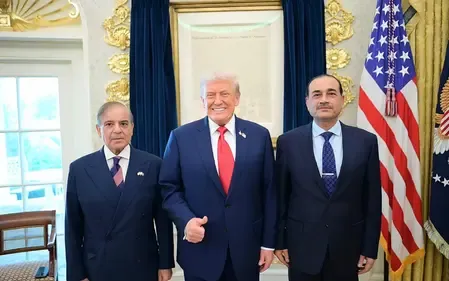
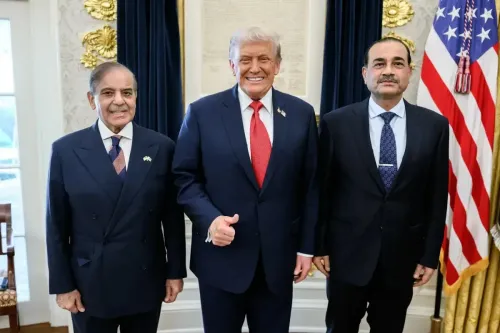
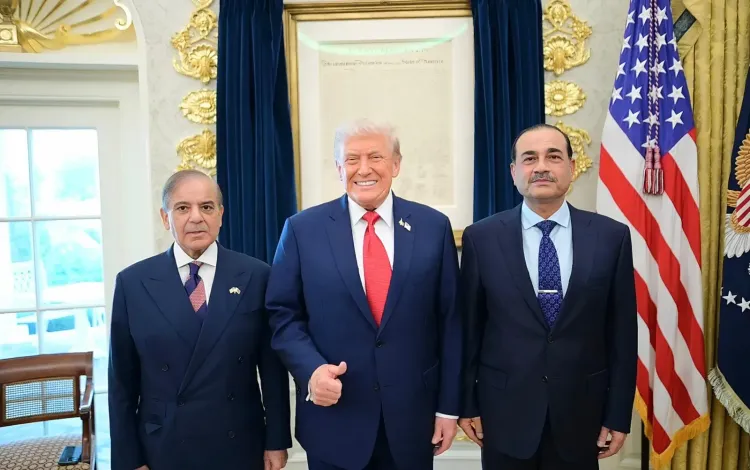
US President Donald Trump has repeatedly praised both Pakistani Army Chief General Asim Munir and Prime Minister Shehbaz Sharif, with Munir's name featuring prominently in his public remarks. Yet, the Politeia Research Foundation report argues that this tactical warmth obscures a deepening strategic contradiction.
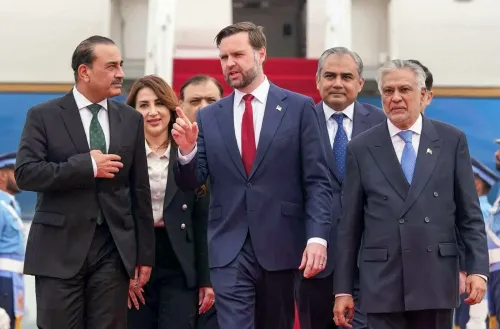
'As Washington deepens tactical engagement with Pakistan, Islamabad is simultaneously aligning itself more closely with China on Taiwan, the South China Sea, CPEC, and Beijing's broader strategic vision. This growing China-Pakistan strategic convergence raises serious questions about America's Indo-Pacific strategy and its long-term partnership with India,' the report stated.
This is not an isolated development. Pakistan's alignment with China on multilateral platforms has been consistent over the past decade, but the explicit endorsement of Beijing's Taiwan position in a bilateral joint communiqué represents a qualitative shift, the report argued.
Implications for the US-India Strategic Partnership
The report's concerns gain additional weight in the context of recent high-level India-US diplomacy. During his visit to New Delhi, US Secretary of State Marco Rubio repeatedly used the term 'strategic alliance' across multiple engagements — including delegation-level talks, a joint press briefing with External Affairs Minister S. Jaishankar, and public remarks — signalling that Washington views India as a long-term anchor in the Indo-Pacific.
The report highlighted the tension this creates: deepening ties with Pakistan risk eroding the credibility of that very partnership with India, particularly given New Delhi's long-standing concerns about Islamabad's role as a conduit for Chinese strategic interests in South Asia.
What the Report Recommends
The Politeia Research Foundation urged US officials to reassess both the policy approach and the depth of engagement with Pakistan. It warned that Washington must not allow tactical considerations — whether related to counter-terrorism, regional stability, or bilateral optics — to erode its core Indo-Pacific commitments on Taiwan's status quo, freedom of navigation, and the balance of power.
'The US must ensure that it is not shooting itself in the foot by undermining its own interests in the Indo-Pacific region, particularly regarding Taiwan, while at the same time weakening its partnership with India for the sake of Pakistan, whatever the reason may be,' the report concluded.
As the geopolitical fault lines in the Indo-Pacific sharpen, Washington's ability to hold together a coherent regional strategy — one that accommodates both its Pakistan engagement and its India partnership — faces an increasingly credible stress test.
Point of View
Which is the language of force. Each time Trump praises Asim Munir, he hands Beijing a signal that its Pakistan investment is paying diplomatic dividends at America's expense. India is watching, and so is every Indo-Pacific partner weighing the reliability of US commitments.
NationPress
19 Sept 2026
Frequently Asked Questions
What did Pakistan say about Taiwan in the China-Pakistan joint statement?
Pakistan reaffirmed its support for the one-China principle and endorsed China's goal of reunification with Taiwan, including 'by every possible means'. The statement also backed China's position on the South China Sea, according to the Politeia Research Foundation report.
Why does Pakistan's China alignment concern US strategists?
US Indo-Pacific strategy rests on maintaining Taiwan's status quo, freedom of navigation, and a regional balance of power — all of which Pakistan's joint statement with China contradicts. Analysts warn that US tactical engagement with Islamabad is inadvertently strengthening a country that is actively undermining Washington's core regional objectives.
How does this affect US-India relations?
US Secretary of State Marco Rubio recently described India as a 'strategic alliance' partner during his New Delhi visit. The Politeia Research Foundation report argues that continued US engagement with Pakistan — which openly aligns with China against Indian and US interests — risks eroding the credibility of that India partnership.
What is the Politeia Research Foundation's recommendation to the US?
The think tank urges US officials to reassess the depth and nature of their engagement with Pakistan, warning that tactical considerations must not be allowed to undermine America's long-term Indo-Pacific commitments or its strategic partnership with India.
What is CPEC and why is it relevant here?
The China-Pakistan Economic Corridor (CPEC) is a flagship Belt and Road Initiative project linking China's Xinjiang province to Pakistan's Gwadar port. The report flags Pakistan's alignment with China on CPEC, Taiwan, and the South China Sea as part of a broader, deepening strategic convergence between Beijing and Islamabad that runs counter to US interests.