Pakistan uses proxy groups to destabilise neighbours, report finds
Synopsis
A detailed report by the Afghan Diaspora Network lays bare how Pakistan's military has institutionalised proxy warfare as foreign policy — active simultaneously against India in J&K and against the Taliban in Afghanistan. With the FATF pressure gone and US-Pakistan ties warming since 2025, the report warns the last external brakes on the strategy have been removed, raising the risk of mass-casualty conflicts across South Asia.
Key Takeaways
Pakistan has used jihadist proxy groups as a foreign policy instrument for more than 70 years , according to an Afghan Diaspora Network report.
In April 2025 , Pakistan-backed terrorists killed 26 civilians in Pahalgam, J&K ; India launched Operation Sindoor in response in May 2025 .
Afghanistan's Ministry of Defence says its forces killed 28 and captured 32 Pakistan-linked fighters in Nuristan .
The Taliban has accused Pakistan's military of sheltering IS-K and actively destabilising the region.
Pakistan's exit from the FATF grey list and renewed US-Pakistan ties post-2025 have, critics argue, removed the last external pressure on Islamabad.
The report warns of growing risk of major military conflicts and mass-casualty events in South Asia .
Pakistan continues to pursue a deliberate policy of fomenting instability in its neighbourhood through jihadist proxy groups — a strategy described in a report by the Afghan Diaspora Network as cheap, easily deniable, and structurally beneficial to the Pakistan Army, even as ordinary Pakistani citizens bear the ultimate social and economic costs.
A Strategy More Than Seven Decades Old
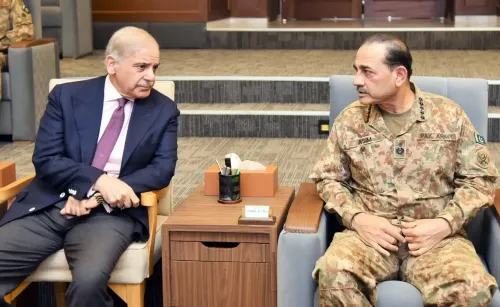
According to the report, Pakistan has been deploying proxy outfits as instruments of foreign policy for more than 70 years, with the approach now active on two simultaneous fronts — against India in Jammu and Kashmir and against the Taliban in Afghanistan. The report notes that top military leadership in Rawalpindi has consistently backed this approach, using it to preserve institutional power and defence budgets.
The Pahalgam Attack and Operation Sindoor
Events of 2025 underscored that the strategy remains operational. In April 2025, Pakistan-backed terrorists killed 26 civilians in Pahalgam, Jammu and Kashmir. The Resistance Front (TRF), widely identified as a proxy of Lashkar-e-Tayyaba (LeT), claimed responsibility. In response, India's armed forces launched Operation Sindoor in May 2025, carrying out what officials described as a focused, measured, and non-escalatory military action targeting high-value terror infrastructure in Pakistan and Pakistan-occupied Kashmir (PoK). The depth of the Pakistan military-militant nexus became visibly apparent in the aftermath, with photographs showing coffins of killed militants draped in Pakistan's national flag and senior uniformed army officers attending the funerals.
Pakistan's Proxy War in Afghanistan
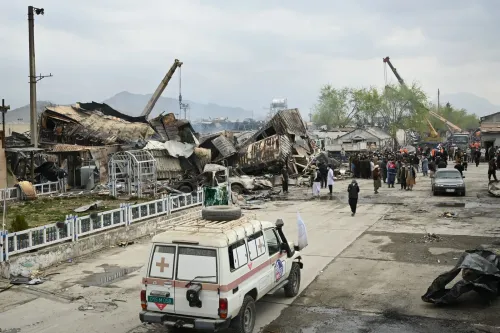
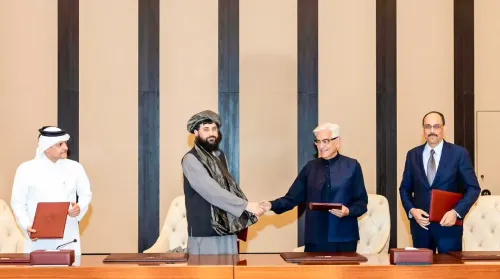
The report also details Pakistan's long history of proxy engagement in Afghanistan. Islamabad helped create the Afghan Taliban and backed the Haqqani network over decades. The director of Pakistan's Inter-Services Intelligence (ISI) was in Kabul within days of the Taliban's seizure of power in 2021. However, relations have since deteriorated sharply. Afghanistan's Ministry of Defence recently stated that its forces killed 28 fighters and captured 32 others in Nuristan, accusing Pakistani security forces of financing and training those individuals. A Taliban spokesperson separately alleged that a faction within Pakistan's military was actively working to destabilise the region and accused Islamabad of sheltering the Islamic State Khorasan (IS-K) rather than combating it.
Why External Pressure Has Diminished
Rahmatullah Achakzai, a journalist based in Balochistan, is quoted in the report explaining the strategic calculus: 'Pakistan continues using this strategy of creating instability in the neighbourhood through proxy groups because it is cheap, easy to deny, and benefits the military. It helps the Pakistan Army keep its budget and political power intact, while the local population bears the ultimate costs. International sanctions have mostly targeted individuals and terrorist outfits, not the Pakistan Army itself.'
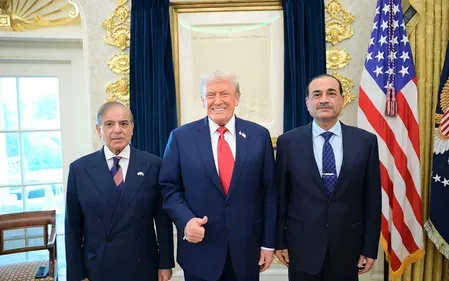
The report further warns that Pakistan's removal from the FATF grey list — achieved, critics argue, through regulatory paperwork changes rather than substantive reforms — and renewed US-Pakistan ties since 2025 have collectively stripped away the last meaningful levers of external pressure. 'South Asia now faces increasing chances of instability, aided by the Pakistani military, that may lead to major military conflicts and possibly mass-casualty events,' the report states.
What This Means for Regional Security
The convergence of these dynamics — a resurgent proxy network, weakened international accountability mechanisms, and a diplomatically rehabilitated Pakistan Army — represents a compounding risk for South Asia. With India having already demonstrated military escalation readiness through Operation Sindoor and Afghanistan now openly accusing Islamabad of backing fighters on its soil, the proxy strategy that once operated in the shadows is increasingly drawing direct state responses. How regional powers and multilateral bodies respond to the accountability gap will shape the security calculus in the months ahead.
Frequently Asked Questions
What does the Afghan Diaspora Network report say about Pakistan's proxy policy?
The report concludes that Pakistan continues to deploy jihadist proxy groups to destabilise its neighbours because the strategy is cheap, deniable, and preserves the Pakistan Army's budget and political dominance. It notes the approach has been active for over 70 years and is currently directed against both India and Afghanistan.
How is Pakistan's proxy strategy connected to the Pahalgam attack and Operation Sindoor?
In April 2025, Pakistan-backed terrorists killed 26 civilians in Pahalgam, Jammu and Kashmir, with the Resistance Front — a Lashkar-e-Tayyaba proxy — claiming responsibility. India responded in May 2025 with Operation Sindoor, targeting terror infrastructure in Pakistan and PoK; funerals of killed militants attended by uniformed Pakistani army officers publicly underscored the military-militant connection.
Why has international pressure on Pakistan's proxy networks diminished?
According to the report, Pakistan's removal from the FATF grey list — achieved largely through paperwork adjustments rather than structural reform, critics argue — and the resumption of close US-Pakistan ties since 2025 have together eliminated the main external levers that previously constrained Islamabad. The report warns this creates escalating risks of conflict across South Asia.
What is Pakistan accused of doing in Afghanistan?
Afghanistan's Ministry of Defence has accused Pakistani security forces of financing and training fighters who were killed and captured in Nuristan. A Taliban spokesperson separately accused a faction of Pakistan's military of sheltering IS-K and attempting to destabilise the region — a sharp deterioration from the two sides' earlier alignment.
Who is Rahmatullah Achakzai and what did he say?
Rahmatullah Achakzai is a journalist based in Balochistan who is quoted in the Afghan Diaspora Network report. He argued that Pakistan's proxy strategy persists because it benefits the army institutionally, while ordinary citizens pay the cost, and that international sanctions have largely targeted individuals and outfits rather than the Pakistan Army itself.