Pakistan's cross-border terrorism deepens South Asia instability, report finds
Synopsis
A report in the European Times lays out in stark detail how Pakistan's military establishment has used ISI-backed militant networks as a decades-long instrument of proxy war against India — from the 2001 Parliament attack to the 2025 Pahalgam massacre — arguing the strategy has imposed irreversible social, psychological, and economic costs on India while destabilising the entire South Asian region.
Key Takeaways
A European Times report published on 10 October 2026 concludes that Pakistan has used cross-border terrorism as a deliberate, long-term strategy to weaken India.
The ISI allegedly backed militant networks by providing sanctuary, training, weapons, and funding through narcotics and extortion channels.
Major attacks cited include the 2001 Parliament attack , the 2008 Mumbai attacks ( 166 killed , 300+ injured ), the 2016 Uri attack ( 19 soldiers killed), and the 2019 Pulwama bombing ( 40 CRPF personnel killed).
The 2025 Pahalgam attack , which killed 26 people — mostly Hindu tourists — is cited as evidence the threat remains active.
The report acknowledges India's institutional resilience but warns the psychological and financial toll on Indian society remains 'immense.'
A report published in the European Times has found that Pakistan's sustained use of cross-border terrorism has deepened instability across South Asia, inflicting a heavy economic and social burden on India over decades of what the report describes as a deliberate proxy war. The assessment, released on 10 October 2026, argues that Islamabad has wielded terrorism as both 'a weapon and a war of endurance,' with the stated aim of weakening India over the long term.
A Strategy of Proxy War
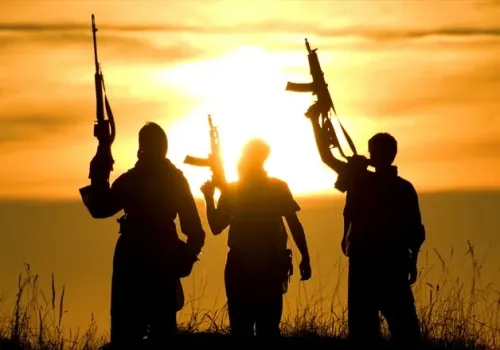
According to the report, Pakistan's military establishment has long cast India as an existential threat and, in response, cultivated militant networks by providing sanctuary, training, and logistical support. Recruitment initially targeted Kashmiri youth before expanding to foreign fighters — many of them veterans of the Afghan-Soviet war. Backed by Inter-Services Intelligence (ISI), these recruits reportedly underwent training at camps inside Pakistan, learning weapons handling, explosives use, guerrilla tactics, and survival skills.
The report states that infiltrators were assisted in crossing the Line of Control (LoC) through guides and terrain advantages, with alleged cover from the Pakistan Army. Weapons, encrypted communications, and financing are said to have moved through ISI channels, sympathetic donors, narcotics trafficking, and extortion networks.
Landmark Attacks and Their Human Cost
The report catalogues a series of major attacks attributed to Pakistan-based groups. The 2001 Parliament attack, reportedly carried out by operatives of Jaish-e-Mohammed and Lashkar-e-Taiba trained in Pakistan, targeted the heart of Indian democracy. The 2008 Mumbai attacks — meticulously planned from Pakistani soil, according to the report — killed 166 people and injured over 300, turning the city into what the report describes as 'a war zone for three harrowing days.'
The 2016 Uri attack claimed 19 soldiers and prompted India's retaliatory surgical strikes across the LoC. The 2019 Pulwama bombing killed 40 CRPF personnel, reigniting bilateral tensions and leading to aerial confrontations between the two nuclear-armed neighbours. Most recently, the report cites the 2025 Pahalgam terrorist attack, in which a Pakistan-based group gunned down 26 people — predominantly Hindu tourists — underscoring what it calls the continuing and undiminished threat.
Economic and Psychological Toll on India
The report is unequivocal about the broader damage inflicted on Indian society. 'Terrorism has become one of the most corrosive burdens India has had to bear, not only in the lives lost but in the social, emotional, and economic scars it leaves behind,' it states. It argues that decades of sustained militancy have scarred generations, reshaped national priorities, and imposed a heavy toll on growth and stability — forcing India into what it describes as 'a perpetual cycle of vigilance, mobilisation, and loss.'
Despite this, the report acknowledges that the resilience of the Indian people and its institutions has allowed the country to withstand sustained pressure over time.
Broader Regional Implications
The findings arrive against a backdrop of elevated India-Pakistan tensions following the Pahalgam attack and subsequent diplomatic and military developments. Analysts have long argued that Pakistan's use of non-state actors as instruments of foreign policy has not only destabilised India but has corroded Pakistan's own internal security architecture. Critics note that the international community's response to state-sponsored terrorism emanating from Pakistani territory has remained inconsistent, with geopolitical considerations frequently outweighing accountability. The report's publication from a European outlet adds to a growing body of Western commentary scrutinising Pakistan's conduct.
How the international community — particularly multilateral institutions and Pakistan's key allies — responds to such assessments will shape the diplomatic landscape across South Asia in the months ahead.
Point of View
With India-Pakistan relations at one of their lowest points in years. What mainstream coverage tends to underplay is the cumulative economic cost of this proxy war on India's development trajectory — the security spending, the disrupted investment in Jammu and Kashmir, the generational psychological burden. The report's framing of Pakistan's doctrine as a 'war of attrition' is analytically sound, but the harder question it does not answer is why the international community, including Pakistan's own financial guarantors, has repeatedly stopped short of imposing costs that would alter Islamabad's calculus. Until that accountability gap closes, reports like this risk documenting a problem without shifting the structural incentives that perpetuate it.
NationPress
10 Oct 2026
Frequently Asked Questions
What does the European Times report say about Pakistan and cross-border terrorism?
The report concludes that Pakistan has deliberately used cross-border terrorism as a strategic tool to weaken India, describing it as an undeclared war of attrition backed by the ISI through militant training, infiltration support, and financing. It argues this strategy has deepened instability across South Asia and imposed heavy economic and social costs on India.
Which major terrorist attacks on India does the report cite?
The report highlights the 2001 Parliament attack by Jaish-e-Mohammed and Lashkar-e-Taiba operatives, the 2008 Mumbai attacks that killed 166 people and injured over 300, the 2016 Uri attack that killed 19 soldiers, the 2019 Pulwama bombing that killed 40 CRPF personnel, and the 2025 Pahalgam attack that killed 26 people, mostly Hindu tourists.
How does the report describe Pakistan's role in supporting militant networks?
According to the report, the ISI provided sanctuary, training, and logistical support to militants — including weapons handling, explosives, and guerrilla tactics — while allegedly facilitating LoC infiltration with military cover. Funding reportedly flowed through ISI channels, sympathetic donors, narcotics trafficking, and extortion.
What has been the impact of Pakistan-backed terrorism on India?
The report says terrorism has scarred generations of Indians, reshaped national priorities, and imposed a heavy toll on economic growth and social stability. It describes India as trapped in 'a perpetual cycle of vigilance, mobilisation, and loss,' though it also acknowledges the resilience of Indian institutions in withstanding the sustained pressure.
Why is this report significant now?
The report's publication follows the 2025 Pahalgam attack and comes amid heightened India-Pakistan tensions. Its release by a European outlet adds to growing Western scrutiny of Pakistan's conduct and arrives at a moment when international debate over accountability for state-sponsored terrorism in South Asia is intensifying.