Proxy Warfare Boomerang: How Pakistan's Terror Strategy Is Destroying Itself
Synopsis
A new India Narrative report reveals that Pakistan's eight-decade proxy warfare doctrine against India has spectacularly backfired — failing to alter Kashmir's status while spawning domestic extremism that now threatens Pakistan's own internal stability. The strategy, rooted in the 1947 Kashmir conflict, has become a self-destructive institutional addiction.
Key Takeaways
Pakistan's proxy warfare doctrine against India dates back to 1947 , when tribal militias were covertly deployed in Jammu and Kashmir — establishing a pattern of using deniable non-state actors for strategic objectives.
Despite eight decades of sustained proxy conflict, Pakistan has failed to alter Kashmir's political status — its primary strategic goal — while deepening bilateral hostility and narrowing diplomatic options.
The militant infrastructure built by Pakistan's security establishment has created severe domestic blowback , with groups like Tehrik-i-Taliban Pakistan (TTP) now directly threatening the Pakistani state itself.
Pakistan spent over four years on the FATF grey list between 2018 and 2022 due to its failure to dismantle terror financing networks — a direct international consequence of its proxy warfare ecosystem.
India has responded with increasing assertiveness, conducting surgical strikes in 2016 and Balakot airstrikes in 2019 , demonstrating a new willingness to impose kinetic costs on Pakistan's proxy strategy.
The India Narrative report warns that reforming Pakistan's proxy warfare doctrine requires a fundamental shift in strategic culture within Rawalpindi's military-intelligence complex — not merely a policy adjustment.
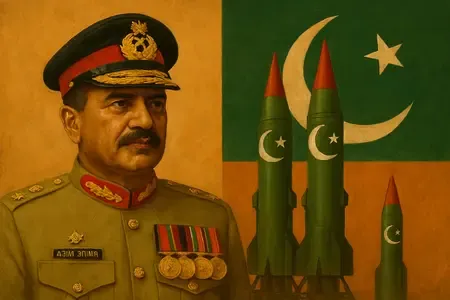
New Delhi, April 25: Pakistan's decades-long strategy of proxy warfare against India has not only failed to achieve its core objective of altering Kashmir's political status but has simultaneously triggered a dangerous blowback of domestic extremism and internal instability, according to a detailed report published by India Narrative on Saturday, April 25. The findings expose a strategic paradox at the heart of Islamabad's security doctrine — a weapon forged to wound a rival that is now cutting its own hand.
Eight Decades of Shadow War: The Origins of Pakistan's Proxy Strategy
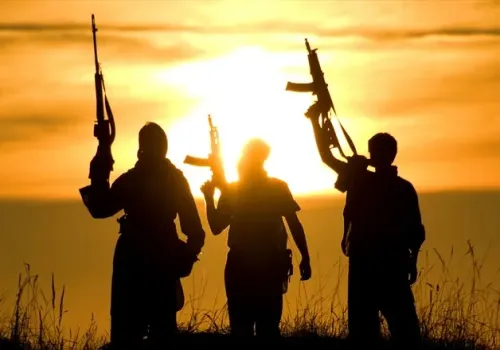
The report traces the roots of Pakistan's proxy warfare doctrine to the very moment of the subcontinent's partition in 1947. The first armed confrontation over Jammu and Kashmir was not a formal military declaration but a covert operation deploying tribal militias and irregular fighters — guided and supported by elements within the Pakistani establishment — to reshape ground realities before India could mount a formal response.
This founding episode established a template that has defined the India-Pakistan conflict for nearly eight decades: the use of deniable non-state actors to pursue strategic goals while maintaining plausible deniability on the world stage. India Narrative describes this not as an accidental or reactive posture but as a deliberate, institutionalised strategic choice that has evolved across successive generations of Pakistani military and civilian leadership.
Why Pakistan Chose Proxy Conflict Over Conventional War
Pakistan views proxy warfare as a cost-effective pressure instrument — designed to inflict sustained, low-intensity damage that drains India's resources, destabilises its internal security, and keeps disputes like Kashmir alive on the global diplomatic agenda. Conventional military confrontation, by contrast, carries the twin risks of outright battlefield defeat and uncontrolled escalation.
Critically, after both nations developed nuclear capabilities, proxy conflict emerged as the preferred tool to sustain hostilities without crossing the nuclear threshold. The strategy offered Islamabad a way to wage war without formally waging war — a calculated exploitation of the grey zone between peace and open conflict.
By channelling aggression through non-state militant groups, Pakistan has historically been able to evade direct international accountability even when evidence of state involvement surfaces. This deliberate ambiguity, the report notes, complicates responses from global bodies. Although international organisations have identified and sanctioned multiple militant outfits operating on Pakistani soil, uneven enforcement has allowed the underlying networks to survive, adapt, and reconstitute themselves.
Strategic Failure: Kashmir Status Unchanged, Costs Mount for Pakistan
Despite decades of sustained pressure, Pakistan's proxy strategy has produced no tangible strategic dividend. The report is unambiguous: Kashmir's political status has not changed. Instead, the relentless campaign has deepened mutual hostility between the two nations, hardened positions on both sides, and severely narrowed the diplomatic space for any meaningful engagement.
Notably, India's response to cross-border terrorism has grown progressively more assertive — from the 2016 surgical strikes following the Uri attack to the 2019 Balakot airstrikes after the Pulwama bombing. Each escalation has demonstrated that the proxy warfare calculus carries increasing risks for Islamabad itself, as New Delhi has shown a growing willingness to respond kinetically and publicly.
The international community's patience has also visibly thinned. Pakistan has faced repeated grey-listing by the Financial Action Task Force (FATF) — spending over four years on the watchdog's grey list between 2018 and 2022 — a direct consequence of its failure to credibly dismantle terror financing networks operating within its borders.
The Boomerang Effect: Extremism Consumes Pakistan From Within
Perhaps the most damning finding of the report is the blowback effect. The very militant infrastructure that Pakistan's security establishment cultivated as a strategic asset against India has metastasised into an existential domestic threat. Tehrik-i-Taliban Pakistan (TTP), sectarian violence, and a proliferation of armed non-state actors have made Pakistan one of the world's most terrorism-afflicted nations by its own official data.
This is a textbook case of strategic blowback — a phenomenon well-documented in the aftermath of the Afghan jihad of the 1980s, when US-Pakistan-backed mujahideen networks eventually turned their guns on both sponsors. Pakistan is now confronting the same dynamic at an even more acute domestic level, with militant groups that once served state objectives now challenging state authority directly.
The report argues that changing this trajectory is not a matter of simple policy recalibration. The proxy warfare doctrine has become so deeply embedded in the institutional DNA of Pakistan's military-intelligence complex that dismantling it requires a fundamental transformation of strategic culture — a shift that shows no signs of occurring under the current power structure in Rawalpindi.
Broader Implications: What Comes Next for the India-Pakistan Equation
The report's conclusions arrive at a moment of heightened regional tension. India has consistently pushed for international accountability on cross-border terrorism, and the United Nations Security Council and major powers have grown increasingly vocal about the dangers of state-sponsored militant networks in South Asia.
As Pakistan navigates a severe economic crisis — with IMF bailouts, a collapsing currency, and social unrest — its capacity to sustain the proxy infrastructure is also under strain. Analysts suggest that economic desperation could either force a strategic rethink or, more dangerously, push the establishment toward doubling down on asymmetric tactics as a low-cost distraction from domestic failures.
The coming months will be critical in determining whether Islamabad chooses a path of genuine strategic recalibration or continues a doctrine that, by its own report's evidence, has delivered neither Kashmir nor stability — only deeper isolation and a nation consuming itself from within.
Point of View
And the evidence is now undeniable. What the mainstream narrative consistently underplays is that this isn't a rogue policy but an institutionalised strategic culture embedded in the GHQ's DNA, making reform structurally near-impossible without a fundamental civil-military power shift in Islamabad. The deeper irony is that while Pakistan spent decades trying to internationalise Kashmir, it is now its own domestic terrorism crisis — a direct product of its proxy infrastructure — that has drawn the world's attention. India must recognise that Pakistan's internal implosion, while vindicating New Delhi's long-standing position, also creates dangerous instability on its western border that demands calibrated strategic vigilance.
NationPress
29 Sept 2026
Frequently Asked Questions
What is Pakistan's proxy warfare strategy against India?
Pakistan's proxy warfare strategy involves using non-state militant groups, insurgents, and irregular fighters to apply sustained pressure on India — particularly over Kashmir — without triggering a full-scale conventional or nuclear war. This doctrine dates back to the 1947 tribal militia infiltration into Jammu and Kashmir and has been institutionalised within Pakistan's military-intelligence establishment over eight decades.
Has Pakistan's proxy warfare strategy succeeded in changing Kashmir's status?
No. Despite nearly 80 years of proxy conflict, Pakistan has failed to alter the political status of Kashmir, which remains a core strategic objective of Islamabad's India policy. The strategy has instead deepened hostility, hardened diplomatic positions, and drawn international sanctions against Pakistan-based militant networks.
How has proxy warfare backfired on Pakistan domestically?
The militant infrastructure Pakistan cultivated against India has metastasised into a severe domestic security threat, with groups like Tehrik-i-Taliban Pakistan (TTP) and sectarian armed outfits now targeting the Pakistani state itself. This blowback has contributed to widespread internal instability, thousands of civilian and military casualties, and Pakistan's repeated grey-listing by the Financial Action Task Force (FATF).
Why does Pakistan continue proxy warfare despite its failures?
According to the India Narrative report, Pakistan persists with proxy warfare because it remains embedded in the institutional thinking of the country's powerful military-security establishment. Abandoning the strategy requires not just a policy change but a fundamental transformation of Pakistan's strategic culture — a shift that has not materialised under current power structures.
What is India's response to Pakistan's proxy warfare?
India has progressively adopted a more assertive posture, including the 2016 surgical strikes following the Uri attack and the 2019 Balakot airstrikes after the Pulwama bombing. New Delhi has also consistently pushed for international accountability on cross-border terrorism, contributing to Pakistan's FATF grey-listing and growing global scrutiny of Islamabad's militant networks.