Lashkar-army rift deepens as Pakistan faces US pressure on Abraham Accords
Synopsis
The Lashkar-e-Taiba — Pakistan's most obedient proxy for decades — is breaking ranks. Post-Operation Sindoor grievances, ideological clashes over the Afghan Taliban, and now Trump's Abraham Accords push have cracked open a rift that Indian intelligence says is only widening. With Saifullah Qasoori publicly threatening anyone who recognises Israel and Army Chief Asim Munir caught between Washington and his own proxies, Pakistan's internal security calculus is under unprecedented strain.
Key Takeaways
Lashkar-e-Taiba (LeT) is experiencing an unprecedented internal rift with the Pakistan Army and ISI , according to Indian intelligence agencies .
Tensions escalated after Operation Sindoor , when LeT leadership felt the establishment failed to protect its cadres and facilities.
US President Donald Trump's push for Pakistan to join the Abraham Accords has deepened the crisis, with Islamabad publicly rejecting normalisation with Israel .
LeT leader Saifullah Qasoori , allegedly the mastermind of the Pahalgam attack , has openly threatened any nation that recognises Israel — including an implicit warning to the Pakistan establishment.
The outfit's de facto chief Talha Saeed continues to engage with Pakistan's political class on Jammu and Kashmir , while Qasoori publicly challenges the establishment's foreign policy stance — a visible sign of internal division.
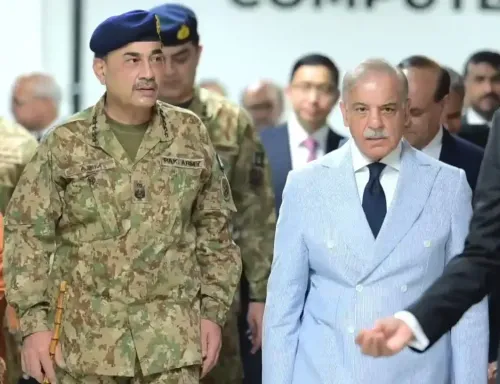
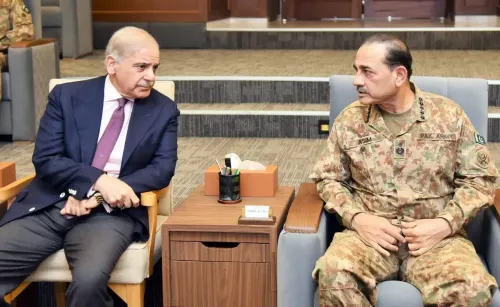
Army Chief Field Marshal Asim Munir faces mounting pressure from both Washington and hardline factions, with officials warning the rift is 'only going to get worse.'
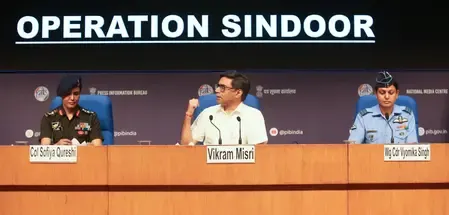
A deepening rift between Lashkar-e-Taiba (LeT) and the Pakistan Army is threatening to destabilise Islamabad's already fragile internal security architecture, according to Indian intelligence agencies. The fracture, which officials say accelerated after Operation Sindoor, has been further aggravated by US President Donald Trump's push for Pakistan to join the Abraham Accords framework — a demand Islamabad has publicly rejected.
How the Rift Began
For decades, the Lashkar-e-Taiba was regarded as the most compliant of Pakistan's strategic proxies — unlike the Jaish-e-Mohammed, which has on multiple occasions broken ranks with the establishment. That loyalty, according to Indian intelligence officials, is now fracturing. The turning point, officials say, came in the aftermath of Operation Sindoor, when LeT's leadership felt the establishment had failed to protect its cadres and facilities.
Tensions compounded when Islamabad pushed the outfit to align against the Afghan Taliban — a position LeT reportedly found ideologically untenable. The group was also said to have reluctantly agreed to join a coalition with the Islamic State Khorasan Province (ISKP) to counter the Tehreek-e-Taliban Pakistan (TTP) and the Balochistan Liberation Army (BLA) — an arrangement that sits uneasily with its core ideology.
The Abraham Accords Flashpoint
Pakistan has firmly stated it will not normalise relations with Israel until an independent Palestinian state is established. But Trump's insistence that Islamabad join the Abraham Accords framework has placed Army Chief Field Marshal Asim Munir in a particularly difficult position. According to officials, the newfound diplomatic proximity to Washington has not gone down well with Pakistan's hardline factions and terror outfits.
'Pakistan has a big problem to deal with after it was dragged in by the United States,' an official said. 'Not only will it have to deal with its own people who have always stood against Israel, but handling its terror proxies is going to be a nightmare.'
Qasoori's Open Challenge to the Establishment
The most visible sign of the rift is Saifullah Qasoori — a top LeT leader and, according to Indian officials, the alleged mastermind of the Pahalgam attack — who has openly threatened consequences for any Muslim nation that recognises Israel. In a public message directed at the Pakistan establishment, Qasoori stated that 'the Muslim world would never recognise Israel and whoever does so will be destroyed.' He further declared that Pakistan is the 'defence leader of the Muslim world' while Saudi Arabia is its 'spiritual and ideological leader' — a framing that implicitly binds Islamabad to a hardline anti-normalisation stance.
Officials note that Qasoori's remarks amount to an unprecedented public attempt by an LeT figure to dictate Pakistan's foreign policy direction.
A Divided Outfit, A Cornered Army
The internal split within LeT is now reportedly visible in the divergent behaviour of its leadership. The outfit's de facto chief, Talha Saeed, has been engaging with Pakistan's political class — reportedly meeting a close aide of Prime Minister Shehbaz Sharif to discuss plans relating to Jammu and Kashmir. Qasoori, by contrast, is publicly challenging the establishment's geopolitical positions.
'These are signs of a clear rift, and in the days to come, it is only going to get worse,' an official said. Officials further noted that Field Marshal Asim Munir 'clearly did not sign up for this' and that both the ISI and the army face mounting pressure to answer for the shifting dynamics. The ISI's traditionally tight grip over LeT, officials warn, can no longer be taken for granted.
What Comes Next
Indian intelligence officials assess that the LeT-army rift will deepen as Trump continues to press Islamabad on the Abraham Accords. The terror group's leadership is expected to demand that the establishment take a more confrontational public stance against Israel — a demand that would further irritate Washington. Officials describe the situation as a compounding dilemma: the harder Pakistan pushes back against US pressure, the more it emboldens hardline factions; the softer it goes, the more it risks an internal blowback from the very proxies it has long relied upon.
Point of View
While Asim Munir's survival increasingly depends on not alienating Washington. The fact that Saifullah Qasoori — an active operational commander allegedly behind Pahalgam — is now publicly dictating Pakistan's foreign policy posture is not a fringe development; it is a structural warning. If the ISI loses its grip on LeT, the consequences will not be confined to Pakistan's borders.
NationPress
14 Oct 2026
Frequently Asked Questions
Why is the Lashkar-e-Taiba at odds with the Pakistan Army?
The rift stems from multiple flashpoints: LeT's leadership felt abandoned by the establishment after Operation Sindoor, disagreed with Islamabad's policy of fighting the Afghan Taliban, and was pushed into an ideologically uncomfortable coalition with ISKP. The US pressure on Pakistan to join the Abraham Accords has further widened the divide, as LeT's ideology is firmly opposed to any recognition of Israel.
What is the Abraham Accords and why does it matter for Pakistan?
The Abraham Accords are US-brokered normalisation agreements between Israel and several Arab states. US President Donald Trump has reportedly pushed Pakistan to join the framework, which Islamabad has rejected, stating it will not recognise Israel until an independent Palestinian state is established. The pressure places Pakistan's army in direct conflict with its own hardline proxies, who view any engagement with Israel as a betrayal.
Who is Saifullah Qasoori and what has he said?
Saifullah Qasoori is a top Lashkar-e-Taiba leader whom Indian officials allege was the mastermind of the Pahalgam attack. He has publicly threatened to 'destroy' any nation that recognises Israel and has declared that Pakistan is the 'defence leader of the Muslim world' — statements that amount to an unprecedented public attempt to dictate Islamabad's foreign policy from within a terror outfit.
How does this rift affect India's security concerns?
Indian intelligence agencies are closely tracking the split, noting that a fractured LeT — with one faction engaging Pakistan's political class on Jammu and Kashmir and another openly radicalising against the establishment — poses an unpredictable threat. A LeT that feels unconstrained by ISI oversight could act more independently, increasing the risk of unilateral escalation.
What is the significance of Talha Saeed meeting a Shehbaz Sharif aide?
The meeting between LeT's de facto chief Talha Saeed and a close aide of Prime Minister Shehbaz Sharif reportedly centred on plans relating to Jammu and Kashmir, signalling that one faction of LeT remains operationally engaged with Pakistan's political establishment. Indian officials view this, alongside Qasoori's public defiance, as evidence of a split command structure within the outfit.