Pakistan passport ranked 4th weakest globally in Henley Index 2025
Synopsis
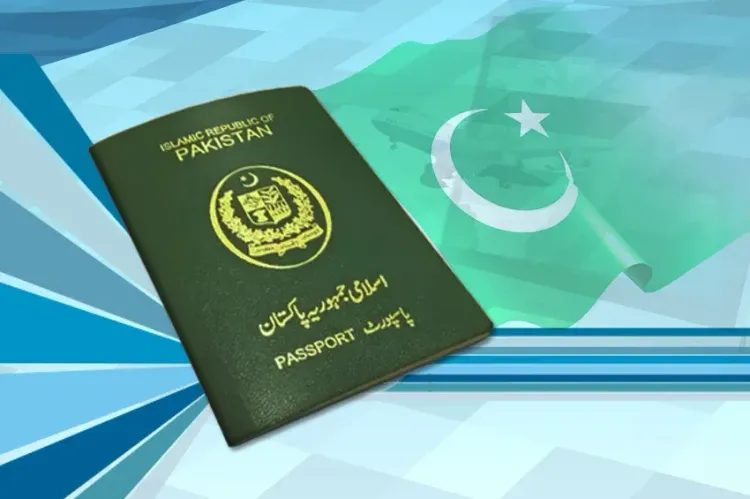
Pakistan's passport now opens doors to just 29 countries — fewer than almost every nation on earth. Ranked 101st out of 199 by the Henley Passport Index, and with Gulf nations imposing sweeping visa bans since December 2024, Pakistani citizens face one of the world's most constrained travel profiles, a crisis that is as much diplomatic as it is reputational.
Key Takeaways
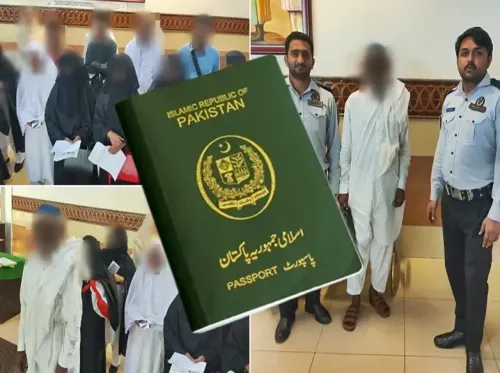
Pakistan's passport ranks 101st out of 199 in the latest Henley Passport Index , the fourth weakest globally.
Only Iraq , Syria , and Afghanistan have weaker passports than Pakistan.
Pakistani nationals can access just 29 destinations visa-free or via visa on arrival.
The UAE reportedly stopped issuing visas to most Pakistani citizens as of November 2024 , according to Pakistan's Additional Interior Secretary Salman Chaudhry .
In December 2024 , the UAE , Saudi Arabia , and other Gulf nations imposed an indefinite visa ban on nationals from at least 30 Pakistani cities .
Pakistani authorities have raised the issue with Gulf counterparts during bilateral meetings, but restrictions remain in place.
Pakistan's passport has been ranked the fourth weakest in the world in the latest Henley Passport Index, placing 101st among 199 passports assessed, with only Iraq, Syria, and Afghanistan faring worse. Pakistani citizens currently enjoy visa-free or visa-on-arrival access to just 29 destinations worldwide, according to the UK-based citizenship and residence advisory firm.
What the Henley Index Measures
The Henley Passport Index evaluates 199 passports against 227 travel destinations, scoring each on the number of countries accessible without a prior visa or with a visa on arrival. Pakistan's score of 29 destinations places it firmly at the bottom of the global rankings, reflecting severe restrictions on Pakistani travellers' international mobility.
Pakistani nationals can enter Dominica, St Vincent and the Grenadines, Vanuatu, Trinidad and Tobago, Barbados, Haiti, Cook Islands, Rwanda, Micronesia, Montserrat, and The Gambia without a prior visa. Visa-on-arrival access is available in countries including Mozambique, Cambodia, Madagascar, Maldives, Nepal, Palau Islands, Samoa, Timor-Leste, and Tuvalu, among others. Additionally, electronic travel authorisations are available for Seychelles, Sri Lanka, and Kenya.
UAE and Gulf Visa Restrictions
The ranking comes against a backdrop of deepening travel restrictions for Pakistani citizens in the Gulf region. As of last November, the United Arab Emirates (UAE) had reportedly stopped issuing visas to Pakistani nationals, according to Pakistan's Additional Interior Secretary Salman Chaudhry, who disclosed the development during a meeting of the Senate Functional Committee on Human Rights.
Chaudhry was quoted by leading Pakistani daily Dawn as saying, 'If a ban is imposed, getting it removed would be difficult.' He added that the UAE was issuing visas only to holders of blue and diplomatic passports.
Senator Samina Mumtaz Zehri, chair of the Senate committee on human rights, confirmed the Interior Ministry official's remarks, stating that the restrictions stem from concerns that Pakistani travellers were 'getting involved in criminal activities' after reaching the UAE. According to Zehri, the committee was briefed that the UAE had issued virtually no visas to Pakistanis, with only a handful granted recently 'after much difficulty.'
Wider Gulf Crackdown Since December 2024
In December 2024, the UAE, Saudi Arabia, and several other Gulf nations reportedly imposed an indefinite ban on granting visas to people from at least 30 cities in Pakistan. The move followed a reported rise in cases involving Pakistani nationals caught begging, smuggling, drug trafficking, and human trafficking abroad. Pakistani citizens have since faced widespread visa rejections across multiple Gulf countries, prompting Islamabad to raise the issue with counterparts during bilateral meetings.
What This Means for Pakistan
The combination of a near-bottom Henley ranking and Gulf visa restrictions signals a compounding mobility crisis for Pakistani citizens. Pakistan's government faces pressure both to address the behavioural concerns cited by Gulf authorities and to pursue diplomatic channels to restore access. How quickly Islamabad can reverse these restrictions will be closely watched, as the Gulf region remains a critical destination for Pakistani workers and the diaspora.
Point of View
Not the diagnosis. Pakistan's passport weakness is compounding in real time — Gulf nations are not just restricting visas on paper; they are citing criminal conduct by Pakistani nationals as justification, a reputational problem that diplomatic pressure alone cannot solve. The December 2024 city-level visa bans affecting at least 30 Pakistani cities represent a structural shift in how Gulf governments now view Pakistani migration, moving from individual vetting to blanket geographic restrictions. Until Islamabad can demonstrate credible enforcement against trafficking, begging, and drug networks operating through its diaspora, the passport's global standing is unlikely to recover — regardless of which index measures it.
NationPress
29 Jul 2026
Frequently Asked Questions
What is Pakistan's current rank in the Henley Passport Index?
Pakistan ranks 101st out of 199 passports in the latest Henley Passport Index, making it the fourth weakest passport in the world. Only Iraq, Syria, and Afghanistan are ranked lower.
How many countries can Pakistani citizens visit without a prior visa?
Pakistani nationals can access just 29 destinations visa-free or via visa on arrival, according to the Henley Passport Index. This includes countries such as Rwanda, Maldives, Nepal, and Dominica.
Why has the UAE restricted visas for Pakistani citizens?
According to Pakistani officials, the UAE halted visa issuance to most Pakistani nationals due to concerns over Pakistani travellers 'getting involved in criminal activities' after arrival. Additional Interior Secretary Salman Chaudhry disclosed this at a Senate committee meeting, noting that only holders of blue and diplomatic passports were still receiving UAE visas.
When did Gulf countries impose visa bans on Pakistan?
In December 2024, the UAE, Saudi Arabia, and several other Gulf nations reportedly imposed an indefinite visa ban on nationals from at least 30 cities in Pakistan, following a rise in cases involving begging, drug trafficking, and human trafficking by Pakistani nationals abroad.
How does the Henley Passport Index calculate its rankings?
The Henley Passport Index, compiled by a UK-based citizenship and residence advisory firm, evaluates 199 passports against 227 travel destinations. Rankings are based solely on the number of destinations a passport holder can visit without obtaining a visa in advance or with a visa on arrival.