CM Bhajan Lal Hails Lok Sabha Nod to Exam Anti-Cheating Bill

Synopsis
Rajasthan CM Bhajan Lal Sharma hailed the Lok Sabha passage of the Public Examinations (Prevention of Unfair Means) Amendment Bill, 2026, crediting PM Modi's leadership for a decisive legislative strike against paper leaks, copying, and exam mafias threatening India's merit-based selection system.
Key Takeaways
Lok Sabha passed the Public Examinations (Prevention of Unfair Means) Amendment Bill, 2026 on 29 July 2026 .
Rajasthan CM Bhajan Lal Sharma called it a 'historic decision' protecting the aspirations of crores of Indian youth.
The bill targets paper leaks, organised cheating networks, and exam mafias with stricter legal provisions.
It builds on the original Public Examinations (Prevention of Unfair Means) Act, 2024 , enacted after the NEET-UG and other exam scandals.
CM Sharma credited PM Narendra Modi's leadership for the legislation, framing it as a guarantee that merit and hard work will be the only path to success.
Enforcement at the state level and judicial implementation will determine whether the law delivers on its promise.
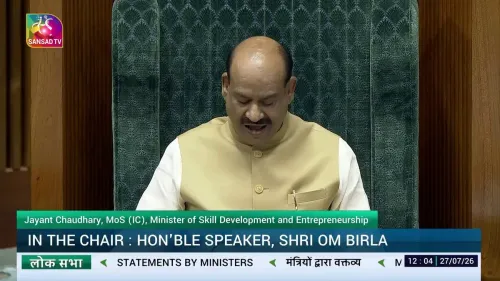
For millions of students who have watched their hard work undone by paper leaks and exam mafias, Wednesday, 29 July 2026 marks a turning point. Rajasthan Chief Minister Bhajan Lal Sharma welcomed the passage of the Public Examinations (Prevention of Unfair Means) Amendment Bill, 2026 in Lok Sabha, calling it a historic decision that protects the dreams, labour, and trust of crores of young Indians.
What the Bill Takes Aim At
The amendment builds on the Public Examinations (Prevention of Unfair Means) Act, 2024 — Parliament's earlier response to a wave of high-profile paper leak scandals that rocked competitive examinations, including NEET-UG and several SSC and UPSC-linked tests. Those scandals exposed organised cheating networks capable of compromising exams at scale, triggering nationwide protests and eroding candidate confidence in merit-based selection.
The 2026 amendment, as CM Sharma described it, sharpens that legislative sword — delivering 'a decisive blow against paper leaks, copying, and exam mafias' while pushing the system toward greater transparency. His post, written in Hindi, declared: 'pratibha, parishram aur imaandaari ke saath ab koi samjhauta nahi hoga' — 'there will be no compromise with talent, hard work, and honesty in the examination system.'
Modi Government's Credibility Bet on Merit
Sharma credited Prime Minister Narendra Modi's 'visionary leadership' for the central government sending a 'clear message' through the legislation. The framing is deliberate: after the 2024 exam controversies forced the government onto the back foot — with student protests in multiple states and political opposition demanding accountability — this amendment is positioned as proof that the system has been course-corrected.
For the BJP, the bill is also a political signal ahead of a competitive electoral calendar. Exam aspirants — a constituency numbering in the tens of millions — have been among the most vocal critics of governance failures in public recruitment. A tough anti-cheating law that actually bites offers the party a concrete answer to those grievances.
What Comes Next for Rajasthan's Aspirants
Rajasthan has itself been no stranger to exam paper leak controversies, making Sharma's endorsement more than ceremonial. The state's large aspirant population — competing for government jobs in teaching, police, and administration — stands to benefit directly if the amended law is backed by robust enforcement. The real test will be in implementation: whether investigation agencies are empowered, prosecution timelines tightened, and state-level complementary frameworks aligned with the central Act.
A law on paper is only as strong as the machinery behind it. India's crores of exam-going youth are watching to see whether this time, the promise holds.
Point of View
When large-scale paper leaks in NEET-UG and other tests triggered widespread protests. By championing the bill, the BJP signals it is converting political liability into a governance achievement — using tough law to reclaim the narrative on merit and fairness. For CM Sharma, whose state has its own history of exam controversies, the endorsement serves a dual purpose: aligning Rajasthan with central policy and reassuring a restive aspirant constituency. The real measure of success, however, will be enforcement depth and judicial speed — without which the law risks becoming another symbolic gesture.
NationPress
29 Jul 2026
Frequently Asked Questions
What is the Public Examinations (Prevention of Unfair Means) Amendment Bill 2026?
It is an amendment to the Public Examinations (Prevention of Unfair Means) Act, 2024, passed by Lok Sabha on 29 July 2026, aimed at imposing stricter penalties for paper leaks, cheating, and organised exam malpractice in government competitive examinations.
Why did India need an amendment to the 2024 exam anti-cheating law?
The 2024 Act was enacted after high-profile paper leak scandals in exams like NEET-UG exposed organised cheating networks. The 2026 amendment strengthens those provisions to further deter exam mafias and rebuild candidate confidence in merit-based selection.
What did Rajasthan CM Bhajan Lal Sharma say about the bill?
CM Sharma called the bill's passage 'a historic decision' that protects the dreams and hard work of crores of young Indians, and credited Prime Minister Narendra Modi's visionary leadership for the move.
How does this law affect students appearing for competitive exams in India?
The law aims to create a fairer examination environment by criminalising paper leaks and malpractice more severely, so that success in public exams is determined solely by merit and hard work rather than by access to leaked papers or organised cheating.
What were the major exam paper leak scandals that led to this legislation?
The most prominent was the NEET-UG 2024 paper leak, alongside irregularities in several SSC and other recruitment exams, which triggered nationwide student protests and prompted Parliament to legislate against exam malpractice.