Dr. Jitendra Singh's Sharp Riposte to Rahul Gandhi in Lok Sabha
Synopsis
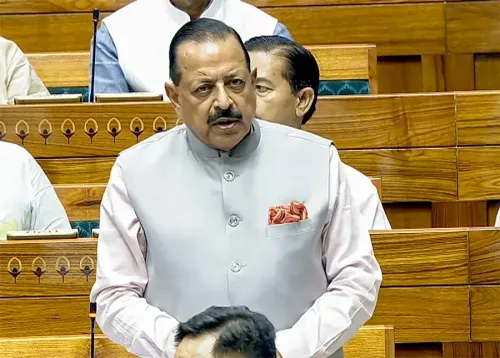
Union Minister Dr. Jitendra Singh landed a sharp parliamentary quip at Rahul Gandhi during the Lok Sabha debate on the Public Examinations (Prevention of Unfair Means) Amendment Bill, 2026, turning the House's own decorum rules into a pointed punchline.
Key Takeaways
Jitendra Singh responded to Rahul Gandhi during debate on The Public Examinations (Prevention of Unfair Means) Amendment Bill, 2026 in Lok Sabha on July 29, 2026 .
The minister quipped that 'even an idiot can't call himself an idiot inside parliament, because it is unparliamentary language,' using House rules as a rhetorical device.
The exchange occurred in the context of a substantive legislative debate on curbing paper leaks and cheating in national-level public examinations.
The amendment bill builds on earlier legislation targeting malpractices in recruitment and entrance exams — a concern directly affecting millions of students.
Parliamentary rules on unparliamentary language, maintained by the Lok Sabha Speaker , were at the centre of the verbal joust.
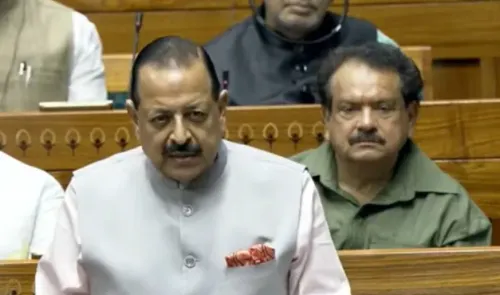
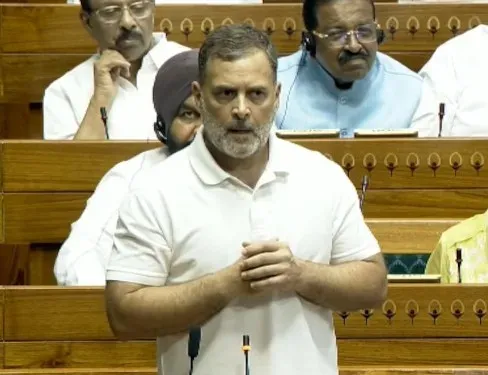
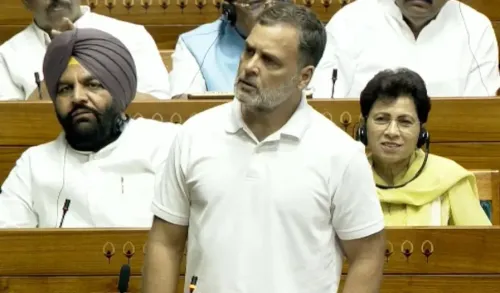
A parliamentary debate turned into a battle of wit on Wednesday, July 29, 2026, when Union Minister Dr. Jitendra Singh delivered a pointed rejoinder to Congress leader Rahul Gandhi during the discussion on The Public Examinations (Prevention of Unfair Means) Amendment Bill, 2026 in Lok Sabha. The minister's quip — that 'even an idiot can't call himself an idiot inside parliament, because it is unparliamentary language' — drew instant attention on the floor and beyond.
The Remark That Stopped the House
The exchange unfolded during what was already a charged debate on the amendment bill, which deals with curbing malpractices in public recruitment and entrance examinations. Dr. Singh's line was a direct, sardonic response to Gandhi, deploying the very rules of parliamentary decorum as the punchline. By invoking the concept of 'unparliamentary language,' the minister effectively used the House's own rulebook as a rhetorical weapon — pointing out that certain words are forbidden in the chamber regardless of who deploys them or in what context.
The remark encapsulates a recurring feature of Indian parliamentary proceedings: the rules on unparliamentary language, periodically updated by the Lok Sabha Speaker, exist to maintain decorum but frequently become the subject of debate themselves — and, as Wednesday showed, of political theatre.
The Bill Behind the Banter
The backdrop was substantive. The Public Examinations (Prevention of Unfair Means) Amendment Bill, 2026 is an amendment to legislation first introduced to crack down on the epidemic of paper leaks and cheating in national-level exams — a crisis that has disrupted the futures of millions of students and shaken public confidence in bodies like NTA. The bill's passage through Lok Sabha is being closely watched by students, exam authorities, and education reformers alike.
Opposition scrutiny of such legislation is expected and legitimate — and it is within that scrutiny that Gandhi's remarks prompted the minister's retort. The specifics of what Gandhi said remain part of the broader debate record, but Dr. Singh's reply has already cut through the noise.
As the amendment bill moves toward a vote, the real question is not who won Wednesday's exchange — it is whether the legislation delivers the accountability that millions of exam-aspirants are waiting for.
Point of View
A minister who straddles science policy and parliamentary affairs, the remark signals comfort with political combat beyond his portfolio. More broadly, the fact that a sharp one-liner from the treasury bench can overshadow the substance of an important exam-integrity bill reflects the tension between legislative scrutiny and political performance that defines modern Indian parliamentary culture.
NationPress
29 Jul 2026
Frequently Asked Questions
What did Dr. Jitendra Singh say to Rahul Gandhi in Lok Sabha?
Dr. Jitendra Singh told Rahul Gandhi that 'even an idiot can't call himself an idiot inside parliament, because it is unparliamentary language' — a pointed quip invoking House decorum rules during the debate on the Public Examinations Amendment Bill on July 29, 2026.
What is the Public Examinations (Prevention of Unfair Means) Amendment Bill, 2026?
It is an amendment to legislation designed to curb malpractices such as paper leaks and cheating in national-level public recruitment and entrance examinations in India.
What is unparliamentary language in Lok Sabha?
Unparliamentary language refers to words or expressions ruled out of order by the Lok Sabha Speaker for being offensive, indecorous, or disrespectful — such words are expunged from the official record of proceedings.
Why was the Public Examinations Bill being debated in Lok Sabha?
The bill was under discussion as part of ongoing legislative efforts to strengthen accountability in India's public examination system, following widespread concern over paper leaks and cheating affecting millions of students.
Who is Dr. Jitendra Singh?
Dr. Jitendra Singh is the Union Minister of State (Independent Charge) for Science and Technology and Earth Sciences, and also holds the portfolio of Minister of State in the Prime Minister's Office and for Personnel.