Jitendra Singh opens Lok Sabha debate on exam anti-cheating bill
Synopsis
Union Minister Dr. Jitendra Singh opened the Lok Sabha debate on the Public Examinations (Prevention of Unfair Means) Amendment Bill, 2026 on July 28, seeking to strengthen India's 2024 anti-exam-fraud law amid persistent paper-leak scandals affecting millions of aspirants.
Key Takeaways
Jitendra Singh delivered opening remarks in Lok Sabha on July 28, 2026 during discussion on the Public Examinations (Prevention of Unfair Means) Amendment Bill, 2026.
The amendment builds on the original Public Examinations (Prevention of Unfair Means) Act, 2024 , which criminalised paper leaks and impersonation in national public exams.
The 2024 law was enacted in direct response to high-profile paper-leak scandals in NEET and UGC-NET examinations.
Singh holds charge of Science and Technology, Earth Sciences, and the PMO's Personnel and Public Grievances portfolio , placing him at the centre of recruitment-integrity governance.
Further readings and voting in both houses of Parliament will determine the bill's final form and enforcement provisions.
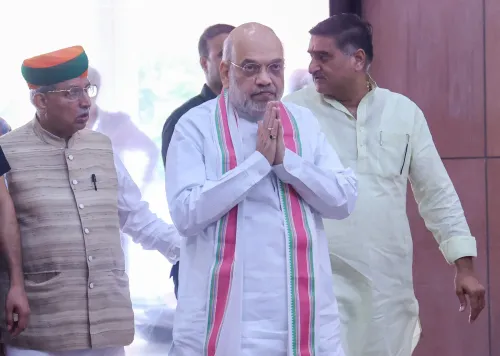
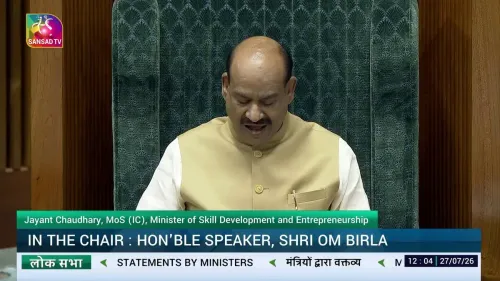
India's war on exam fraud reached the floor of Lok Sabha on Tuesday, July 28, 2026, as Union Minister of State (Independent Charge) for Science and Technology Dr. Jitendra Singh delivered his opening remarks during the discussion on 'The Public Examinations (Prevention of Unfair Means) Amendment Bill, 2026' — a legislative push to sharpen the teeth of a law born out of one of India's most damaging exam-integrity crises.
The 2024 law that made Parliament act — and why it wasn't enough
The original Public Examinations (Prevention of Unfair Means) Act, 2024 was Parliament's direct response to a cascade of paper-leak scandals that rocked national-level examinations — most visibly NEET and UGC-NET — and shattered the hopes of millions of aspirants. That law criminalised paper leaks, impersonation, and organised malpractice in public exams for the first time at the central level, imposing stiff penalties on those who compromise the integrity of recruitment and entrance processes.
The 2026 Amendment Bill now before the lower house signals that the government views the original legislation as a foundation, not a ceiling. Dr. Singh's opening remarks as the minister piloting the discussion placed the amendment squarely in the context of the government's broader commitment to fair, credible examinations — the gateway for millions of young Indians to higher education and government employment.
Why exam integrity is a governance flashpoint
India's high-stakes public examinations — from medical entrance tests to civil services — determine the life trajectories of crores of students every year. Each leak incident does not merely disadvantage honest candidates; it corrodes public trust in state institutions and hands organised criminal networks a lucrative business. The pattern has repeated itself across states and exam bodies, making central legislation both politically necessary and administratively complex to enforce.
Dr. Singh's ministerial portfolio — spanning the Prime Minister's Office, Personnel, Public Grievances and Pensions alongside Science and Technology — positions him at the intersection of recruitment reform and governance accountability, making him a natural face for this debate in the House.
The bill's further readings, committee scrutiny, and eventual passage through both houses of Parliament will determine how much stronger India's legal shield against exam fraud actually becomes — and whether enforcement mechanisms can match the ambition of the law on paper.
Point of View
Given his PMO and Personnel portfolio, signals that the Centre is treating exam integrity as a governance-credibility issue, not merely an education-ministry matter. With competitive exams functioning as India's primary social-mobility engine, any perception of systemic failure carries acute political cost — making this bill as much about optics and public trust as it is about penal provisions.
NationPress
27 Oct 2026
Frequently Asked Questions
What is the Public Examinations (Prevention of Unfair Means) Amendment Bill, 2026?
It is a proposed amendment to the Public Examinations (Prevention of Unfair Means) Act, 2024, currently under discussion in Lok Sabha, aimed at further strengthening legal provisions against paper leaks, impersonation and malpractice in national-level public examinations.
What did the original Public Examinations Act 2024 do?
The 2024 Act was India's first central legislation to criminalise paper leaks, impersonation and organised cheating in public examinations such as NEET and UGC-NET, introducing stiff penalties for those who compromise exam integrity.
Why did India need a law against exam paper leaks?
Repeated paper-leak scandals in high-stakes national exams devastated the prospects of millions of honest candidates and exposed deep vulnerabilities in exam administration, pushing Parliament to enact central legislation with criminal penalties.
What is Dr. Jitendra Singh's role in this bill?
As Union Minister of State (Independent Charge) for Science and Technology and a Minister of State in the PMO handling Personnel and Public Grievances, Dr. Singh is closely linked to recruitment and governance reform, and he delivered the opening remarks for the Lok Sabha debate on July 28, 2026.
What happens next after the Lok Sabha debate on the exam amendment bill?
The bill will undergo further readings, possible committee review, and voting in Lok Sabha before moving to Rajya Sabha for passage; once enacted, the government will notify rules and enforcement mechanisms.