Owaisi Raises Question of Muslim Political Voice in UP
Synopsis
AIMIM president Asaduddin Owaisi posted a pointed Hindi video on 27 October asking why Muslims in Uttar Pradesh need their own political voice — a clear signal ahead of the 2027 state assembly elections as his party eyes seat consolidation in the state.
Key Takeaways
Asaduddin Owaisi posted a Hindi-language video on 27 October 2026 questioning why an independent Muslim political voice is necessary in Uttar Pradesh .
The post is framed as a rhetorical question directed at Muslim voters in India's most populous and electorally significant state.
AIMIM previously fielded candidates in UP in the 2017 and 2022 assembly elections, contesting Muslim-concentrated constituencies.
The party's core argument is that reliance on larger secular or regional parties leaves Muslim political representation subordinate to coalition arithmetic.
The 2027 Uttar Pradesh assembly elections are the immediate electoral context; AIMIM's candidate strategy and any alliance talks are the next key signals to watch.
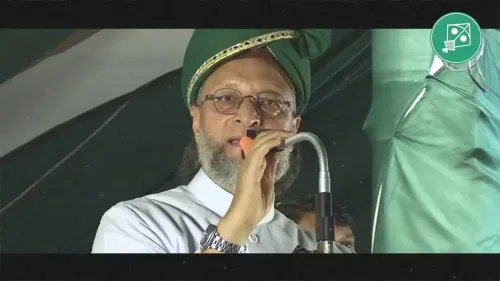
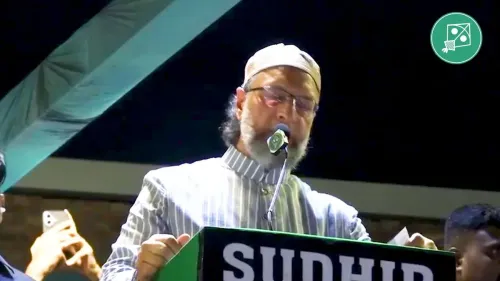
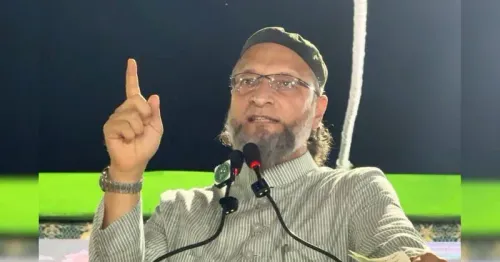
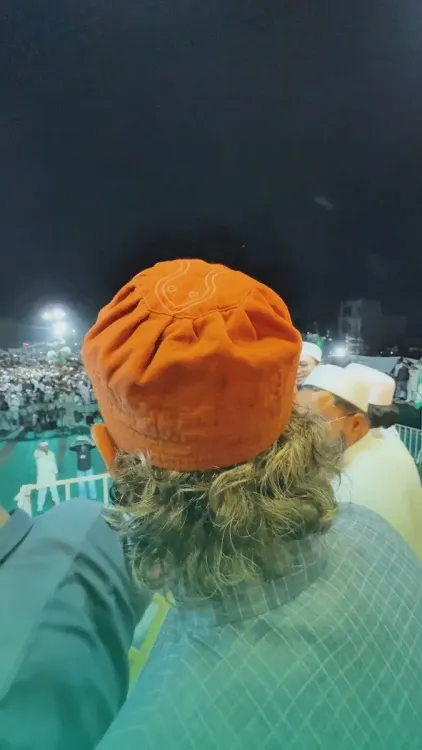
A pointed question — and a political signal. AIMIM president Asaduddin Owaisi posed a sharp rhetorical challenge on Tuesday, 27 October 2026, asking why Muslims in Uttar Pradesh need their own political voice, framing the question as one every Muslim voter in India's most populous state must answer for themselves.
The Hindi-language post — 'Uttar Pradesh mein Musalmanon ki apni siyasi awaaz kyun zaroori hai?' ('Why is an independent political voice necessary for Muslims in Uttar Pradesh?') — arrived alongside a video and carries the unmistakable texture of a pre-election pitch. With the 2027 Uttar Pradesh assembly elections on the horizon, the timing leaves little ambiguity about the audience Owaisi is addressing.
AIMIM's Recurring UP Argument
Uttar Pradesh is the single most consequential battlefield for any party seeking Muslim political consolidation. The state's Muslim population represents a significant share of the electorate, and its votes have historically flowed between the Samajwadi Party, the Bahujan Samaj Party, and, in smaller pockets, the Congress. AIMIM's core argument — repeated across multiple electoral cycles — is that these larger parties treat Muslim voters as a captive bloc without delivering proportionate representation or policy outcomes.
Owaisi's party fielded candidates in the 2017 and 2022 Uttar Pradesh assembly elections, contesting seats in Muslim-concentrated constituencies. The results were modest, but the ideological premise remained intact: that dependence on 'secular' or regional parties leaves Muslim political interests perpetually subordinate to coalition arithmetic.
The 2027 Stakes and What to Watch
Framing the pitch as a question rather than a manifesto is deliberate. It invites the voter to arrive at the conclusion independently, a classic organising technique ahead of seat-announcement cycles. The sharper question for observers is whether AIMIM translates this rhetoric into a credible candidate slate — and whether it seeks any seat-sharing arrangement with opposition groups or contests alone, as it has largely done in UP before.
Muslim voting patterns in UP have shifted meaningfully across every election since 2014, responding to both BJP consolidation of Hindu votes and factional strains inside the opposition. That fluidity is precisely the opening Owaisi is attempting to widen — one question at a time.
Point of View
AIMIM is laying the ideological groundwork before announcing candidates — a sequencing that allows it to test resonance before committing resources. The party's repeated UP forays have yet to yield significant seat tallies, but each cycle builds name recognition and chips at the argument that only established parties can protect minority interests. The real test is whether this question, packaged as video content, can convert passive curiosity into active voter identification with AIMIM's platform.
NationPress
27 Oct 2026
Frequently Asked Questions
Why is Owaisi raising the issue of Muslim political voice in Uttar Pradesh?
Owaisi and AIMIM argue that Muslim voters in UP have historically depended on larger parties without gaining proportionate political representation. The post is aimed at building support for an independent AIMIM platform ahead of the 2027 state assembly elections.
Has AIMIM contested elections in Uttar Pradesh before?
Yes. AIMIM fielded candidates in the 2017 and 2022 Uttar Pradesh assembly elections, focusing on Muslim-majority constituencies, though it did not win significant numbers of seats in either cycle.
When are the next Uttar Pradesh assembly elections?
The next Uttar Pradesh assembly elections are scheduled for 2027 . Owaisi's October 2026 post is widely read as an early campaign signal ahead of that contest.
What is AIMIM's argument about Muslim voters and mainstream parties?
AIMIM contends that parties like the Samajwadi Party and BSP treat Muslim votes as a guaranteed bloc while delivering limited representation in government or party leadership. Owaisi promotes an independent platform as the alternative.
Will AIMIM ally with other opposition parties in UP in 2027?
No alliance details have been announced. AIMIM has largely contested UP elections independently in the past; any seat-sharing talks ahead of 2027 remain the key development to watch.