India slams 'disguised veto' blocking UNSC reform at UN General Assembly
Synopsis
India's UN envoy called out a hidden veto that has quietly strangled UNSC reform for 17 cycles — and named names. With Italy and Pakistan's bloc blocking text-based negotiations, and China shielding terror suspects in sanctions committees, India's case for comprehensive reform, including a full veto for new permanent members, is both a legal argument and a geopolitical challenge to the current world order.
Key Takeaways
India's Permanent Representative P.
Harish told the UN General Assembly on 27 October 2026 that a 'disguised, de facto veto' is blocking UNSC reform .
The Uniting for Consensus bloc, led by Italy and including Pakistan , has used procedural manoeuvres to prevent the IGN from adopting a negotiating text across 17 cycles .
China has blocked sanctions on Pakistan-based terrorists including Masood Azhar and Sajid Mir in closed-door sanctions committee meetings, Harish noted.
India insists any new permanent members added through UNSC reform must receive full veto rights — rejecting proposals for second-class permanent membership.
India demands text-based negotiations with clearly defined timelines as the only credible path to comprehensive reform.
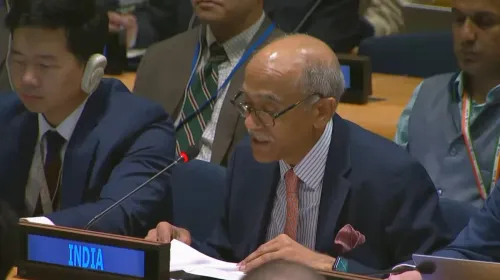
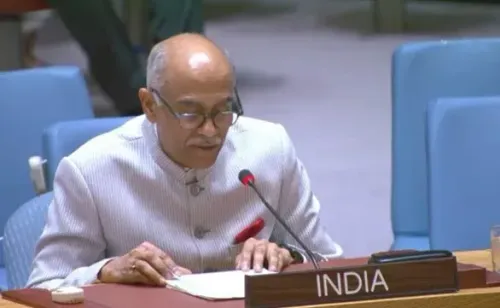
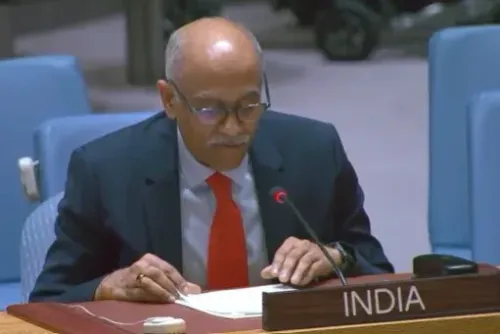
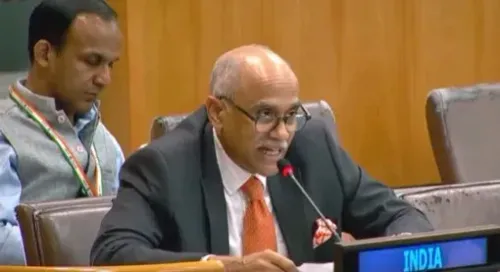
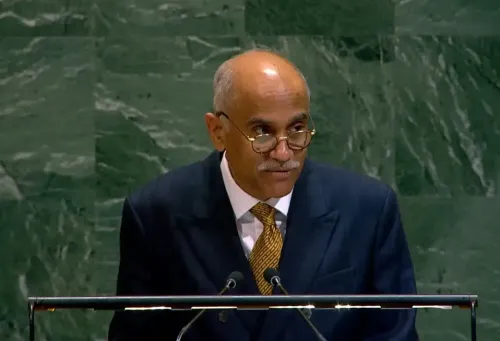
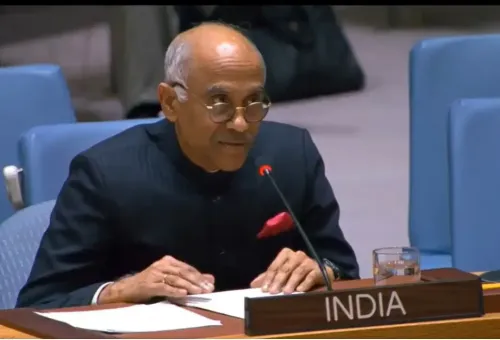
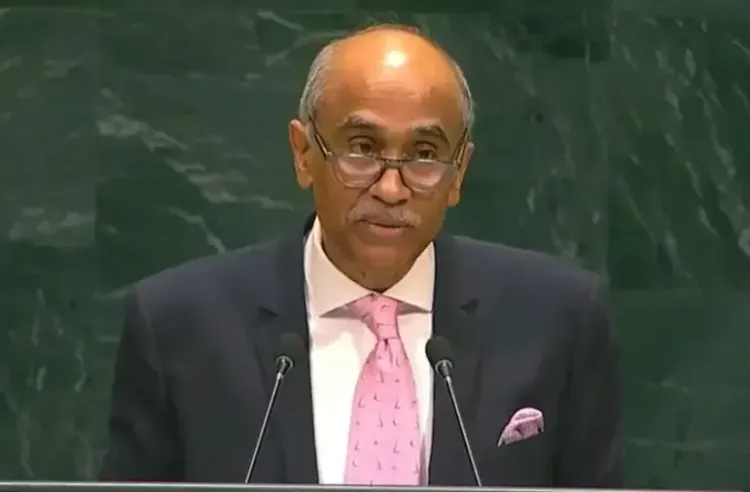
India's Permanent Representative P. Harish on Monday, 27 October 2026, sharply criticised what he called a 'disguised, de facto veto' that is paralysing the UN Security Council (UNSC) reform process, delivering a pointed address during the UN General Assembly debate on the veto rights of the five permanent members. Speaking at United Nations headquarters in New York, Harish argued that procedural manipulation by a bloc of countries has effectively strangled 17 cycles of reform negotiations without a single substantive outcome.
The 'Uniting for Consensus' Bloc and Procedural Blockage
A small group of nations calling itself Uniting for Consensus, led by Italy and including Pakistan, has repeatedly blocked the Intergovernmental Negotiations (IGN) from adopting a negotiating text through procedural manoeuvres. Harish was unambiguous in framing this as an abuse of process: 'The argument of consensus has been harnessed as a disguised, de facto veto in the IGN process as well,' he said.
He underlined that the 2008 General Assembly resolution that established the IGN is explicit — the guiding principle is 'the widest possible political acceptance, not consensus.' Using consensus as a de facto veto, he contended, has no basis in the founding resolution. Despite 17 cycles of negotiations spanning nearly two decades, 'we have no outcome to show for it,' he said.
Hidden Vetoes Beyond the Formal P5 Privilege
Harish broadened the critique beyond the formal veto power held by the five permanent members (P5) — the United States, United Kingdom, France, Russia, and China. He pointed to informal, unwritten vetoes that even non-permanent members wield in practice: 'The veto is not only what is cast in the open. There is also the effective or de facto veto that every Council member, elected and non-elected, holds over presidential statements, press statements and the decisions of sanctions committees,' he said.
This hidden power, he explained, flows from an unwritten rule of consensus that allows a single member to block a proposal — 'most often without explanation.' He cited concrete examples of this dynamic, noting that China has at times blocked sanctions on Pakistan-based terrorists including Zaki-ur-Rehman Lakhvi and Shahid Mahmood of Lashkar-e-Taiba, and Sajid Mir and Masood Azhar of Jaish-e-Mohammad in the closed-door meetings of the sanctions committee.
India's Stance on Permanent Membership and Veto Rights
India reiterated its longstanding and principled position that any country admitted as a new permanent member through UNSC reforms must be granted full veto powers — not a diluted, second-class status. 'We reiterate that as long as the veto exists, it must be held by all permanent members of a reformed Council,' Harish said, adding that 'fairness and justice demand it.'
Harish explicitly rejected proposals for new categories of permanent members with extended terms but no veto rights, arguing this would 'further entrench the very inequity we are seeking to correct.' This is the Council's core credibility problem: its architecture, he said, reflects 'the outcome of a war eight decades ago' rather than today's geopolitical realities.
Scepticism Over Existing Accountability Mechanisms
Harish was also candid in his scepticism about the existing mechanism that requires countries using their vetoes to appear before the General Assembly and explain their action. Though intended as a 'harbinger of change', he noted that the large number of vetoes cast since the mechanism was introduced 'tells a contrary story.'
For reform to be meaningful, Harish said, the starting point must be an 'early commencement of text-based negotiations, with clearly defined timelines and milestones' — a direct rebuke to the open-ended, inconclusive format that the IGN has followed for nearly two decades. The push from India comes as global pressure for UNSC expansion gains momentum among the G4 nations — India, Brazil, Germany, and Japan — all of which seek permanent seats.
Point of View
The patience argument has run out, and New Delhi is now naming the mechanics of blockage with unusual specificity. The citation of China's sanctions-committee vetoes on Pakistani terror suspects is particularly pointed: it links UNSC reform directly to counterterrorism accountability, making the debate harder to dismiss as abstract institutional architecture. Yet India's own demand that all new permanent members receive veto powers cuts both ways — it is a principled stance, but it also raises the stakes for expansion to a level that makes consensus among existing P5 members even less likely. The real test is whether the G4 can convert this rhetorical pressure into a procedural breakthrough, or whether this speech joins a long record of eloquent interventions that changed nothing.
NationPress
27 Oct 2026
Frequently Asked Questions
What is the 'disguised, de facto veto' India is criticising at the UN?
India is criticising the practice where a small bloc of countries — led by Italy and including Pakistan, under the banner 'Uniting for Consensus' — uses procedural consensus requirements to block the Intergovernmental Negotiations (IGN) from adopting a negotiating text on UNSC reform. Unlike the formal P5 veto, this procedural block has no basis in the 2008 General Assembly resolution that founded the IGN, yet it has effectively stalled reform for 17 negotiation cycles.
What is India's position on veto rights for new UNSC permanent members?
India holds that any country admitted as a new permanent member through UNSC reform must receive full veto powers, on par with existing P5 members. Harish explicitly rejected proposals for extended-term or permanent seats without veto rights, arguing such arrangements would deepen existing inequalities rather than correct them.
Why did India mention China blocking sanctions on Pakistani terror suspects?
India's envoy P. Harish cited China's blocking of sanctions on individuals including Masood Azhar and Sajid Mir of Jaish-e-Mohammad and Lashkar-e-Taiba operatives in closed-door sanctions committee meetings to illustrate that the veto problem extends beyond formal P5 privileges. This 'de facto veto' operates through an unwritten consensus rule and allows any Council member, including non-permanent ones, to block decisions without explanation.
How long have UNSC reform negotiations been going on?
The Intergovernmental Negotiations on UNSC reform have run for 17 cycles since the process was formalised under a 2008 General Assembly resolution. Despite nearly two decades of talks, no negotiating text has been adopted, which India attributes to procedural obstruction by the Uniting for Consensus group.
What does India want as the next step in UNSC reform?
India is calling for an immediate start to text-based negotiations with clearly defined timelines and milestones, a significant shift from the open-ended deliberative format that has characterised the IGN. It also wants any reformed Council to reflect contemporary geopolitical realities rather than the post-World War II order.