CM Mohan Yadav Pays Tribute to Veer Banda Singh Bahadur

Synopsis
Madhya Pradesh CM Dr. Mohan Yadav marked the birth anniversary of Sikh warrior Veer Banda Singh Bahadur on 27 October 2026, saluting his defeat of the Mughals and his enduring legacy as a protector of farmers, labourers, and the marginalised.
Key Takeaways
Mohan Yadav posted a tribute on 27 October 2026 marking the birth anniversary of Veer Banda Singh Bahadur .
Banda Singh Bahadur was born in 1670 and executed by the Mughals in 1716 after leading a historic armed uprising in Punjab.
His administration abolished the zamindari system in controlled territories, redistributing land directly to peasant farmers.
CM Yadav specifically highlighted Banda Singh's role in protecting farmers, labourers, and weaker sections — grounding the tribute in social-justice history.
Such birth-anniversary tributes to figures of Mughal-era resistance form a consistent pattern across Indian political parties and state governments.
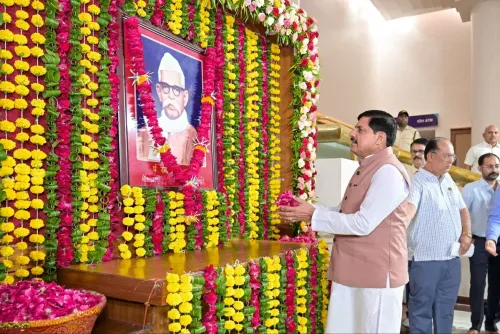
On the birth anniversary of the legendary Sikh warrior Veer Banda Singh Bahadur, Madhya Pradesh Chief Minister Dr. Mohan Yadav offered his reverence on Tuesday, 27 October 2026, honouring a commander whose defiance of Mughal power over three centuries ago still echoes in India's political memory.
Posting on X in Hindi, CM Yadav wrote: 'वीर बंदा सिंह बहादुर जी की जयंती पर सादर नमन करता हूं' — 'I offer my respectful salute on the birth anniversary of Veer Banda Singh Bahadur.' He invoked Banda Singh's 'unmatched valour in defeating the Mughals' and declared that the warrior 'will always be remembered for protecting the interests of farmers, labourers, and the weaker sections.'
The warrior who shook the Mughal empire
Veer Banda Singh Bahadur, born 1670, was a Sikh military commander who launched one of the most audacious uprisings against Mughal authority in Punjab. Inspired by Guru Gobind Singh Ji, he led campaigns that dismantled Mughal administrative control across large swathes of Punjab and, for a brief period, established a sovereign Sikh administration — redistributing land to peasants and elevating the status of the agrarian poor. He was captured and executed by the Mughals in 1716, making him a martyr figure for resistance and social justice alike.
Farmers and the weak — a deliberate remembrance
What stands out in CM Yadav's tribute is his deliberate framing of Banda Singh not merely as a battlefield hero, but as a champion of kisans (farmers), shramiks (labourers), and marginalised communities. This is historically grounded: Banda Singh's administration abolished the zamindari system in territories he controlled, handing land directly to the tiller — a radical act for the early eighteenth century. Invoking that legacy today carries unmistakable resonance in agrarian-heavy states like Madhya Pradesh.
A pan-party tradition of Sikh heritage commemoration
Across the political spectrum, Indian leaders regularly mark the birth and martyrdom anniversaries of figures associated with resistance to Mughal rule. Such tributes have become fixtures in state-level cultural calendars, school curricula, and public events — a pattern that both reflects and reinforces the centrality of these histories to contemporary national identity. CM Yadav's post fits squarely within that tradition, while the specific emphasis on social protection lends it a grounded, policy-adjacent dimension.
A warrior who gave his life so that the weak might own the land they tilled — that story, three centuries old, is still worth telling.
Point of View
Reinforcing a broader cultural-nationalist narrative. The deliberate emphasis on Banda Singh's agrarian reforms — land redistribution to peasants — adds a social-equity layer that speaks to Madhya Pradesh's predominantly rural voter base. Such statements serve a dual function: cultural identity consolidation among Sikh communities and a dog-whistle appeal to agrarian constituencies ahead of local political cycles. The framing is historically defensible, which gives the tribute unusual staying power beyond pure symbolism.
NationPress
27 Oct 2026
Frequently Asked Questions
Who was Veer Banda Singh Bahadur?
Veer Banda Singh Bahadur (1670–1716) was a Sikh military commander who led a major armed uprising against Mughal authority in Punjab, established a short-lived sovereign Sikh administration, redistributed land to farmers, and was ultimately captured and executed by the Mughals in 1716.
Why is Veer Banda Singh Bahadur remembered for farmers and workers?
During his rule over parts of Punjab, Banda Singh abolished the zamindari system and redistributed agricultural land directly to the farmers who tilled it — a radical social reform in the early eighteenth century that made him a hero among agrarian and lower-income communities.
What did CM Mohan Yadav say about Veer Banda Singh Bahadur?
CM Yadav paid tribute on his birth anniversary, praising his 'unmatched valour in defeating the Mughals' and saying he 'will always be remembered for protecting the interests of farmers, labourers, and the weaker sections.'
When is Veer Banda Singh Bahadur's birth anniversary?
Veer Banda Singh Bahadur's birth anniversary falls on 27 October, marking the birth year of 1670.
Who is Dr. Mohan Yadav?
Dr. Mohan Yadav is a BJP politician who has served as Chief Minister of Madhya Pradesh since December 2023.