Dr. Jitendra Singh closes Rajya Sabha debate on exam anti-cheating bill

Synopsis
Union Minister Dr. Jitendra Singh closed the Rajya Sabha debate on the Public Examinations (Prevention of Unfair Means) Amendment Bill, 2026 on July 30, advancing India's legislative effort to stamp out exam fraud following high-profile paper leaks that have roiled national competitive examinations since 2023.
Key Takeaways
Jitendra Singh delivered closing remarks in Rajya Sabha on July 30, 2026 during debate on the exam anti-cheating amendment bill.
The bill amends the Public Examinations (Prevention of Unfair Means) Act, 2024 , which was enacted after widespread irregularities in NEET and JEE .
The 2024 Act established centralised investigation authority and stricter criminal penalties for exam fraud; the 2026 amendment continues tightening the framework.
India has faced repeated large-scale paper leaks since 2023 , affecting hundreds of thousands of competitive exam aspirants.
Passage of the amendment will be followed by new rules on implementation timelines, surveillance protocols, and inter-state coordination from relevant bodies including NTA .
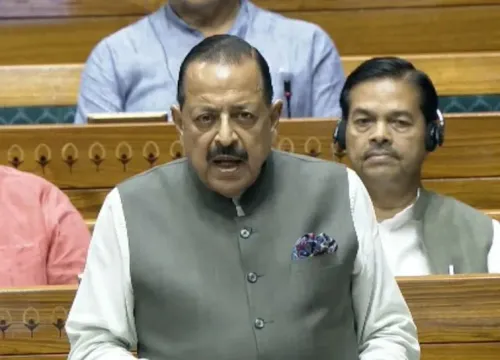
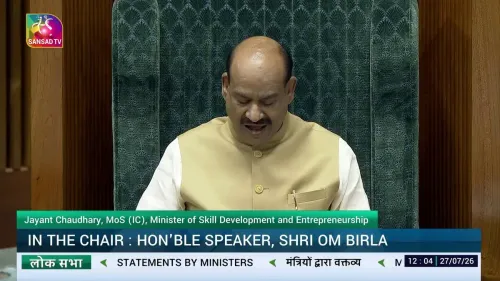
India's war on exam fraud moved forward in Parliament on Thursday, July 30, 2026, as Union Minister Dr. Jitendra Singh delivered his closing remarks in the Rajya Sabha during the debate on the Public Examinations (Prevention of Unfair Means) Amendment Bill, 2026 — the latest legislative push to seal the cracks that have let paper leaks corrode the dreams of millions of aspirants.
From the 2024 Act to the 2026 Amendment
The bill before the upper house is an amendment to the Public Examinations (Prevention of Unfair Means) Act, 2024, which Parliament enacted in the aftermath of a wave of high-profile exam irregularities — most visibly in NEET and JEE — that shook public confidence in India's centralised testing architecture. That original law created a dedicated framework: centralised investigation authority, enhanced criminal penalties, and a clear chain of accountability for exam-conducting bodies. The 2026 amendment continues that trajectory, tightening the regime further.
Dr. Jitendra Singh, who holds the Ministry of State (Independent Charge) portfolios for Science and Technology and Earth Sciences, along with ministerial responsibilities in the Prime Minister's Office and the Ministry of Personnel, represented the government on the floor of the Rajya Sabha as the bill reached its closing stage of debate.
Why the Upper House Debate Matters
Rajya Sabha deliberations on exam-integrity legislation carry particular weight because the upper house has historically been the forum where state-level concerns — about inter-state coordination, the role of state public service commissions, and the reach of central enforcement — get the sharpest airing. India has seen repeated, large-scale paper leaks since 2023, spanning multiple states and affecting hundreds of thousands of candidates who had spent years and significant money preparing for competitive recruitment and admissions tests.
The legislative response has been deliberate: first, establish the criminal and institutional framework through the 2024 Act; then, as implementation exposed gaps, amend to close them. The amendment bill now before Parliament is part of that second phase — a signal that the government views exam integrity not as a one-time fix but as an ongoing governance commitment.
What Comes Next for Aspirants and Exam Bodies
The immediate next steps hinge on the bill's passage and the rules that follow. Stakeholders watching closely include the National Testing Agency (NTA), state-level recruitment boards, the sprawling coaching sector, and — most consequentially — the estimated tens of millions of students who sit for national-level competitive exams each year. Any new implementation timelines, enhanced surveillance protocols, or inter-state coordination mechanisms notified after the bill becomes law will define whether the legislative intent translates into on-the-ground deterrence.
For a generation of aspirants who have watched hard-earned preparation undermined by systemic fraud, the credibility of India's public examination system is not an abstract policy question. It is the difference between a fair shot and a rigged game.
Point of View
While landmark, was treated as a foundation rather than a final answer — a relatively rare posture in Indian legislative practice. Dr. Jitendra Singh's floor role in Rajya Sabha, despite his primary portfolios lying in science and personnel, reflects the PMO's direct stake in ensuring the bill clears the upper house without friction. The sustained parliamentary attention to exam fraud also carries an electoral subtext: competitive examinations are one of the few remaining meritocratic pathways for aspirational India, and any perception that the state cannot protect their integrity is politically corrosive. Whether the amendment's provisions prove sufficient will ultimately be judged not in Parliament but in the next major examination cycle.
NationPress
14 Sept 2026
Frequently Asked Questions
What is the Public Examinations (Prevention of Unfair Means) Amendment Bill, 2026?
It is an amendment to the Public Examinations (Prevention of Unfair Means) Act, 2024, which was originally enacted to penalise paper leaks and cheating in national competitive exams like NEET and JEE. The 2026 amendment seeks to further strengthen the legal framework against exam fraud.
What did Dr. Jitendra Singh do in Rajya Sabha on July 30, 2026?
Union Minister Dr. Jitendra Singh delivered his closing remarks during the Rajya Sabha debate on the Public Examinations (Prevention of Unfair Means) Amendment Bill, 2026, representing the government's position on the legislation.
Why was the 2024 exam anti-cheating law enacted?
The Public Examinations (Prevention of Unfair Means) Act, 2024 was passed following widespread irregularities in high-stakes national exams, including NEET and JEE, which triggered public outrage and demands for stronger criminal accountability.
How does the 2026 amendment differ from the original 2024 Act?
The specific provisions of the 2026 amendment have not been publicly detailed in verified sources, but it is understood to build on the 2024 Act's framework of centralised investigation and stricter penalties, tightening the regime further in response to implementation experience.
What happens after the Rajya Sabha passes the exam amendment bill?
Once passed, the bill would need presidential assent to become law, after which the Ministry of Education and bodies like NTA are expected to notify implementation rules, including new surveillance protocols and inter-state coordination mechanisms.