Anti-paper leak bill 2026: Jitendra Singh opens debate, calls it Modi govt's milestone legislation
Synopsis
Parliament's debate on the Public Examinations (Prevention of Unfair Means) Amendment Bill, 2026 turned into a sharp political exchange: MoS Jitendra Singh laid out a chronology of pre-2014 paper leaks and argued that UPA-era committees had themselves called for unified legislation — but never delivered it. The 2026 amendment now raises the stakes with stiffer sentences targeting the entire chain of offenders, not just those caught red-handed.
Key Takeaways
MoS Jitendra Singh opened the parliamentary debate on the Public Examinations (Prevention of Unfair Means) Amendment Bill, 2026 on 28 July .
The bill amends the Public Examinations (Prevention of Unfair Means) Act, 2024 , described as India's first comprehensive anti-paper-leak law.
The 2026 amendment introduces enhanced imprisonment terms targeting all persons involved in exam fraud — directly or indirectly.
Singh cited leaks including the 2019 Railway Recruitment Board , 2011 AIEEE , 2009 RRB , and 2012 AIIMS New Delhi entrance exams as evidence of the pre-2014 legislative vacuum.
Venugopal objected during the debate; Singh responded that the record could not be altered 'by changing figures or digits.' Singh argued that UPA-era committees had recommended a common testing agency but the Congress-led government never acted on the suggestion.
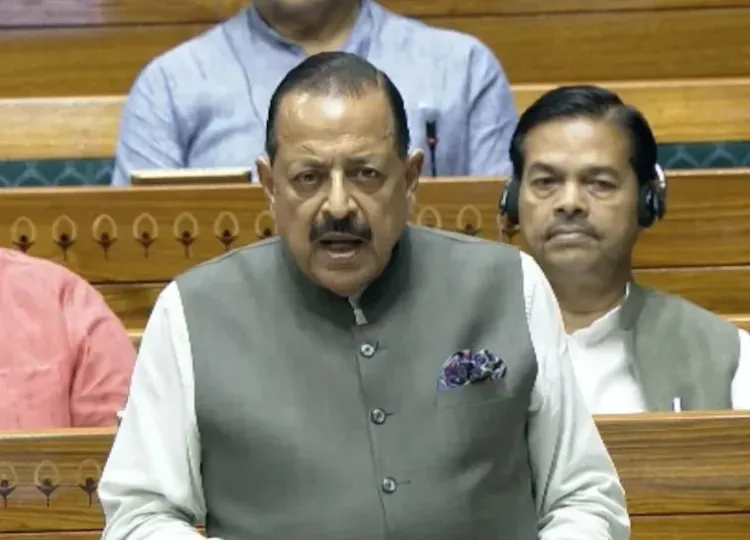
Minister of State Jitendra Singh on Tuesday, 28 July opened the parliamentary debate on the Public Examinations (Prevention of Unfair Means) Amendment Bill, 2026, asserting that the Modi government had completed what he described as the 'unfinished task' of the previous United Progressive Alliance (UPA) administration by enacting comprehensive legislation against paper leaks and exam-related malpractice.
What the Bill Proposes
The 2026 amendment builds on the Public Examinations (Prevention of Unfair Means) Act, 2024, which Singh described as 'the first of its kind in the history of Independent India.' He said the core objective of the amendment is to ensure 'speedy justice' for students wronged by paper leaks, with enhanced prison terms targeting not just immediate offenders but all those involved 'directly or indirectly.'
'The basic objectives were to give more credibility and transparency to examinations, to reassure students that they would be rewarded for their genuine efforts, and to ensure that their future is safe,' Singh said. 'Before this, there was no comprehensive law available to deal with such cases.'
A Chronology of Past Leaks
Singh cited a string of examination irregularities predating 2014 to argue that successive governments had failed to legislate a unified response. He referenced the 2019 Railway Recruitment Board Examination, the 2011 All India Engineering Entrance Examination, the 2009 Railway Recruitment Board paper leak, and the 2012 AIIMS New Delhi entrance paper leak, among others.
Congress MP K.C. Venugopal objected to the list, prompting Singh to respond: 'Venugopal ji, by changing the figures or digits, you cannot change the record; it's on the record.' Singh maintained he was 'following a chronology' and that the incidents were matters of parliamentary record.
The UPA-Era Committees Argument
Singh pointed out that multiple committees during the UPA tenure had themselves recommended the creation of a common testing agency — a suggestion that was never acted upon. 'You (Congress) should complement Prime Minister Modi and this government; it has finished an unfinished task, which you should have accomplished,' he said, directing his remarks across the aisle.
He characterised the 2024 Act and its 2026 amendment together as 'a reaffirmation of this government's deep commitment to safeguard the welfare of the youth of this country' and as a 'milestone legislation in the history of Indian Parliament.'
What Comes Next
The bill was introduced in Parliament on 27 July, a day before Singh opened the debate. With the government framing the legislation as both a youth-welfare measure and a political counter-narrative to the opposition, the debate is expected to intensify as other members respond. The amendment's stricter sentencing provisions will be closely watched by student groups and civil society organisations that have campaigned against examination fraud.
Point of View
Yet high-profile exam controversies have continued. The real measure of the 2026 amendment is not its sentencing provisions on paper but whether enforcement machinery — investigators, prosecutors, forensic capacity — can actually pursue the full chain of offenders. Stricter law without upgraded implementation risks becoming another milestone that looks better in a parliamentary speech than in a courtroom.
NationPress
26 Oct 2026
Frequently Asked Questions
What is the Public Examinations (Prevention of Unfair Means) Amendment Bill, 2026?
It is a parliamentary bill introduced on 27 July 2026 that amends the Public Examinations (Prevention of Unfair Means) Act, 2024 — India's first comprehensive anti-paper-leak law. The amendment seeks to widen accountability by imposing enhanced prison terms on all persons involved in examination fraud, not just the immediate perpetrators.
Why is the Modi government calling this an 'unfinished task' of the UPA era?
MoS Jitendra Singh argued that multiple committees formed during the UPA government's tenure had themselves recommended creating a common testing agency and unified legislation against exam fraud, but those recommendations were never enacted. The government says the 2024 Act and its 2026 amendment together fulfil those long-pending suggestions.
What paper leaks did Jitendra Singh cite during the debate?
Singh referenced the 2019 Railway Recruitment Board Examination, the 2011 All India Engineering Entrance Examination, the 2009 Railway Recruitment Board paper leak, and the 2012 AIIMS New Delhi entrance paper leak, among others, to illustrate the absence of a comprehensive law before 2024.
How does the 2026 amendment differ from the 2024 Act?
The 2024 Act focused on holding immediate wrongdoers accountable. The 2026 amendment introduces increased imprisonment terms and extends liability to all persons involved in exam fraud — directly or indirectly — with the stated aim of delivering 'speedy justice' to affected students.
Who is affected by this legislation?
The bill primarily protects students appearing in public examinations conducted by central recruitment and testing bodies. It targets anyone in the chain of exam fraud — from paper setters and leakers to distributors — making the net of criminal accountability significantly wider than before.