Dr. Jitendra Singh tables exam anti-cheating amendment bill
Synopsis
Union Minister Dr. Jitendra Singh introduced the Public Examinations (Prevention of Unfair Means) Amendment Bill, 2026 in Parliament on 27 July, seeking to strengthen the 2024 law that criminalised paper leaks and exam malpractice across central recruitment and entrance-test bodies.
Key Takeaways
Jitendra Singh introduced 'The Public Examinations (Prevention of Unfair Means) Amendment Bill, 2026' in Parliament on 27 July 2026 .
The Bill amends the Public Examinations (Prevention of Unfair Means) Act, 2024 , which was passed to criminalise paper leaks and exam malpractice.
The 2024 Act covered examinations conducted by central bodies including UPSC, SSC and NTA .
Singh holds charge of the Department of Personnel and Training (DoPT) , the nodal ministry overseeing the original Act's implementation.
The Bill will now go through parliamentary debate before potential passage and rule notification by DoPT .
Millions of students and civil services aspirants stand to be affected by any strengthened anti-malpractice provisions.
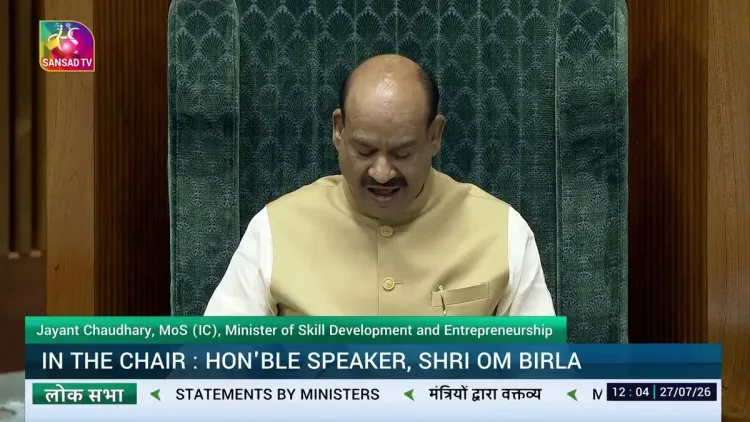
Union Minister of State (Independent Charge) for Science and Technology and Earth Sciences Dr. Jitendra Singh on Monday, 27 July 2026 introduced 'The Public Examinations (Prevention of Unfair Means) Amendment Bill, 2026' in Parliament, seeking to amend the landmark 'Public Examinations (Prevention of Unfair Means) Act, 2024'.
Context
Dr. Jitendra Singh, who also holds charge as Minister of State in the Prime Minister's Office with responsibility for Personnel, Public Grievances and Pensions, announced the tabling of the Amendment Bill through a post on X. The Bill proposes changes to the 2024 Act, which was Parliament's legislative response to a wave of examination malpractice scandals that shook the country's recruitment and entrance-test ecosystem.
The original Act was enacted after multiple high-profile paper-leak incidents — most notably in national-level medical and recruitment examinations between 2022 and 2024 — triggered nationwide student protests and demands for enforceable penalties against those responsible for compromising examination integrity.
Policy Backdrop
The Public Examinations (Prevention of Unfair Means) Act, 2024 criminalised a range of malpractices including paper leaks, impersonation, and organised cheating in tests conducted by central bodies such as UPSC, SSC and the National Testing Agency (NTA). It introduced stringent punishments and empowered central investigative agencies to act swiftly against organised networks.
The Department of Personnel and Training (DoPT), which functions under the Minister's purview, has been the nodal body overseeing implementation of the Act since its passage. Amendment bills of this nature are typically introduced to address procedural gaps, definitional ambiguities, or enforcement challenges that surface during the initial phase of a law's operation.
The broader legislative pattern reflects successive central government efforts to restore public confidence in high-stakes examinations — a credibility crisis that cost many aspirants dearly and led to calls for systemic overhaul of how national-level tests are designed, conducted, and secured.
Stakeholders and Impact
The Amendment Bill, if passed, would directly affect millions of students and civil services aspirants who appear annually in examinations conducted by central recruitment and testing bodies. For this constituency, legislative tightening of anti-malpractice provisions carries significant implications for the fairness and predictability of competitive examinations.
Examination bodies including UPSC, SSC and NTA would be expected to align their operational and security protocols with any new provisions introduced through the amendment. State governments and their respective public service commissions may also draw procedural lessons from the central framework as it evolves.
What's Next
The Amendment Bill's introduction marks the start of the legislative process; it will now be subject to debate and scrutiny in Parliament during the ongoing session. Passage would be followed by the Department of Personnel and Training notifying implementing rules to give operational effect to the revised provisions.
Observers of examination-sector reform will watch closely for the specific amendments proposed — particularly whether the Bill addresses gaps in enforcement timelines, the scope of agencies empowered to investigate, or the categories of offences covered under the original Act. The trajectory of this legislation will signal how seriously the government intends to build on the 2024 framework ahead of the next major recruitment cycle.
Point of View
Piloting this legislation reinforces his ministry's positioning as the institutional guardian of examination integrity, a politically salient issue given the scale of student anger that preceded the original law. The timing — mid-session tabling — suggests urgency, possibly driven by ongoing enforcement challenges or feedback from central recruitment agencies. How the Bill fares in parliamentary debate will test whether the political consensus that produced the 2024 Act holds firm enough to deepen its provisions.
NationPress
25 Oct 2026
Frequently Asked Questions
What is the Public Examinations Amendment Bill 2026?
It is a bill introduced by Union Minister Dr. Jitendra Singh in Parliament on 27 July 2026 to amend the Public Examinations (Prevention of Unfair Means) Act, 2024, which criminalises paper leaks and malpractice in central examinations.
What was the original Public Examinations Act 2024 about?
The Public Examinations (Prevention of Unfair Means) Act, 2024 was passed by Parliament to criminalise paper leaks, impersonation, and organised cheating in examinations conducted by bodies such as UPSC, SSC, and NTA, following widespread scandals between 2022 and 2024.
Who introduced the exam anti-cheating amendment bill in Parliament?
Union Minister of State (Independent Charge) Dr. Jitendra Singh, who holds charge of the Ministry of Personnel, Public Grievances and Pensions, introduced the Amendment Bill.
Which examinations does the Public Examinations Act cover?
The Act covers public examinations conducted by central bodies including the Union Public Service Commission (UPSC), Staff Selection Commission (SSC), and the National Testing Agency (NTA), among others.
What happens after the Amendment Bill is introduced in Parliament?
After introduction, the Bill will be debated and voted upon in Parliament. If passed, the Department of Personnel and Training will notify implementing rules to give the revised provisions operational effect.