Dr. Jitendra Singh: Exam Bill Covers More Than Paper Leaks
Synopsis
Union Minister Dr. Jitendra Singh intervened in Rajya Sabha on July 31, 2026, to clarify that the Public Examinations Amendment Bill 2026 addresses the full spectrum of unfair practices in public exams — not just paper leaks — pushing back against what he called an Opposition misreading of the legislation.
Key Takeaways
Jitendra Singh intervened in Rajya Sabha on July 31, 2026 during debate on the Public Examinations (Prevention of Unfair Means) Amendment Bill, 2026 .
He stated the Opposition had 'mis-read the Bill,' which covers the 'entire spectrum of possible unfair practices' — not only paper leaks.
The Bill amends the Public Examinations (Prevention of Unfair Means) Act, 2024 , which was enacted following multiple exam irregularity incidents from 2022 onwards.
Bodies such as NTA and UPSC have faced repeated allegations of leaks, impersonation, and collusion in central examinations.
The 2026 Amendment seeks to widen the statutory definition of unfair means beyond leaks to cover a broader range of malpractices.
Next steps include passage in Parliament, presidential assent, and framing of rules for examination-conducting agencies.
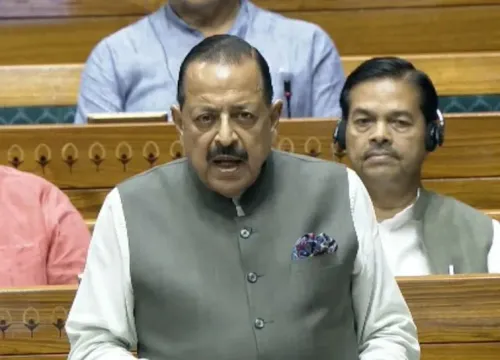
The Opposition got it wrong — and Union Minister Dr. Jitendra Singh stood up in the Rajya Sabha on Friday, July 31, 2026, to say exactly that. Intervening in the debate on the Public Examinations (Prevention of Unfair Means) Amendment Bill, 2026, the Minister pushed back sharply against what he called a fundamental misreading of the legislation's scope.
Quoting his own words on the floor of the House, Dr. Singh said: 'The Opposition seems to have mis-read the Bill. This legislation is not limited to paper leaks alone — it covers the entire spectrum of possible unfair practices in public examinations.' The clarification was pointed: this is not a narrow fix, it is a broad statutory net.
From Paper Leaks to the Full Spectrum of Malpractice
The Amendment Bill is the legislative successor to the Public Examinations (Prevention of Unfair Means) Act, 2024, which was itself rushed into existence after a wave of high-profile exam irregularities rattled public confidence in central recruitment and entrance tests. Bodies such as the NTA and UPSC faced repeated allegations of paper leaks, impersonation, and organised collusion from 2022 onwards.
The 2024 Act criminalised the most visible offence — the leak. But the 2026 Amendment, as Dr. Singh framed it, goes further: widening the statutory definition of 'unfair means' to capture the full range of malpractices that aspirants, administrators, and courts have identified in the years since. The argument from the Treasury Bench is that a leak is only one entry point into a much larger problem.
Millions of Aspirants, One Legislative Moment
The stakes behind the parliamentary debate are concrete. Every year, tens of millions of Indian students sit for central government examinations — from UPSC Civil Services to SSC and NTA-conducted entrance tests. A single compromised paper can invalidate months of preparation and trigger years of litigation. The 2024 Act was a first response; the 2026 Amendment is Parliament's attempt to close the gaps that experience has since exposed.
Dr. Singh's intervention signals that the government views the Opposition's framing — that the Bill is merely an anti-leak measure — as both technically incorrect and politically reductive. The Minister's floor speech was, in effect, a restatement of legislative intent for the record.
With the Bill now under active debate in the Rajya Sabha, the next steps are passage, presidential assent, and the issuance of rules that will determine how examination-conducting agencies operationalise the expanded provisions. For crores of exam aspirants, how swiftly and rigorously those rules are written will matter far more than the parliamentary argument that preceded them.
Point of View
' the government positions itself as the authoritative interpreter of a law it piloted. The 2026 Amendment is part of a broader pattern of successive legislative tightening around exam integrity, each round prompted by fresh malpractice revelations. Whether the expanded definition of 'unfair means' translates into effective enforcement will depend on rule-making and institutional capacity — the real test that lies beyond the Rajya Sabha chamber.
NationPress
14 Sept 2026
Frequently Asked Questions
What is the Public Examinations (Prevention of Unfair Means) Amendment Bill 2026?
It is a 2026 amendment to the Public Examinations (Prevention of Unfair Means) Act, 2024, which seeks to widen the definition of unfair practices in central public examinations beyond paper leaks to cover the full spectrum of malpractices including impersonation and collusion.
What did Dr. Jitendra Singh say in Rajya Sabha about the exam bill?
Dr. Jitendra Singh said the Opposition had 'mis-read the Bill,' clarifying that the legislation is not limited to paper leaks alone but covers the entire spectrum of possible unfair practices in public examinations.
What was the original Public Examinations Act 2024 about?
The Public Examinations (Prevention of Unfair Means) Act, 2024 was enacted to criminalise organised malpractices — particularly paper leaks — in central public examinations conducted by bodies like NTA and UPSC, following a series of irregularity incidents from 2022 onwards.
Which exams does the Public Examinations Amendment Bill 2026 apply to?
The Bill applies to central public examinations, covering tests conducted by bodies such as the NTA and UPSC, which include major entrance and recruitment examinations sat by millions of aspirants each year.
What happens after the Public Examinations Amendment Bill passes in Parliament?
After passage in both Houses and presidential assent, the government will need to issue rules under the Act, which will determine how examination-conducting agencies implement the expanded provisions against unfair practices.