Rajnath Singh at ADMM-Plus: Operation Sindoor shows India's counter-terror resolve
Synopsis
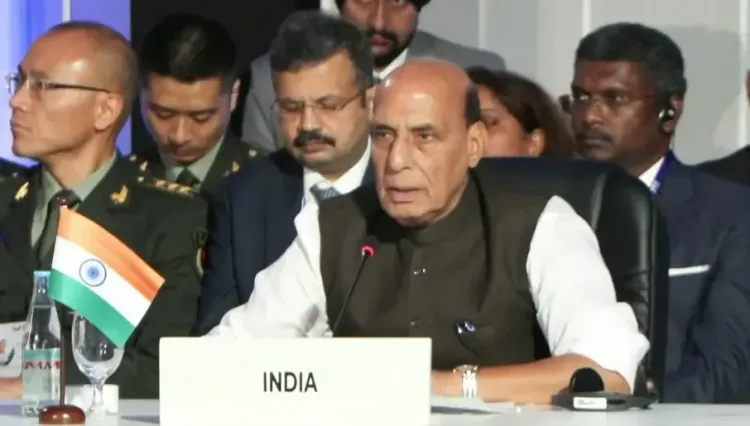
At the 13th ADMM-Plus in Cebu, Defence Minister Rajnath Singh formally invoked Operation Sindoor in a multilateral forum for the first time — using it as evidence of India's counter-terrorism resolve — while offering battle-tested expertise to ASEAN partners and staking India's claim as the Indo-Pacific's primary net security provider.
Key Takeaways
Rajnath Singh addressed the 13th ADMM-Plus in Cebu on 29 October 2026 , positioning India as a battle-hardened counter-terrorism partner for ASEAN.
Operation Sindoor was cited as proof of India's 'firm stance against state-sponsored terror' — its first formal invocation in a multilateral defence forum.
India and Malaysia are co-chairing the ADMM-Plus Experts' Working Group on Counter-Terrorism for the 2024–2027 cycle.
Singh reiterated commitment to the ASEAN-India Plan of Action 2026–2030 and declared 2026 the ASEAN-India Year of Maritime Cooperation .
The Indian Navy has maintained a continuous Gulf of Aden presence since 2008 , securing thousands of merchant vessels without use of force against other nations.
Singh proposed a defence 'Youth Bridge' framework to deepen people-to-people and digital ties between India and ASEAN nations.
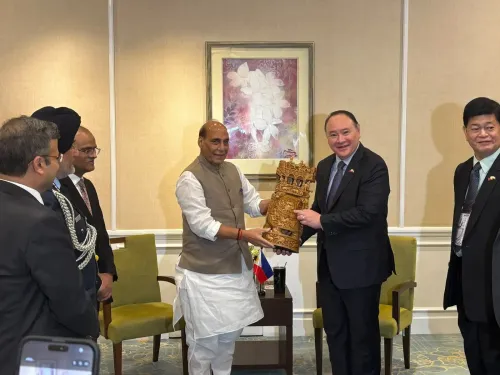
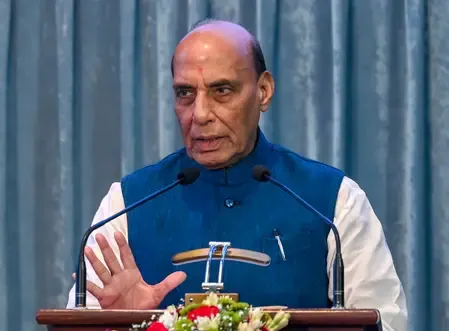
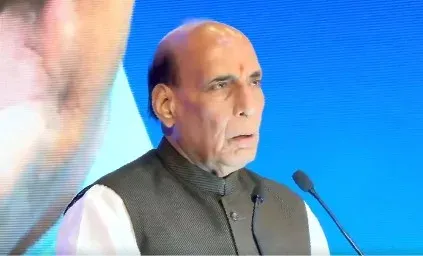
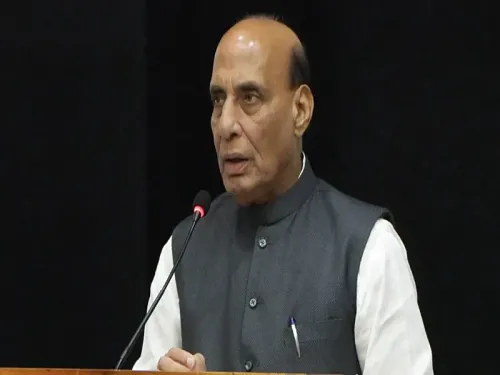
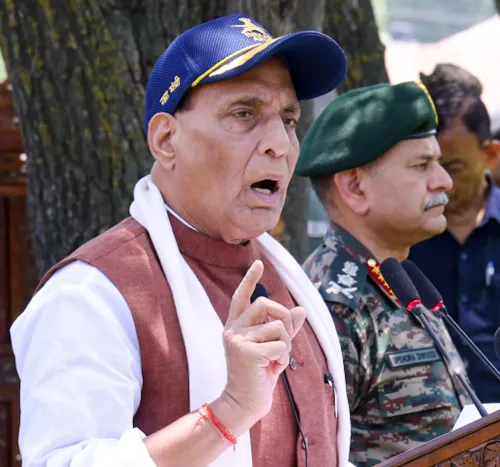
Defence Minister Rajnath Singh on 29 October 2026 told the 13th ASEAN Defence Ministers' Meeting-Plus (ADMM-Plus) in Cebu, Philippines, that India's counter-terrorism expertise has been forged not in classrooms but through decades of confronting cross-border security threats — and that every strategy deployed has been validated in real-time operations. The address placed India's hard-won operational experience at the centre of its pitch for deeper regional security cooperation.
Operation Sindoor as a Case Study
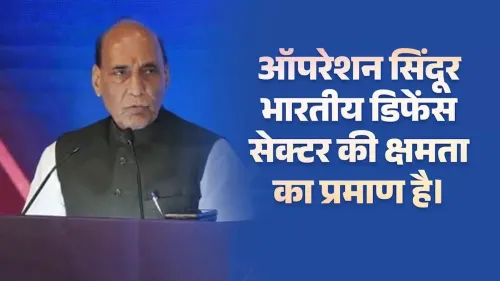
Singh cited Operation Sindoor — conducted by Indian armed forces last year — as a defining illustration of New Delhi's approach. The operation, he said, dismantled a substantial portion of terrorist infrastructure and served as 'a clear statement of India's firm stance against state-sponsored terror.' It is the first time the government has formally invoked Operation Sindoor in a multilateral defence forum to frame India's counter-terrorism credentials.
Singh emphasised that India's experience is 'not just limited to theoretical or classroom knowledge, but has been attained by facing cross-border security challenges for decades,' adding that 'every strategy is tested in real-time situations and has been successful.'
India-ASEAN Counter-Terrorism Framework
Singh noted that counter-terrorism is an 'important area' of cooperation under the ADMM-Plus structure. For the 2024–2027 cycle, India and Malaysia are co-chairing the Experts' Working Group on Counter-Terrorism — a pairing that reflects the growing institutional depth of India's ASEAN defence ties. He reaffirmed commitment to the ASEAN-India Comprehensive Strategic Partnership and the ASEAN-India Plan of Action 2026–2030, both of which were endorsed at the 2nd ASEAN-India Defence Ministers' Informal Meeting held in Kuala Lumpur in October 2025.
India, Singh said, is fully prepared to share its 'practical and battle-tested counter-terrorism experience' through joint military exercises, capacity-building programmes, and intelligence sharing.
Maritime Security: India as Net Security Provider
A substantial portion of Singh's address focused on maritime security — a domain he framed as inseparable from regional peace and prosperity. He pointed to the Indian Navy's uninterrupted presence in the Gulf of Aden since 2008, during which it has escorted thousands of merchant vessels and thwarted multiple hijacking attempts, as evidence of India's role as a 'trusted net security provider in the Indian Ocean Region and the wider Indo-Pacific.'
'Merely issuing statements regarding maritime security is not enough,' Singh said, underscoring that India's commitment is operational, not rhetorical. He stressed adherence to the United Nations Convention on the Law of the Sea (UNCLOS) and said India's advocacy for freedom of navigation and overflight 'is not directed against any country' but aimed at protecting collective regional interests.
Singh also highlighted that 2026 has been declared the ASEAN-India Year of Maritime Cooperation, with the 2nd ASEAN-India Maritime Exercise already conducted as part of that framework.
Youth Bridge Proposal and Regional Vision
Singh proposed the establishment of a defence 'Youth Bridge' framework to foster people-to-people connectivity, digital innovation, and capacity building across ASEAN and India — aligning with the meeting's joint statement theme of 'Youth, Peace and Security.' He argued that India and ASEAN share a demographic advantage — comparatively young populations — that creates a natural convergence of long-term interests.
He articulated India's vision of an Indo-Pacific that is 'open, inclusive, and based on a rules-based international order,' anchored in what he described as the civilisational ethos of 'Sarve Bhavantu Sukhinah' — a Sanskrit phrase meaning the welfare and happiness of all. The meeting's overarching theme, 'Navigating Our Future Together,' was cited by Singh as deeply resonant with India's own foreign and defence policy orientation.
What the Address Signals
This is a notable escalation in the assertiveness of India's multilateral defence diplomacy. By invoking Operation Sindoor in a formal ASEAN forum and positioning India as a net security provider — not merely a participant — New Delhi is staking a larger claim in the Indo-Pacific security architecture at a time of heightened regional tensions. The next test will be whether this diplomatic momentum translates into binding cooperation commitments under the 2026–2030 Plan of Action.
Point of View
Not a rhetorical flourish — New Delhi is telling its Indo-Pacific partners that its counter-terrorism offer comes with operational proof, not just policy papers. This matters because ASEAN states have historically been cautious about aligning too closely with any single power's security framing; India is essentially asking them to treat its experience as a regional asset rather than a bilateral one. The maritime security pitch — anchored in 18 years of Gulf of Aden deployments — is similarly calibrated to distinguish India from powers that assert freedom of navigation without the operational track record to back it. The unresolved question is whether this assertive framing helps or hinders consensus-driven ASEAN diplomacy, which has historically resisted letting any outside actor set the security agenda.
NationPress
29 Oct 2026
Frequently Asked Questions
What did Rajnath Singh say at the ADMM-Plus meeting in Cebu?
Singh told the 13th ADMM-Plus in Cebu on 29 October 2026 that India's counter-terrorism expertise is grounded in decades of real-world cross-border security challenges, not theory. He offered to share this experience with ASEAN partners through joint exercises, capacity-building, and intelligence sharing, and invoked Operation Sindoor as a demonstration of India's resolve against state-sponsored terror.
What is Operation Sindoor and why did Singh mention it?
Operation Sindoor was a military operation conducted by Indian armed forces that dismantled a significant portion of terrorist infrastructure. Singh cited it at ADMM-Plus as concrete evidence of India's counter-terrorism effectiveness and its firm stance against state-sponsored terror — the first known invocation of the operation in a formal multilateral defence forum.
What is India's role in the ADMM-Plus counter-terrorism framework?
India and Malaysia are jointly co-chairing the ADMM-Plus Experts' Working Group on Counter-Terrorism for the 2024–2027 cycle. This gives India a direct leadership role in shaping the region's collective counter-terrorism agenda within the ASEAN defence framework.
What is the ASEAN-India Year of Maritime Cooperation?
India has declared 2026 the ASEAN-India Year of Maritime Cooperation, as announced by Singh at the ADMM-Plus. The 2nd ASEAN-India Maritime Exercise has already been conducted under this framework, and Singh reaffirmed India's commitment to UNCLOS and freedom of navigation in the Indo-Pacific.
What is the defence Youth Bridge proposal Singh announced?
Singh proposed the creation of a defence 'Youth Bridge' framework between India and ASEAN nations to strengthen people-to-people connectivity, digital innovation, and capacity building. The initiative is aligned with the ADMM-Plus joint statement's theme of 'Youth, Peace and Security' and is intended to channel the shared demographic youth advantage of India and ASEAN into long-term defence cooperation.