Ramaswamy pushes property tax cuts, lower energy bills, end to sanctuary cities
Synopsis
Entrepreneur Vivek Ramaswamy posted a crisp three-point agenda on X demanding property tax cuts, lower electric bills, and an end to sanctuary cities — a pocketbook-and-enforcement message that previews the key fault lines heading into the 2027 US legislative cycle.
Key Takeaways
Entrepreneur Vivek Ramaswamy posted a three-point policy checklist on X on 27 October 2026 demanding lower property taxes, reduced electric bills, and an end to sanctuary cities.
Property taxes have surged across the United States in recent years due to pandemic-era home-price appreciation pushing assessed valuations higher.
Ramaswamy's energy-cost argument aligns with Republican calls for domestic permitting reform and rollback of mandates he argues inflate utility bills.
The Trump administration previously attempted to withhold federal grants from sanctuary jurisdictions in 2017-2018 , setting legal precedents that remain contested.
All three items are expected to feature in 2027 state and federal legislative sessions , making Ramaswamy's post a de facto pre-session priority signal.
As former co-lead of the DOGE advisory effort, Ramaswamy has consistently framed fiscal discipline and immigration enforcement as a unified governing philosophy.
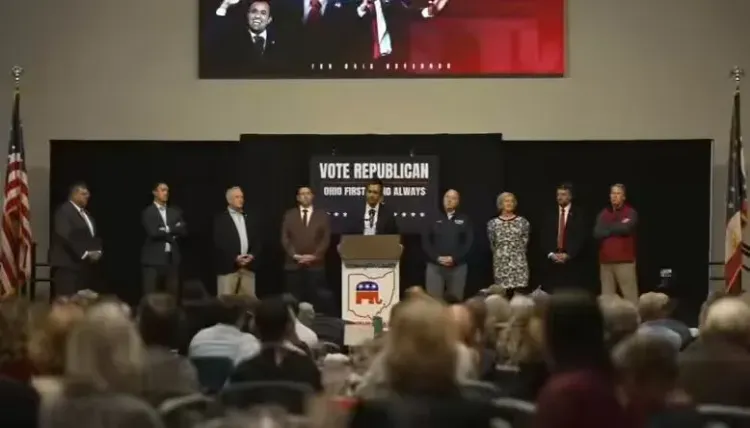
Three policy demands, three checkmarks, and no room for ambiguity. Entrepreneur Vivek Ramaswamy — founder and executive chairman of Strive Asset Management and former co-lead of the US Department of Government Efficiency (DOGE) advisory effort — posted a pointed three-point agenda on X on Tuesday, 27 October 2026, calling for slashed property taxes, lower electric bills, and an end to sanctuary cities, pressing the kind of pocketbook-and-enforcement message that has defined his brand of governance advocacy.
A three-item receipt the American voter is meant to feel
The post is brief by design. Each line targets a cost or a grievance that lands on the kitchen table: the property-tax bill that arrives in the mail, the electricity statement that creeps upward every quarter, and the local policy that, in Republican framing, puts criminal-enforcement priorities at odds with federal immigration law. Ramaswamy's checklist format signals not aspiration but a to-do list — items he is presenting as achievable, not merely debatable.
Property taxes have surged across much of the United States over the past several years, driven by pandemic-era home-price appreciation that pushed assessed valuations sharply higher even as household incomes failed to keep pace. The issue has migrated from a niche local-government concern into a front-rank kitchen-table grievance, attracting attention from legislators in high-cost states from Texas to Florida to New York.
Energy costs and the deregulation argument
On electric bills, Ramaswamy's framing aligns with a longstanding Republican argument: that domestic energy permitting reform, expansion of fossil-fuel supply, and rollback of mandates driving up utility costs represent the fastest route to consumer relief. That position sat at the centre of the 2024 Republican campaign platform and carried through into the early priorities of the administration that followed.
Deregulation advocates point to energy permitting backlogs and renewable-portfolio mandates as hidden cost-drivers embedded in monthly utility statements. Critics counter that long-run investment in cleaner generation lowers price volatility. Ramaswamy's post does not specify a mechanism — it stakes out the destination and invites the political argument.
Sanctuary cities: a federal-funding fight with a long history
The sanctuary-city line carries perhaps the sharpest political charge. The Trump administration moved aggressively in 2017-2018 to condition federal grants on local cooperation with Immigration and Customs Enforcement (ICE), triggering legal battles across multiple jurisdictions that had adopted policies limiting when local police shared detainee information with federal agents. Courts constrained several of those funding conditions, but the underlying tension between federal immigration enforcement and local discretion was never resolved — it was deferred.
Ramaswamy, as a former DOGE co-lead, has consistently positioned himself at the intersection of fiscal discipline and enforcement maximalism. A post combining tax relief, energy costs, and immigration enforcement is not three unrelated grievances — it is a single coherent message aimed at voters who feel squeezed by government at every level.
What the 2027 legislative calendar may deliver
The practical battleground for all three items is now the 2027 state and federal legislative session. Property-tax reform bills are advancing in several state legislatures; energy-permitting overhaul remains active at the federal level; and any renewed attempt to attach immigration-cooperation conditions to federal funding will almost certainly face fresh legal scrutiny. Ramaswamy's post, arriving in late October 2026, reads less like a reaction to a single event and more like a pre-session opening bid — a public marker of the priorities he expects the governing coalition to honour.
Whether the checklist becomes statute depends on legislative arithmetic Ramaswamy does not control. What he does control is the framing — and on that front, the three checkmarks make the ambition unmistakably plain.
Point of View
Posts like this function as public accountability markers — they are harder to quietly shelve when they have already circulated widely. For analysts watching the post-DOGE political trajectory of Ramaswamy, the continuity between his governance-efficiency brief and these three demands is unmistakable: lower costs, tighter enforcement, smaller footprint.
NationPress
27 Oct 2026
Frequently Asked Questions
What did Vivek Ramaswamy post about property taxes?
Ramaswamy called for property taxes to be slashed, listing it as the first of three policy priorities in an X post on 27 October 2026 . He did not specify a mechanism, but the demand aligns with Republican arguments for assessed-valuation reform and state-level tax caps.
What are sanctuary cities and why does Ramaswamy want to end them?
Sanctuary cities are jurisdictions that limit local law enforcement's cooperation with federal Immigration and Customs Enforcement (ICE) when detaining undocumented immigrants. Ramaswamy and other Republicans argue these policies obstruct federal immigration law; the Trump administration previously tried to cut federal funding to such cities in 2017-2018 .
How does Vivek Ramaswamy propose to lower electric bills?
Ramaswamy's post did not detail specific measures, but his broader policy position — consistent with the 2024 Republican platform — favours expanding domestic energy supply, streamlining permitting, and rolling back mandates he argues inflate utility costs.
What is Vivek Ramaswamy's role after DOGE?
Ramaswamy serves as founder and executive chairman of Strive Asset Management . He previously co-led the US Department of Government Efficiency (DOGE) advisory effort and ran as a 2024 Republican presidential candidate before ending his campaign.
When could these policy proposals become law?
The most likely window is the 2027 state and federal legislative session , when property-tax reform bills, energy-permitting overhaul, and renewed attempts to condition federal funding on immigration cooperation are all expected to be active agenda items.