White House Claims $700M Saved on Prescription Drugs via TrumpRx
Synopsis
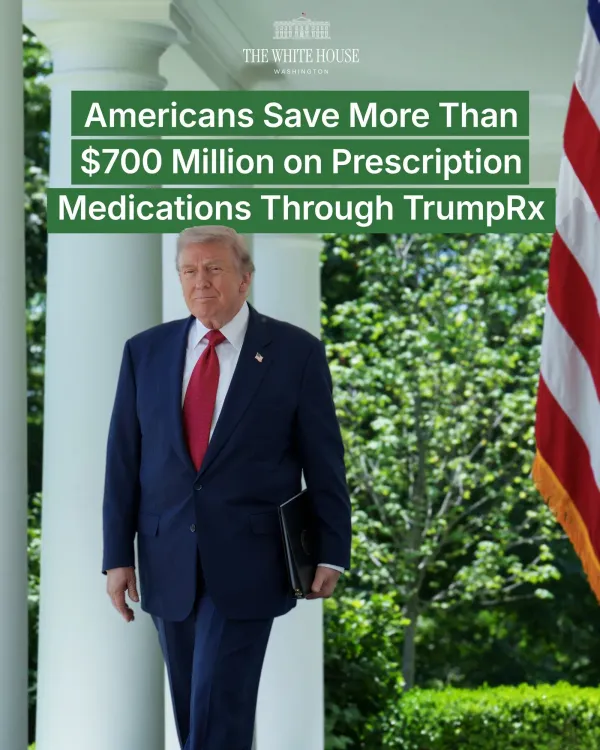
The White House announced on July 29, 2026, that Americans have saved $700 million on prescription drugs via TrumpRx.gov. The claim builds on Trump's long-running drug pricing agenda, including the 2018 American Patients First blueprint, and will now face Congressional and independent scrutiny.
Key Takeaways
The White House claimed $700 million in prescription drug savings for Americans as of July 29, 2026 .
The savings are attributed to TrumpRx.gov , a government drug-pricing platform linked to President Donald Trump's administration.
The specific savings figure and TrumpRx.gov's operational details have not been independently verified.
Trump's drug pricing push traces back to the American Patients First blueprint released in 2018 , targeting transparency and market competition.
Congressional oversight and official government audits will be the next test for the $700 million claim.
Indian generic pharmaceutical exporters, a major US drug supplier, may face downstream implications from any structural shift in US drug procurement policy.
The White House declared on Wednesday, July 29, 2026 that Americans have saved $700 million on prescription drugs through a government drug-pricing initiative linked to TrumpRx.gov — framing it as a campaign promise fulfilled by President Donald Trump.
The $700 Million Claim and What TrumpRx.gov Represents
The official White House post stated: '$700 MILLION SAVED on prescription drugs thanks to TrumpRx.gov — delivering lower medication prices for Americans. A promise made, promise KEPT.' The announcement positions the platform as a direct delivery mechanism for lower drug costs, though the specific savings figure and the TrumpRx.gov program's operational details have not been independently verified at the time of publication.
Prescription drug affordability has been one of the most persistently contentious domestic policy issues in the United States for decades. High out-of-pocket costs for medications have drawn bipartisan concern from Congress and successive administrations alike, making any credible savings claim politically significant heading into the legislative calendar.
Trump's Drug Pricing Push: A Policy Thread Going Back to 2018
Trump's focus on drug prices is not new. During his first term, the administration released the American Patients First blueprint in 2018, which outlined a multi-pronged strategy targeting drug price transparency, increased market competition, and reference pricing models tied to international benchmarks. Executive actions on drug importation and 'most favoured nation' pricing followed in subsequent years, though several faced legal and legislative headwinds.
The TrumpRx.gov platform appears to be the latest iteration of that policy lineage — a direct-to-consumer or government-facilitated mechanism aimed at lowering what American patients pay at the pharmacy counter. Pharmaceutical manufacturers remain central stakeholders in any such framework, as pricing agreements and formulary negotiations directly affect their revenue structures.
What Congress and Watchdogs Will Be Looking For
The headline number — $700 million — will now face scrutiny from Congressional oversight bodies and independent policy analysts. The key questions: how the savings are calculated, which drug categories are covered, and whether the gains are sustained or one-time. Official government reports detailing verified savings from implemented pricing programs will be the next evidentiary benchmark.
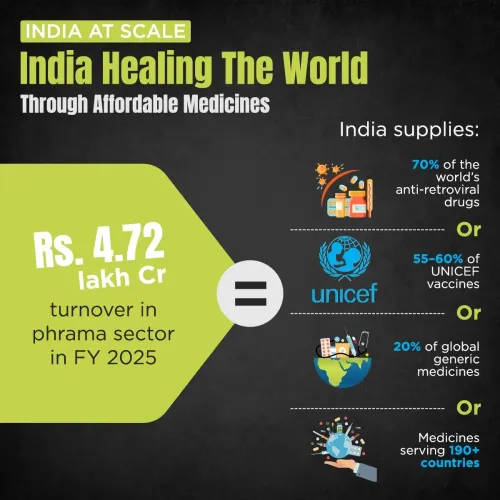
For Indian pharmaceutical exporters — whose generic drug shipments to the US represent a multi-billion dollar trade corridor — any structural shift in how Washington prices and procures medicines carries downstream implications for market access and pricing negotiations.
If the $700 million figure holds up to independent audit, it would mark one of the more concrete deliverables in a decades-long American battle over what patients pay to stay alive — and the administration knows it.
Point of View
Measurable wins on drug pricing ahead of any Congressional budget or legislative cycle. Framing TrumpRx.gov as a promise-kept narrative directly targets a voter bloc — seniors and working-class Americans — for whom pharmacy costs are viscerally real. The announcement also sets up a pressure dynamic on pharmaceutical manufacturers, who will resist any framework that permanently caps their US pricing power. Whether the figure survives independent audit will determine if this becomes a durable policy legacy or a contested talking point.
NationPress
29 Jul 2026
Frequently Asked Questions
What is TrumpRx.gov?
TrumpRx.gov is a US government drug-pricing platform cited by the White House as the mechanism through which Americans have saved $700 million on prescription medications. Its full operational details have not been independently verified.
How much has Trump's drug pricing plan saved Americans?
The White House claims $700 million in savings on prescription drugs as of July 29, 2026, though this figure has not yet been confirmed by independent government audits or Congressional oversight bodies.
What was Trump's American Patients First blueprint?
Released in 2018 during Trump's first term, the American Patients First blueprint outlined strategies to lower US drug prices through increased market competition, pricing transparency, and reference pricing tied to international benchmarks.
Does US drug pricing policy affect India?
Yes. India is one of the largest suppliers of generic medicines to the United States, and any structural shift in how Washington prices or procures drugs can affect Indian pharmaceutical exporters' market access and pricing negotiations.
Will Congress verify the $700 million drug savings claim?
Congressional oversight committees and independent policy analysts are expected to scrutinise the $700 million figure, examining the calculation methodology, drug categories covered, and whether savings are sustained over time.