India's primary healthcare spending doubles to ₹1.4 lakh crore in a decade: NHA data
Synopsis
India's public primary healthcare spending has more than doubled in a decade to ₹1.4 lakh crore, and demand for services has nearly doubled in both rural and urban areas. With over 1.8 lakh Ayushman Arogya Mandirs now operational and free drug lists running to 381 medicines at district hospitals, the data signals a structural — not merely rhetorical — shift in how India finances frontline health.
Key Takeaways
Government primary healthcare spending rose from ₹0.5 lakh crore in 2013-14 to ₹1.4 lakh crore in 2022-23 , per NHA estimates.
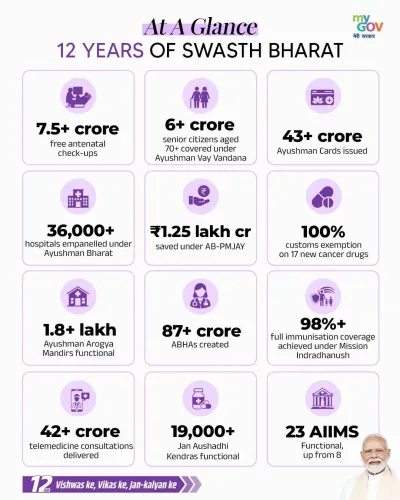
More than 1.8 lakh Ayushman Arogya Mandirs (AAMs) are now operational, offering 12 service packages including mental health, palliative care, and teleconsultation.
Free drugs available at public facilities range from 106 at SHC-AAMs to 381 at district hospitals .
Free diagnostic tests range from 14 at SHC-AAMs to 134 at district hospitals .
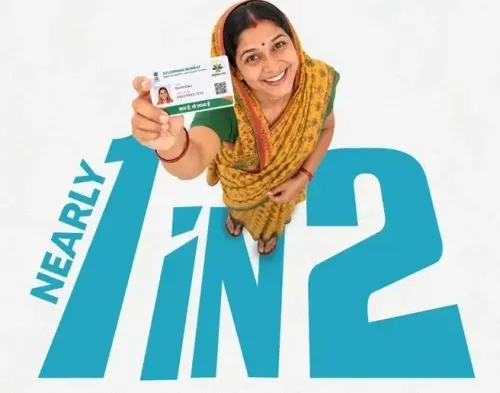
Healthcare demand nearly doubled in rural areas ( 6.8% to 12.2% ) and urban areas ( 9.1% to 14.9% ) between 2017-18 and 2025 , per NSSO data.
India's government expenditure on primary healthcare has more than doubled over the past decade, rising from ₹0.5 lakh crore in 2013-14 to ₹1.4 lakh crore in 2022-23, according to the latest National Health Accounts (NHA) estimates released on 27 May. The figures, now in their 10th edition, offer the most comprehensive time-series picture of India's health financing since the series began.
What the NHA Estimates Show
The NHA estimates are released annually and track actual health expenditure across government, private sector, and other funding sources. The 2022-23 edition marks a decade of data, making it possible to assess long-term trends in how India finances healthcare. According to the report, the sustained increase in public spending reflects a deliberate policy shift toward strengthening primary care infrastructure and widening access.
Ayushman Arogya Mandirs: The Delivery Engine
A central pillar of this expansion has been the rollout of more than 1.8 lakh Ayushman Arogya Mandirs (AAMs) across the country. These centres deliver 12 comprehensive primary healthcare service packages covering reproductive and child health, communicable and non-communicable diseases, mental health, palliative care, oral health, ENT services, and emergency care. They also provide free medicines, diagnostic services, wellness sessions, and teleconsultation facilities — bringing specialist-adjacent care to the community level.
Free Drugs and Diagnostics: A Tiered Framework
The government has significantly expanded the essential drug lists available at public facilities. Under the revised framework, 106 drugs are available free of cost at SHC-AAMs, 172 at PHC-AAMs, 300 at community health centres, 318 at sub-district hospitals, and 381 at district hospitals. Diagnostic coverage follows a similar tiered structure: public facilities now offer 14 diagnostic tests at SHC-AAMs, 63 at PHC-AAMs, 97 at community health centres, 111 at sub-district hospitals, and 134 at district hospitals.
Healthcare Demand Rising in Rural and Urban India
The impact of increased spending is visible in utilisation data. Findings from the National Sample Survey Office's 80th round health survey show that healthcare demand has nearly doubled — rising from 6.8% to 12.2% in rural areas and from 9.1% to 14.9% in urban areas between 2017-18 and 2025. The government attributes this partly to mass awareness campaigns and proactive screening initiatives that have encouraged early detection and timely treatment.
This comes amid a broader national push to reduce out-of-pocket health expenditure, which has historically been one of the highest drivers of household poverty in India. Whether the spending trajectory continues into the next NHA cycle will be closely watched by public health researchers and policymakers alike.
Point of View
But the more important question is what it bought. The NHA data shows spending went up; the NSSO data shows utilisation went up. What neither dataset fully resolves is whether health outcomes — mortality, morbidity, catastrophic expenditure rates — improved proportionally. India's out-of-pocket health spending remains among the highest in Asia despite rising public outlays, suggesting the system is absorbing more money without fully displacing private costs for households. The AAM rollout is structurally sound, but its quality consistency across 1.8 lakh centres is unverified in this report. The next accountability test is outcomes data, not input data.
NationPress
27 Sept 2026
Frequently Asked Questions
How much has India's government spending on primary healthcare increased?
Government expenditure on primary healthcare more than doubled from ₹0.5 lakh crore in 2013-14 to ₹1.4 lakh crore in 2022-23, according to the National Health Accounts estimates released on 27 May. This represents a decade of sustained increase in public health financing.
What are Ayushman Arogya Mandirs and what services do they offer?
Ayushman Arogya Mandirs (AAMs) are government-run primary healthcare centres, with over 1.8 lakh now operational across India. They provide 12 comprehensive service packages covering areas such as reproductive health, non-communicable diseases, mental health, oral care, ENT, and emergency care, along with free medicines, diagnostics, and teleconsultation.
How many free medicines and diagnostic tests are available at public health facilities?
Free medicines range from 106 at SHC-AAMs to 381 at district hospitals, depending on the facility tier. Diagnostic tests range from 14 at SHC-AAMs to 134 at district hospitals under the revised framework.
Has healthcare demand in India actually increased?
Yes. According to the National Sample Survey Office's 80th round health survey, healthcare demand nearly doubled — from 6.8% to 12.2% in rural areas and from 9.1% to 14.9% in urban areas between 2017-18 and 2025. The government attributes this to awareness campaigns and screening initiatives.
What is the National Health Accounts report?
The National Health Accounts (NHA) is an annual government report that tracks actual health expenditure across government, private sector, and other sources. The 2022-23 edition is the 10th in the series, which began in 2013-14, and provides a time-series analysis of India's health financing.