HP CM Office Honours Ram Singh Pathania, Kangra's 1857 Hero
Synopsis
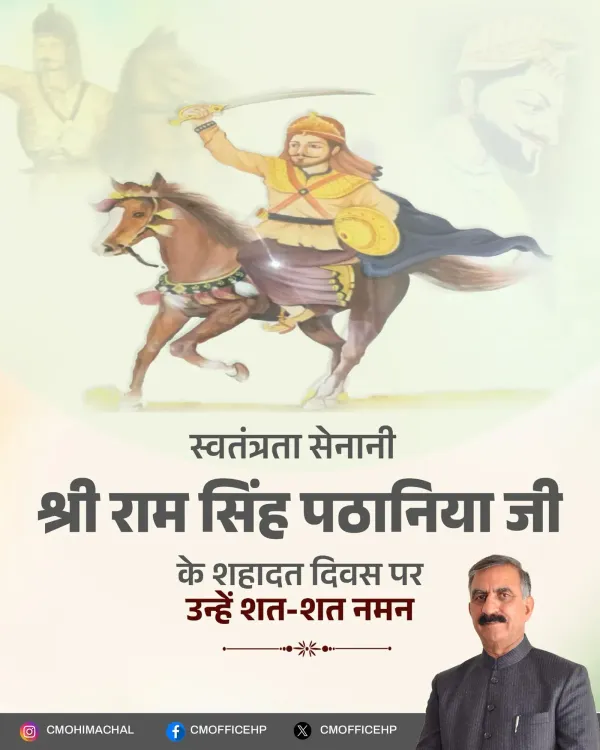
The Chief Minister's Office of Himachal Pradesh honoured Ram Singh Pathania, a 19th-century fighter from Kangra district who led armed resistance against British forces in 1857 and was executed for his defiance, calling his sacrifice an eternal example of bravery.
Key Takeaways
Ram Singh Pathania was a freedom fighter from Kangra district , Himachal Pradesh, who actively resisted British rule during the 1857 uprising.
He was captured by colonial authorities and executed for his role in the armed resistance.
The Chief Minister's Office of Himachal Pradesh issued the tribute on November 11, 2026 , via its official X account.
The post described Pathania as a 'brave son of Kangra' whose sacrifice would 'live forever in the hearts of the people.' Himachal Pradesh administrations have a pattern of commemorating hill-state martyrs to highlight local contributions to the national freedom struggle.
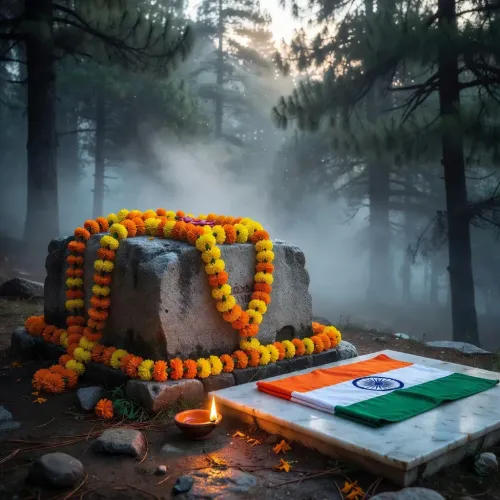
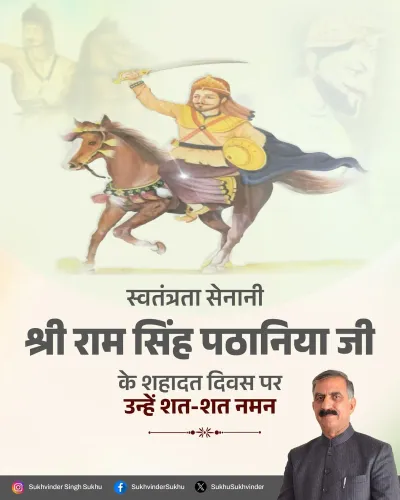
A warrior who refused to bend before British authority, Ram Singh Pathania of Kangra district gave his life resisting colonial rule — and on Wednesday, November 11, 2026, the Chief Minister's Office of Himachal Pradesh invoked his memory with a formal tribute on X, reminding the nation that the fire of 1857 burned in the hills too.
The post, written in Hindi, declared: 'Angrezi hukumat ke saamne na jhukne wale Kangra zila ke veer sapoot' — 'the brave son of Kangra district who never bowed before British rule' — adding that Pathania's sacrifice and courage had 'set an example of bravery' that would 'live forever in the hearts of the people.'
Who Was Ram Singh Pathania
Ram Singh Pathania was a 19th-century freedom fighter who led armed resistance against British forces in the Kangra region during the revolt of 1857. He was eventually captured by colonial authorities and executed — paying the ultimate price for defiance at a time when organised rebellion in the hill tracts was both rare and extraordinarily dangerous.
Kangra, now a prominent district in Himachal Pradesh, witnessed some of the earliest organised revolts against British rule in the mid-nineteenth century. Pathania's story sits squarely in that tradition — a local chapter of a national convulsion that history textbooks have long told primarily from the plains.
Hill Martyrs and the Battle for Historical Memory
State governments across India have made a deliberate practice of surfacing regional heroes of the 1857 uprising — figures whose contributions were systematically marginalised in the dominant national narrative centred on leaders from Uttar Pradesh, Bihar, and Rajasthan. Himachal Pradesh administrations have periodically commemorated hill-state martyrs through official statements and memorials, pushing back against that erasure.
The logic is straightforward: when a state government amplifies a local martyr's name on a major platform, it anchors regional identity to the broader freedom-struggle story. For the residents of Kangra — and for historians who have long argued that the 1857 revolt was truly pan-Indian — such recognition carries real symbolic weight.
Ram Singh Pathania did not survive to see independence. But his name, carried forward by an official account of the government he never got to live under, refuses to disappear — which may be the most fitting tribute of all.
Point of View
Foregrounding a Kangra hill fighter from 1857 serves a dual purpose: deepening regional pride and pushing back against a plains-centric retelling of India's revolt history. It is a low-cost, high-resonance act of soft statecraft — one that costs nothing politically but accumulates cultural capital over time. As memorialisation increasingly moves to social media, such posts also test whether digital tribute can carry the weight once reserved for statues and street names.
NationPress
11 Nov 2026
Frequently Asked Questions
Who was Ram Singh Pathania?
Ram Singh Pathania was a 19th-century freedom fighter from the Kangra district of present-day Himachal Pradesh who led armed resistance against British forces during the 1857 uprising and was subsequently captured and executed by colonial authorities.
Why is Ram Singh Pathania significant in Indian history?
He represents the largely overlooked hill-state dimension of the 1857 revolt. His defiance of British rule in the Kangra region is cited as evidence that the uprising was pan-Indian and not confined to the plains.
Which district was Ram Singh Pathania from?
Ram Singh Pathania was from Kangra district, now a prominent district in the state of Himachal Pradesh in northern India.
Why did the Himachal Pradesh CM Office post a tribute to him?
The Chief Minister's Office periodically commemorates regional martyrs of the freedom struggle to highlight Himachal Pradesh's contributions to India's independence movement, which are often overshadowed by national narratives focused on other regions.
What happened to Ram Singh Pathania after his capture?
After being captured by British colonial forces for his role in the 1857 armed resistance, Ram Singh Pathania was executed — giving his life for his opposition to British rule.