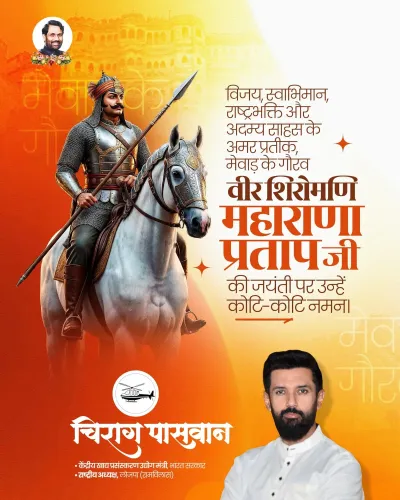
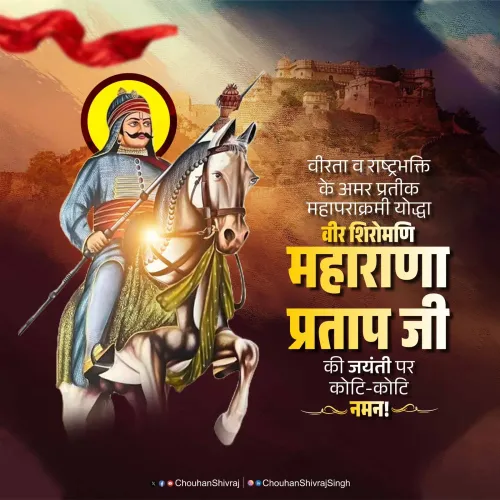
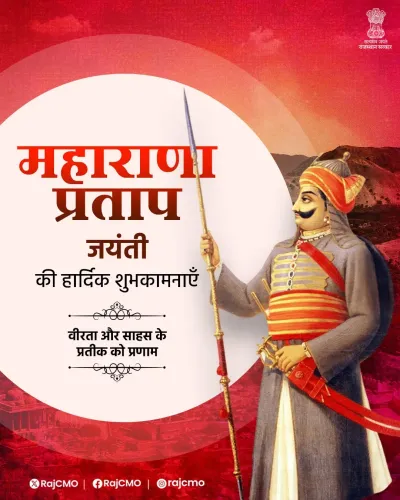
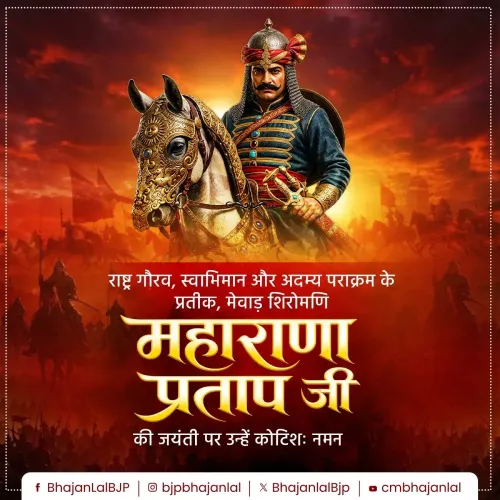
HP CM Office Pays Tribute to Maharana Pratap
Synopsis
The Chief Minister's Office of Himachal Pradesh honoured Maharana Pratap on 17 June 2026, describing the 16th-century Mewar ruler as an immortal hero whose resolve and commitment to freedom remain an enduring inspiration. The tribute is part of a wider pattern of Indian state governments commemorating pre-colonial martial figures.
Key Takeaways
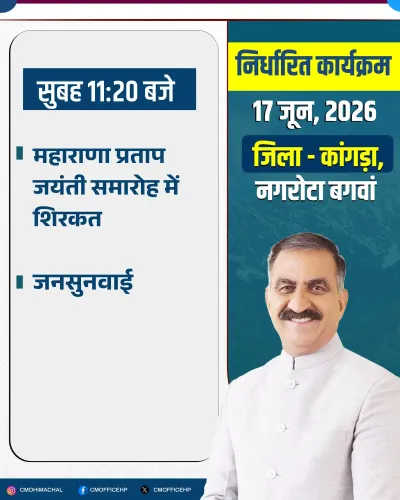
The Chief Minister's Office of Himachal Pradesh posted a formal tribute to Maharana Pratap on 17 June 2026 .
The post described Maharana Pratap as 'Veer Shiromani' — supreme among the brave — and highlighted his refusal to compromise his ideals under adversity.
Maharana Pratap was the ruler of the Mewar kingdom in Rajasthan and is celebrated for resisting Mughal Emperor Akbar's suzerainty in the late 16th century.
State governments across India have issued similar commemorations on Maharana Pratap Jayanti since at least the 2010s .
The tribute reflects a broader pattern of Indian administrations invoking pre-colonial martial figures to reinforce narratives of sovereignty and self-respect.
Stakeholders include Rajput communities , history students, and the heritage tourism sector in Rajasthan and beyond.
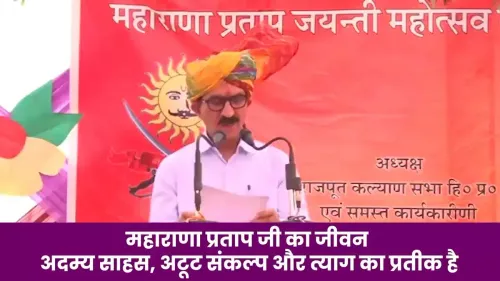
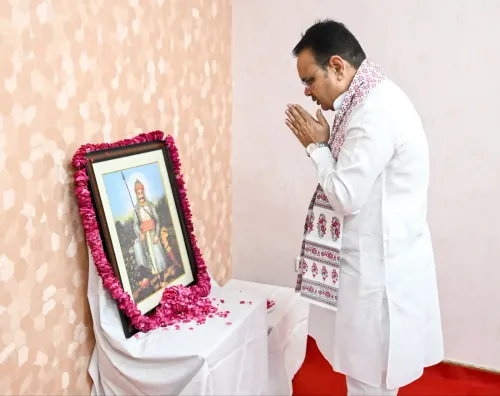
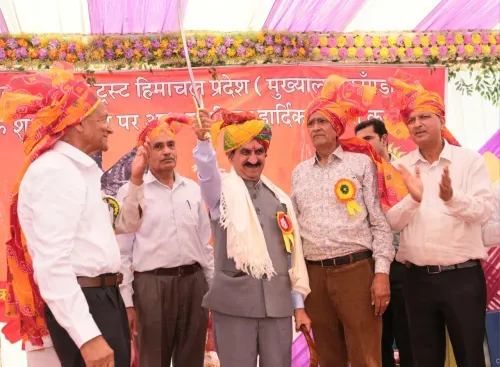
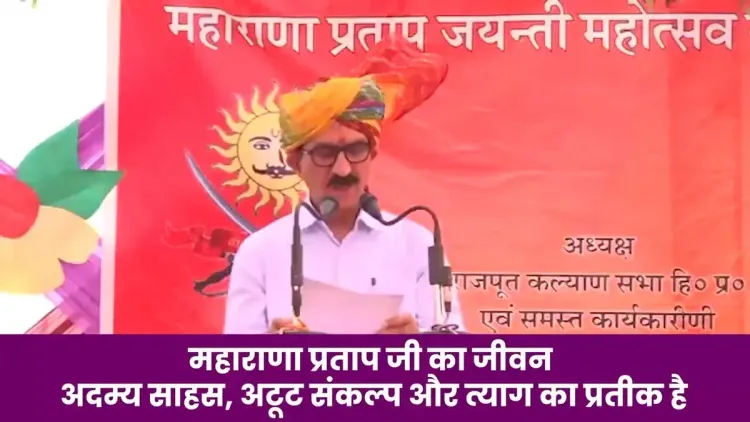
The Chief Minister's Office of Himachal Pradesh on Wednesday, 17 June 2026 paid tribute to Maharana Pratap, honouring the 16th-century Mewar ruler as an immortal hero of Indian history whose life embodied unwavering resolve, self-respect, and dedication to the motherland.
The post, shared in Hindi on the official CMO account, described Maharana Pratap as 'veer shiromani' (supreme among the brave) and stated that he never compromised his ideals or the values of freedom even in the most adverse circumstances. The original text reads: 'उन्होंने विषम परिस्थितियों में भी अपने आदर्शों और स्वतंत्रता के मूल्यों से कभी समझौता नहीं किया' — 'He never compromised his ideals and the values of freedom, even in the most difficult circumstances.'
Context
Maharana Pratap Singh, ruler of the Mewar kingdom in present-day Rajasthan, is one of India's most celebrated pre-colonial martial figures. He is remembered primarily for his prolonged military resistance against Mughal Emperor Akbar in the late 16th century and his refusal to accept Mughal suzerainty — a stance that made him a symbol of sovereignty and self-respect across generations.
His legacy has been commemorated through monuments, school curricula, and state-level cultural programmes across India for decades. The Battle of Haldighati (1576) remains the most iconic episode of his resistance and is widely taught in Indian history syllabi.
Policy Backdrop
Indian state governments have issued commemorative tributes on Maharana Pratap Jayanti — observed typically in early June on the Hindu calendar — since at least the 2010s. These statements are part of a broader pattern of using historical memory to reinforce narratives of sovereignty, martial pride, and resistance to external rule.
Figures such as Chhatrapati Shivaji Maharaj and Rani Lakshmibai receive similar state-level commemorations. The Government of Himachal Pradesh periodically issues such statements on pan-Indian historical figures as part of its cultural outreach, even when those figures are not directly linked to the state's own history.
Stakeholders and Impact
Rajput communities across Rajasthan, Himachal Pradesh, and other states regard Maharana Pratap as a community icon, and state tributes carry social and political resonance within these groups. History students and educators also engage with such commemorations as part of broader conversations about India's pre-colonial heritage.
The tourism sector — particularly around Udaipur, Haldighati, and Rajput heritage sites in Rajasthan — benefits from sustained public interest in Maharana Pratap's legacy, with state commemorations helping keep that interest active.
What's Next
State governments, including Himachal Pradesh, may follow such posts with school programmes, cultural events, or heritage tourism initiatives linked to Maharana Pratap Jayanti in the period ahead. Any convergence with Rajput heritage promotion or fort tourism in Himachal's own hill districts could signal a wider cultural-outreach strategy from the CMO.
The tribute underscores a continuing trend in Indian governance: the active invocation of pre-colonial martial heroes to articulate values of national self-determination and resistance — themes that retain enduring political and cultural salience across party lines.
Point of View
Despite Maharana Pratap being primarily a Rajasthani icon, reflects how such figures have been consciously elevated to pan-Indian status. The timing outside the conventional Jayanti window is notable and may point to a specific local event or programme not yet publicly confirmed. Over time, such tributes accumulate into a coherent cultural messaging strategy that transcends any single post.
NationPress
16 Sept 2026
Frequently Asked Questions
Who was Maharana Pratap and why is he celebrated in India?
Maharana Pratap was the ruler of the Mewar kingdom in present-day Rajasthan in the 16th century. He is celebrated across India for his prolonged military resistance against Mughal Emperor Akbar and his refusal to accept Mughal suzerainty, making him a symbol of self-respect and sovereignty.
Why did the Himachal Pradesh CMO pay tribute to Maharana Pratap?
The Chief Minister's Office of Himachal Pradesh posted a tribute honouring Maharana Pratap as an immortal hero of Indian history, describing his life as a symbol of resolve, self-respect, and dedication to the motherland. State governments across India routinely issue such commemorations.
When is Maharana Pratap Jayanti observed?
Maharana Pratap Jayanti is conventionally observed in early June according to the Hindu calendar. The HP CMO's tribute was posted on 17 June 2026.
What is the Battle of Haldighati?
The Battle of Haldighati, fought in 1576 , was a key confrontation between Maharana Pratap's forces and the Mughal army under Emperor Akbar. It is one of the most iconic episodes of Maharana Pratap's resistance and is widely taught in Indian history.
Do other Indian state governments also issue tributes to Maharana Pratap?
Yes. State governments across India have issued commemorative tributes to Maharana Pratap on his Jayanti since at least the 2010s. Similar commemorations are also held for figures such as Chhatrapati Shivaji Maharaj and Rani Lakshmibai as part of broader cultural outreach.