Tejashwi demands disqualification of 2 MLCs who joined BJP after independent win
Synopsis
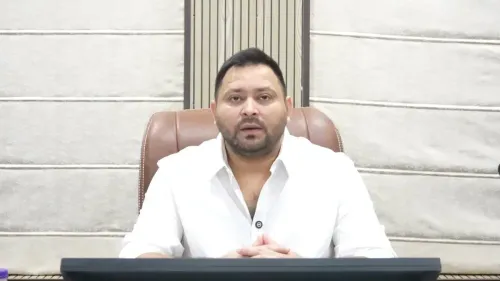
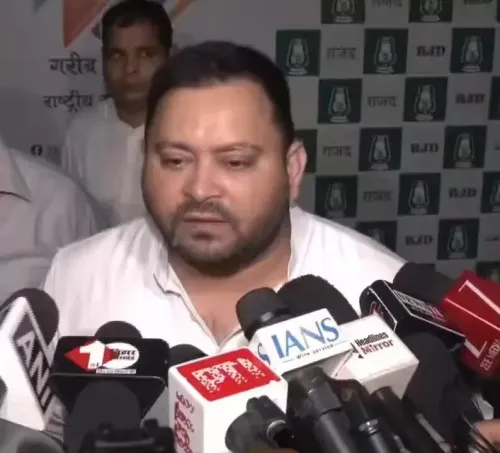
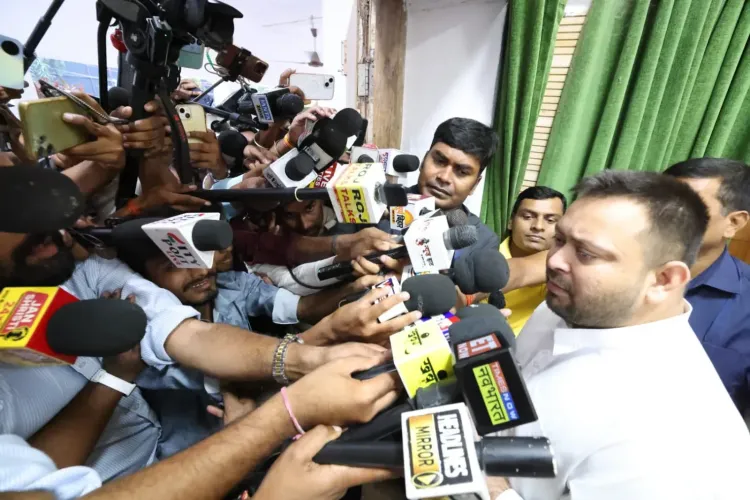
RJD leader Tejashwi Yadav has demanded immediate disqualification of two newly elected Bihar MLC members — Bansidhar Brajwasi and Dr. Rahul Raj — who won as independents and then joined BJP, citing Paragraph 2(2) of the Tenth Schedule of the Indian Constitution.
Key Takeaways
Bansidhar Brajwasi (Tirhut Graduate) and Dr.
Rahul Raj (Saran Teacher) won Bihar Legislative Council seats as independent candidates and subsequently joined the BJP.
RJD leader Tejashwi Yadav invoked Paragraph 2(2) of the Tenth Schedule , which disqualifies any independent legislator who joins a political party after election.
Article 191(2) bars anyone disqualified under the Tenth Schedule from continuing as a state legislature member.
Under Paragraph 6(1) , the power to rule on disqualification rests with the Chairman of the Bihar Legislative Council .
Tejashwi cited the case of Sahebganj MLA Raju Singh to allege selective enforcement of disqualification rules against opposition lawmakers.
The Tenth Schedule was introduced by the 52nd Constitutional Amendment Act of 1985 to curb legislative defections.
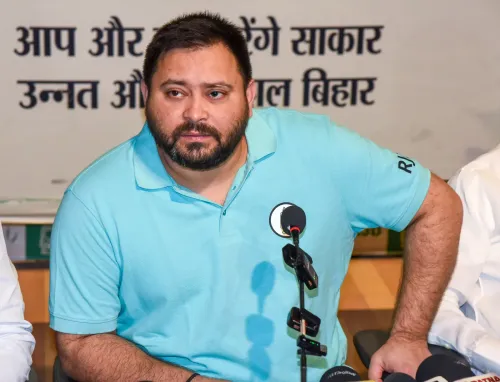
Two freshly elected members of the Bihar Legislative Council are at the centre of a constitutional storm — and RJD leader Tejashwi Yadav is demanding their immediate disqualification. The Leader of the Opposition has invoked the anti-defection law, arguing that Bansidhar Brajwasi, elected from the Tirhut Graduate Constituency, and Dr. Rahul Raj, elected from the Saran Teacher Constituency, forfeited their seats the moment they formally joined the Bharatiya Janata Party after winning as independents.
The constitutional provision Tejashwi is citing
The argument rests on a precise clause of the Tenth Schedule of the Indian Constitution — inserted by the 52nd Constitutional Amendment Act of 1985 specifically to curb legislative defection. Paragraph 2(2) of the Schedule is unambiguous: a member elected as an independent who subsequently joins any political party stands disqualified from the House. There is no merger exception, no grace period. The rule is binary.
Tejashwi reinforced the chain of consequences. Article 191(2) bars anyone disqualified under the Tenth Schedule from continuing as a member of a state legislature. And under Paragraph 6(1), the authority to rule on such disqualification belongs to the Chairman of the Bihar Legislative Council — making the ball squarely in the presiding officer's court.
Why Tejashwi says BJP is 'making a mockery of the Constitution'
The RJD leader did not stop at a legal brief. He widened the charge into a pattern of selective enforcement. He pointed to the case of Sahebganj MLA Raju Singh — a BJP legislator — arguing that when a court convicted a ruling-party lawmaker, the Speaker still did not cancel the membership. That, Tejashwi said, exposed a double standard: one law for the opposition, another for the treasury benches.
He further alleged that when opposition legislators were 'auctioned like animals' and moved to the BJP's side, disqualification petitions submitted in writing were simply ignored. 'BJP-RSS sanvidhan aur loktantra ki sabse badi dushman hai' ('BJP-RSS is the biggest enemy of the Constitution and democracy'), he wrote, closing with an unambiguous political verdict.
The presiding-officer problem and what happens next
The Tenth Schedule's Achilles heel has always been the presiding officer's discretion over timing. Across India's state legislatures, Speakers and Chairmen have been repeatedly accused — by parties on both sides — of sitting on disqualification petitions for months or years, effectively keeping defectors in place through inaction. Bihar has lived through several such cycles.
Tejashwi is demanding that the Chairman of the Bihar Legislative Council initiate disqualification proceedings 'immediately, without unnecessary delay.' Whether the Chairman acts swiftly — or whether this petition joins a long queue of unresolved anti-defection cases — will test the credibility of the very amendment Parliament passed four decades ago to make legislators answerable to voters, not party whips.
The Constitution drew a clear line in 1985. Bihar's upper house now has to decide whether it will honour it.
Point of View
Which means any prolonged inaction by the Chairman would itself become a political liability. For RJD, the move serves a dual purpose: it contests BJP's expansion into the upper house while simultaneously building a broader narrative about constitutional erosion ahead of the next electoral cycle in Bihar.
NationPress
1 Nov 2026
Frequently Asked Questions
What is the anti-defection law in India?
The anti-defection law is contained in the Tenth Schedule of the Indian Constitution, inserted by the 52nd Constitutional Amendment Act of 1985 . It disqualifies legislators who voluntarily give up party membership or vote against party directions, and under Paragraph 2(2) it also disqualifies independents who join any party after winning election.
Can an independent MLA or MLC join a party after winning?
No. Under Paragraph 2(2) of the Tenth Schedule , an independent legislator who joins any political party after winning election is liable to be disqualified from the House.
Who decides disqualification under the Tenth Schedule?
Under Paragraph 6(1) of the Tenth Schedule , the decision rests with the presiding officer of the relevant House — in this case, the Chairman of the Bihar Legislative Council .
Why is Tejashwi Yadav demanding disqualification of Bansidhar Brajwasi and Dr. Rahul Raj?
Tejashwi Yadav argues that both legislators were elected as independents and then formally joined the BJP, triggering automatic disqualification under the anti-defection provisions of the Tenth Schedule.
What is the Sahebganj MLA Raju Singh case Tejashwi mentioned?
Tejashwi cited Sahebganj MLA Raju Singh as an example of alleged double standards, claiming the Speaker did not cancel a BJP legislator's membership even after a court conviction, while opposition defections were handled differently.