PM Modi Highlights 12 Years of Health Reforms, India as Medical Tourism Hub
Synopsis
Prime Minister Narendra Modi on 17 July 2026 credited 12 years of BJP-led health reforms for improving domestic healthcare access and positioning India as a rising global medical tourism destination, citing Ayushman Bharat and infrastructure expansion as key drivers.
Key Takeaways
PM Modi on 17 July 2026 said his government has strengthened India's healthcare capacity over 12 years .
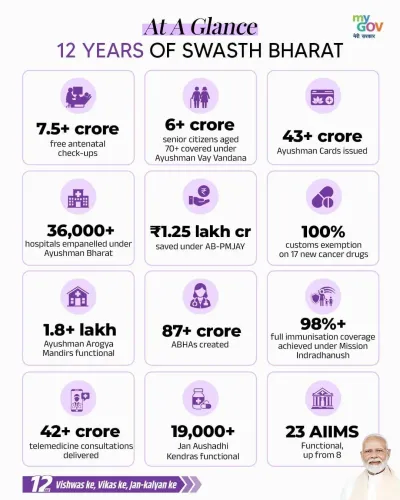
Ayushman Bharat – PM-JAY , launched in September 2018 , provides up to ₹5 lakh annual health cover to over 50 crore beneficiaries.
New AIIMS campuses and upgraded government medical colleges were added under the Pradhan Mantri Swasthya Suraksha Yojana .
A dedicated Medical Visa category introduced in 2017 streamlined entry for international patients seeking treatment in India.
India's medical tourism appeal is driven by cost advantages, English-speaking medical staff, and established private hospital chains.
Patients from neighbouring countries and African nations form a significant share of India's international medical-tourist inflow.
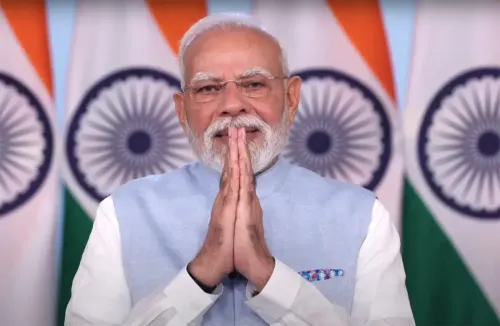
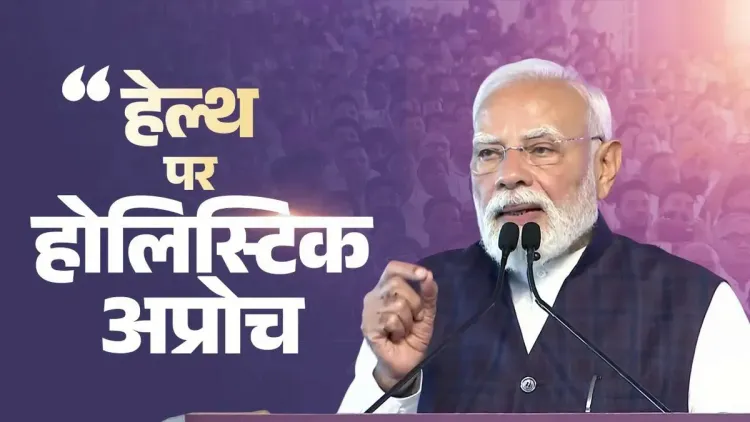
Prime Minister Narendra Modi on Friday, 17 July 2026, highlighted his government's record on healthcare over the past 12 years, asserting that India is emerging as a significant destination for medical tourism. The post, shared on X, credited sustained policy efforts for improving access to treatment and drawing international patients to Indian hospitals.
In his post, Modi wrote: 'बीते 12 वर्षों में हमारी सरकार ने स्वास्थ्य सेवाओं के क्षेत्र में देश का सामर्थ्य बढ़ाया है' — 'In the last 12 years, our government has strengthened the country's capacity in the healthcare sector, due to which people are now getting better treatment facilities.' He added that a significant outcome of these efforts is that India is becoming an important destination for medical tourism.
Context
The post marks a political stocktaking moment for the BJP-led government, which has held power since May 2014. By framing healthcare improvement and medical tourism growth together, Modi is presenting both domestic welfare gains and an economic-export narrative ahead of potential budget and policy announcements.
India's appeal as a medical-travel destination has historically rested on significant cost differentials compared with Western countries, English-speaking medical professionals, and a network of established private hospital chains — factors that predate but have been amplified by post-2014 policy.
Policy Backdrop
The government's health agenda has rested on several pillars since 2014. The National Health Policy 2017 set targets for raising public health expenditure and strengthening tertiary care. Expansions under the Pradhan Mantri Swasthya Suraksha Yojana added new AIIMS campuses and upgraded government medical colleges across the country.
The flagship Ayushman Bharat – Pradhan Mantri Jan Arogya Yojana (PM-JAY), launched in September 2018, extended health insurance cover of up to ₹5 lakh per year to more than 50 crore beneficiaries, making it one of the world's largest publicly funded health-assurance programmes. A dedicated Medical Visa category introduced in 2017 further streamlined entry for international patients seeking treatment in India.
Stakeholders and Impact
The dual claim — better domestic access and growing medical tourism — touches distinct stakeholder groups. Indian patients, particularly those from lower-income households, stand to benefit from expanded public hospital capacity and the PM-JAY insurance umbrella. Private hospitals and state health departments are the primary vehicles through which international medical tourists access care.
Patients from neighbouring countries and several African nations have traditionally made up a significant share of India's medical-tourist inflow, drawn by affordable procedures in cardiology, orthopaedics, oncology and fertility treatment. This positions healthcare delivery as a foreign-exchange earner alongside information technology and conventional tourism in India's services-export strategy.
What's Next
Analysts will watch the Ministry of Tourism's annual medical-tourism arrival data and any fresh health-infrastructure allocations in the next Union Budget or NITI Aayog health-index update for evidence of the trends Modi cited. The Ministry of Health and Family Welfare is expected to remain a key implementation arm as the government seeks to consolidate gains and attract higher volumes of international patients. Whether targeted bilateral agreements or accreditation drives follow this political signal will determine the trajectory of India's medical-tourism ambitions.
Point of View
While simultaneously pitching India as a services-export powerhouse to an international audience. Framing 12 years of health policy as a unified arc — from PM-JAY to medical tourism — allows the BJP to convert incremental administrative gains into a consolidated political narrative ahead of budget season. The medical-tourism angle is particularly significant because it aligns healthcare with India's broader ambition to grow services exports, giving the health ministry an economic-diplomacy dimension it previously lacked. Whether the data on international patient arrivals and domestic health outcomes supports the scale of the claim will be the critical test for independent scrutiny.
NationPress
16 Oct 2026
Frequently Asked Questions
What has the Modi government done for healthcare in 12 years?
The government has expanded AIIMS campuses, upgraded government medical colleges, launched the Ayushman Bharat – PM-JAY scheme offering up to ₹5 lakh health cover to over 50 crore beneficiaries, and introduced a Medical Visa category to attract international patients.
Why is India becoming a medical tourism destination?
India's medical tourism growth is driven by significantly lower treatment costs compared with Western countries, English-speaking medical professionals, and a network of accredited private hospitals offering procedures in cardiology, oncology, orthopaedics, and fertility treatment.
What is Ayushman Bharat PM-JAY?
Ayushman Bharat – Pradhan Mantri Jan Arogya Yojana is a government health insurance scheme launched in September 2018 that provides up to ₹5 lakh annual cover to more than 50 crore low-income beneficiaries, making it one of the world's largest publicly funded health-assurance programmes.
Which countries send the most medical tourists to India?
Patients from neighbouring countries such as Bangladesh, Nepal, and Afghanistan, as well as several African nations, have traditionally formed the largest share of India's inbound medical tourists, attracted by affordable and quality healthcare.
What is the Medical Visa category India introduced for health tourists?
India introduced a dedicated Medical Visa category in 2017 to simplify entry for international patients and their attendants travelling to India specifically for medical treatment, supporting the growth of the medical-tourism sector.